Australia Seeks Enhanced Air Defense Amid Rising Regional Tensions
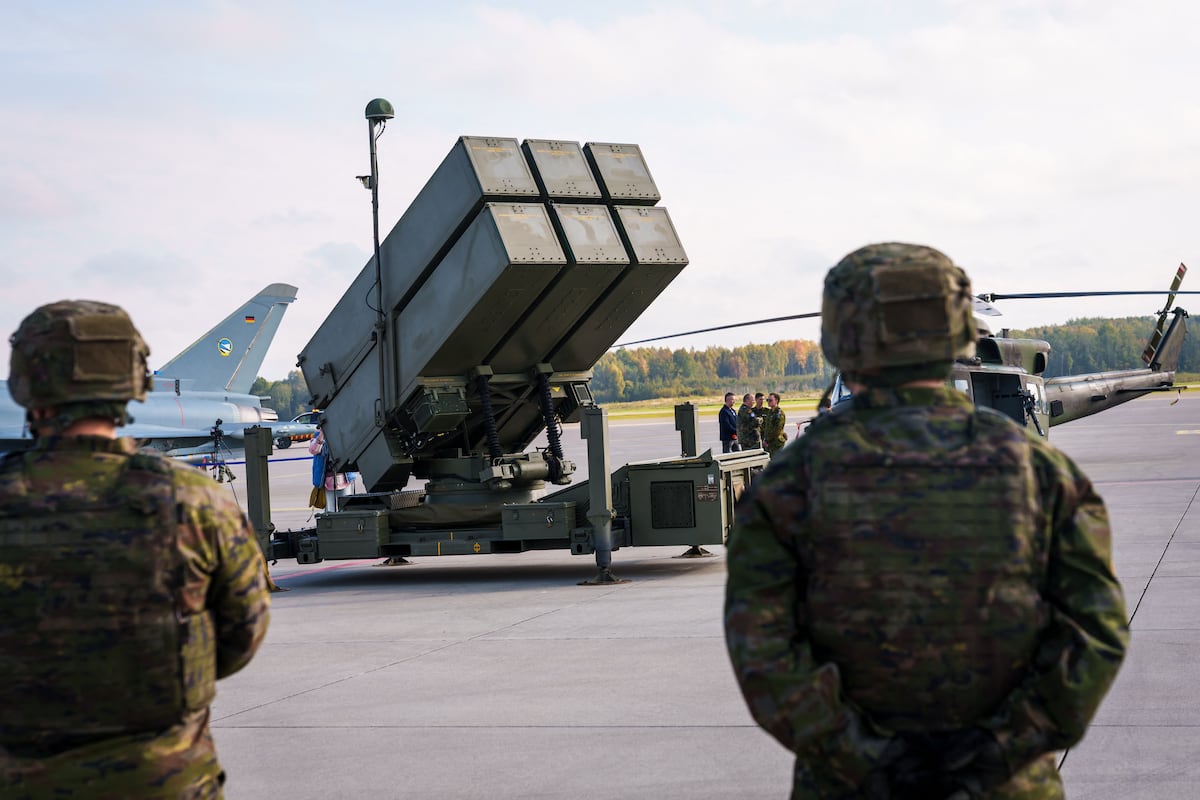
Facing growing geopolitical challenges, Australia is seeking to bolster its air defense capabilities. The country’s current arsenal includes only a limited number of NASAMS short-range air defense systems, prompting Canberra to issue a formal tender for a more robust, medium-range ground-based air defense solution for the Australian Army.
On October 13, the Department of Defence initiated Project Land 6504, a solicitation that has drawn international interest from vendors in Europe, Israel, South Korea, Turkey, and the United States.
The urgent need for enhanced defenses is largely driven by China’s increasing military activities. Recent maneuvers by the People’s Liberation Army, including the circumnavigation of Australia by a naval task group in early 2025 and the launch of an intercontinental ballistic missile into the South Pacific in July, have raised alarms. China’s diverse missile arsenal further underscores Australia’s need for a defensive system that can counter ballistic missiles in their terminal phase, as well as subsonic threats.
The 2026 National Defence Strategy emphasizes missile defense, advocating for “accelerated introduction of medium-range, ground-based, active missile defense through investment in missile launchers and munitions and integrating them with the Australian Defence Force’s command-and-control systems.”
This new system is expected to be an off-the-shelf, proven capability that will contribute to a national, integrated defense network, according to the solicitation details.
The financial constraints posed by the AUKUS nuclear-powered submarine project present a significant challenge to funding the new initiative. Nevertheless, the pressing timeline for the project remains a critical concern. Vendor selection is expected by the end of 2027, with live-firing trials set for Exercise Talisman Saber in mid-2029, and initial operational capability projected for the early 2030s.
The new air defense system must integrate with existing technologies, including radars from CEA Technologies and Lockheed Martin Australia’s Joint Air Battle Management System.
To expedite the process, Canberra is exploring both direct commercial sales and U.S. Foreign Military Sales (FMS) options. This timing may favor non-American suppliers, as the U.S. faces challenges with depleted missile stockpiles due to its conflict with Iran.
A Congressional Research Service report recently highlighted, “Finite U.S. industrial base capacity introduces trade-offs between filling FMS orders and replenishing U.S. stockpiles. FMS delivery delays may result in cancellations, potentially affecting U.S. and partner interoperability and integration.”
Australia could explore alternatives, such as integrating AMRAAM-ER extended-range missiles into its current NASAMS arsenal. John Fry, managing director of Kongsberg Australia, expressed interest in the program, stating: “We’re definitely interested in that program. I think the great thing with the NASAMS architecture is Kongsberg and Raytheon are evolving that into full-spectrum air defense.”
In a related development, Lockheed Martin Australia recently demonstrated a hybrid air defense system, firing an SM-2 missile from a trailer launcher using the Aegis combat system and a CEA radar.