U.S. Army Emphasizes Modernization with Command Rebranding
In a significant move to align its strategic goals with emerging technologies, the U.S. Army has introduced changes to its command structure, underscoring its commitment to modernization and autonomous systems. During the Association of the U.S. Army’s annual meeting in Washington, D.C., the Army’s acting Chief of Staff announced a new designation for a key command, reflecting the service’s forward-looking vision.
Gen. Christopher LaNeve, the acting Army Chief of Staff, revealed that the Futures and Concepts Command has been renamed as the U.S. Army Futures and Autonomous Systems Command (FASCOM). This change coincides with the Army’s new “How the Army Fights” guidance, which provides insights into the application of land power in future conflicts. This guidance was released last week, aiming to reshape the Army’s approach to weapons purchases, force structure, and training.
Addressing industry representatives, LaNeve stated, “We are not walking away from modernization, we are sprinting towards it,” emphasizing that the Army is pursuing advancements responsibly, given the finite nature of resources.
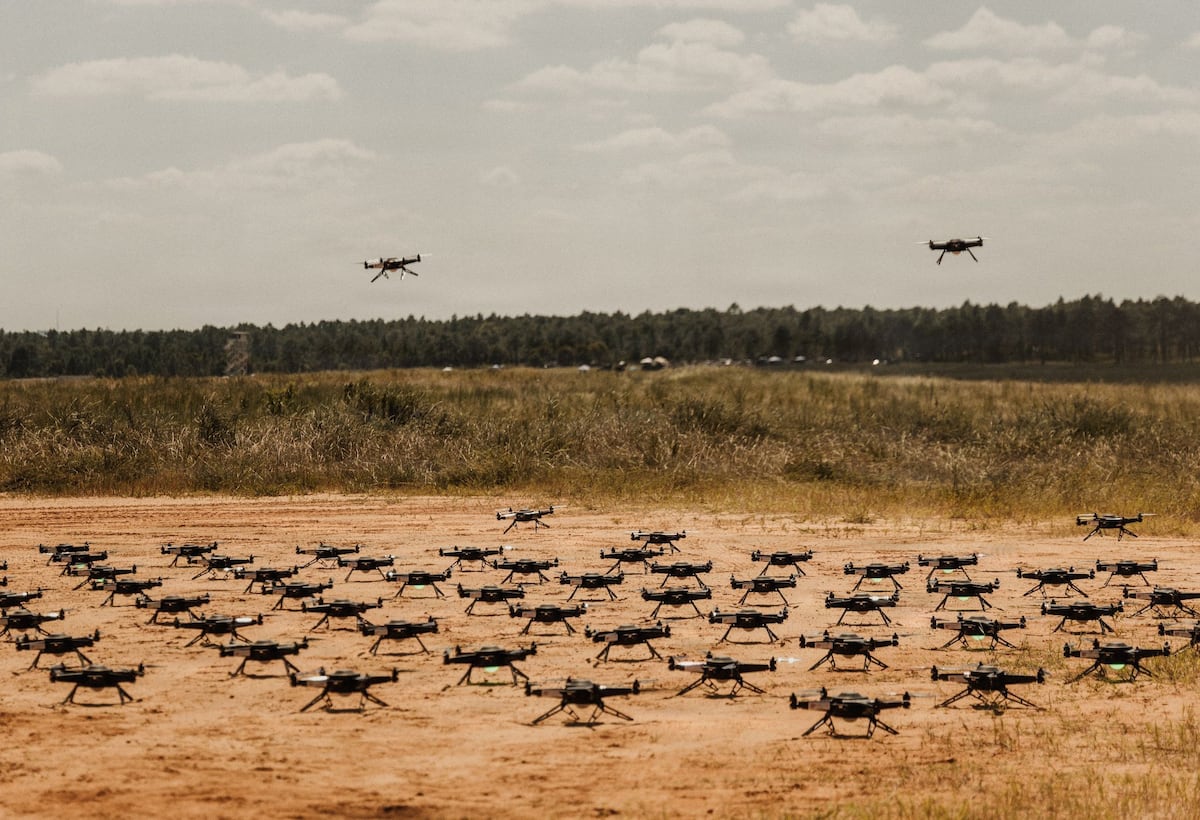
FASCOM has been tasked with spearheading the development of autonomous capabilities through rigorous experimentation and testing at the corps level. According to a recent announcement, the three-star command will focus on formations equipped with autonomous systems for long-range fires, protection, tanks, logistics, and obstacle breaching. It will also see the inclusion of some of the Army’s first 390A Robotic Technicians, activated this month.
The selection of these capabilities is based on their potential impact on maneuverability and their alignment with the four elements of land power outlined in the Army’s new guidance: convergence, strike, close battle, and endurance. “This goes beyond drones,” LaNeve stated, “FASCOM will pioneer operational concepts that harness autonomous capabilities across all warfighting functions.”
Recently, the Army faced criticism for shutting down its experimental drone unit in Europe, which was initially established to explore the operational potential of such formations. The Wall Street Journal reported that this decision aligns with LaNeve’s broader “back-to-basics” strategy, succeeding the initiative of his predecessor, Randy George.
In response to this move, a bipartisan group of lawmakers expressed their concerns in a letter, questioning the implications for the U.S. Army’s ability to learn from Ukraine’s drone warfare experiences. The letter followed the disbandment of the 600-member “Unmanned Assault Battalion” that was part of the 173rd Airborne Brigade.
Maj. Gen. Christopher Norrie, acting Commanding General of U.S. Army Europe and Africa, highlighted a diversified approach to drone warfare during a media roundtable. “In Ukraine and Russia, you’ve seen those armies create brigades and entire unmanned systems forces, whereas the U.S. Army’s approach has been to decentralize; to accelerate learning across all units,” he explained. The Army plans to integrate one-way attack drones at the squad level soon.