As the 2026 U.S. midterm elections approach, a cloud of economic pessimism looms over the Republican Party. Despite positive macroeconomic indicators, public sentiment remains bleak, casting doubt on the party’s prospects for maintaining control.
The paradox lies in the robust economic metrics, such as GDP growth and low unemployment, which contrast starkly with the dismal consumer sentiment. This divergence has sparked a debate on whether traditional economic metrics fail to capture a fundamental shift in how Americans perceive their economic well-being.
Economic issues are front and center as voters prepare to head to the polls, with a Pew Research survey indicating that 84% of voters prioritize the economy. This concern transcends party lines, though a narrowing gap is noted as Republicans increasingly share Democrats’ economic gloom.
In light of these sentiments, Democrats are poised to gain ground in Congress, framing the election as a referendum on the economic policies under President Donald Trump. This political landscape challenges the traditional understanding of economic health, suggesting that consumer sentiment may not simply reflect personal financial circumstances.
Reality versus ‘vibes’
The University of Michigan’s consumer sentiment index serves as a key measure of public economic perception, traditionally aligned with concrete economic indicators like spending and inflation. However, recent years have seen a disconnect, with consumer sentiment dropping despite strong consumer spending and business investment.
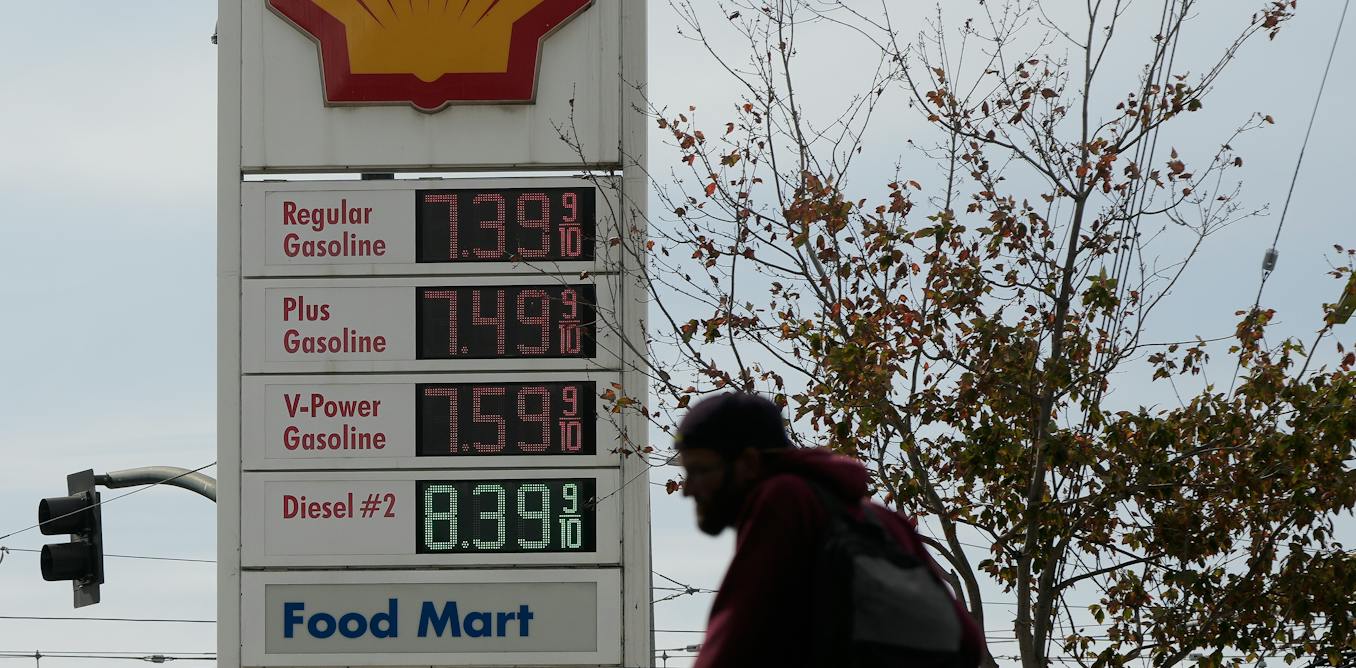
Ongoing inflation, driven by factors like tariffs and energy price fluctuations, remains a concern. Yet inflation has decreased significantly from its peak in 2022, calling into question why consumer sentiment continues to lag.
Despite earlier gains in inflation-adjusted wages, recent declines may further explain voters’ pessimistic outlook.
Inequality versus growth
Rising inequality could be a critical factor in this economic perception gap. Income disparity in the U.S. has widened over the past two decades, only briefly narrowing during major economic crises. Currently, the top 10% of earners account for a disproportionate share of consumer spending, while the bottom 80% struggle to keep pace with inflation.
Wealth inequality is also stark, with the top 0.1% of households owning significantly more wealth than the bottom half. This growing disparity might contribute to the public’s economic unease, which is not fully captured by traditional metrics.
AP Photo/Yuki Iwamura
It’s not just about me
Economists typically associate consumer sentiment with personal financial experiences. However, some scholars suggest that these perceptions may reflect broader concerns about the economy, such as fairness and equality. This “sociotropic” view means voters might prioritize collective economic well-being over personal gain.
Studies indicate that voters consider the overall economic picture more than their financial situations when deciding on the incumbent party’s fate. This perspective is akin to how Americans’ trade policy preferences prioritize national over personal impact.
Therefore, understanding the interplay between economic data and public sentiment is crucial. As new lawmakers take office, they will likely face pressure to address these concerns, emphasizing that a thriving economy on paper may not suffice to allay voter anxieties about inequality and economic justice.