Arizona’s Shifting Pumpkin Landscape: From Fields to Challenges
Arizona, once a hub for pumpkin cultivation, has seen a significant decline in its pumpkin farming. The U.S. Department of Agriculture reported that in 2022, 56 acres of pumpkins were harvested across 125 farms in the state. This marks a notable reduction from 2017, when 114 farms cultivated 241 acres of pumpkins.
Historically, Indigenous communities utilized the “Three Sisters” planting method, growing squash, corn, and beans together to benefit from mutual support and nourishment. This traditional approach is still embraced by many home gardeners today.
Interestingly, Phoenix almost bore the name “Pumpkinville” in the late 19th century, as settlers discovered wild pumpkins thriving along old irrigation channels. However, urban development, water scarcity, and rising temperatures have largely eradicated these naturally occurring pumpkins.
Pumpkins, categorized as squash, are highly water-dependent, comprising over 90% water. Melissa Kruse-Peeples, program manager at Arizona State University Garden Commons and owner of the gardening site The Desert Smells Like Veggies, explains their reputation as “water hogs.” They require not just water, but substantial space, with a single seed producing vines up to 20 feet long and yielding two to five pumpkins.
Alan Solis, sales supervisor at Apple Annie’s Orchard, highlights the importance of soil quality and irrigation in successful pumpkin farming. “We start planting them in July, and one of the successes to why our pumpkins come out so good is our soil and how we take care of them,” he said. “We do anything that we can to make sure the plants stay hydrated throughout the day, especially in Arizona. It’s very hot, so we gotta water them all the time.”
Apple Annie’s Orchard, situated in Willcox, is defying the state’s declining pumpkin trend. This farm, which spans 125 acres, also grows apples, peaches, vegetables, and flowers. It started in the early 1980s with over 6,000 apple trees and expanded into pumpkins in 2003 after acquiring Hunsdon Farms.
The orchard benefits from its geographic location, nestled in a valley with mountains surrounding it, and an elevation of 4,182 feet providing a cooler climate conducive to pumpkin growth compared to the Phoenix area.
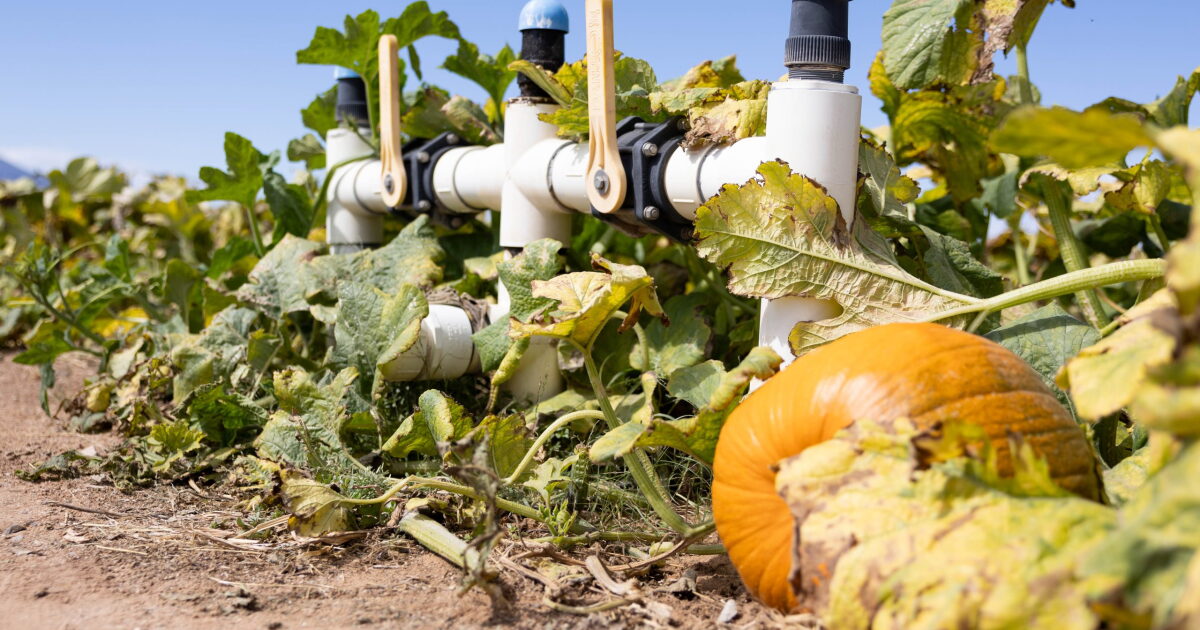
Mandy Kirkendall, director of Apple Annie’s Orchard, describes their innovative irrigation system: “It’s underground so the water is going directly into the plant, and there isn’t the evaporation as if it was on top of the ground.” This subsurface drip irrigation system, according to Southern Irrigation, uses 20-40% less water than traditional sprinklers and enhances soil moisture and nutrient levels.
Apple Annie’s relies on groundwater from its wells, with the oldest well dating back to 1977 and a depth of 252 feet. The farm’s water management strategy is crucial as pumpkins are planted in July and harvested by October.
Challenges such as pest control are significant for pumpkin farming, as Kruse-Peeples notes, “They can get pretty intense, and they can just slowly suck at the squash, the pumpkin plant, causing it sort of weakness and not really to thrive and eventually killing the plant.”
Kirkendall mentions that while they strive to use organic pest control methods, they prioritize crop preservation over organic certification when severe infestations occur.
Apple Annie’s continues to adapt to cost challenges, such as high fuel prices, by minimizing tractor use and protecting the pumpkin patch from damage during harvest time.
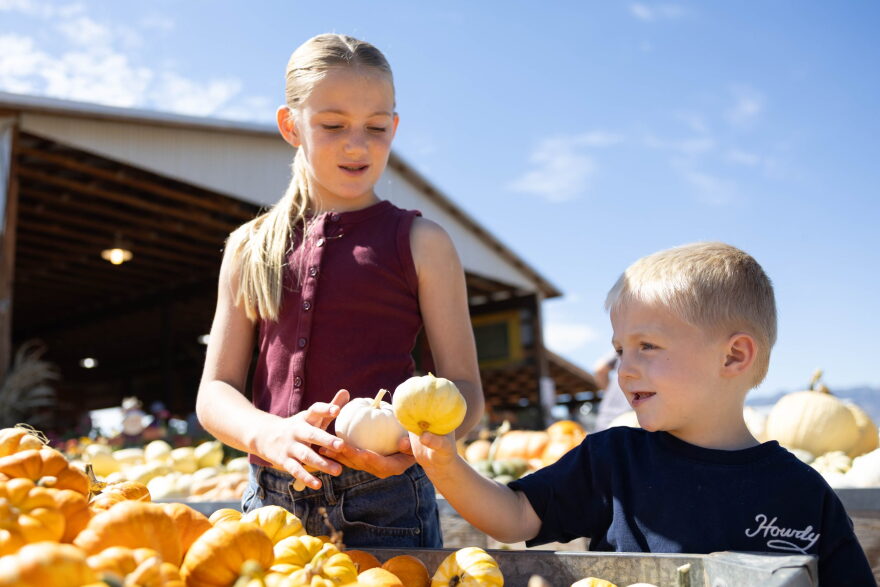
“There’s a lot of variables, so you have to find what works and every year we’re changing stuff,” Solis remarked, emphasizing the constant adaptation required in pumpkin farming.
This article first appeared on Cronkite News and is republished here under a Creative Commons Attribution-NoDerivatives 4.0 International License.