The U.S. Army has officially renamed one of its most essential — and often overlooked — roles on the battlefield. The change reflects a broader shift in how the military is preparing for modern, large-scale warfare.
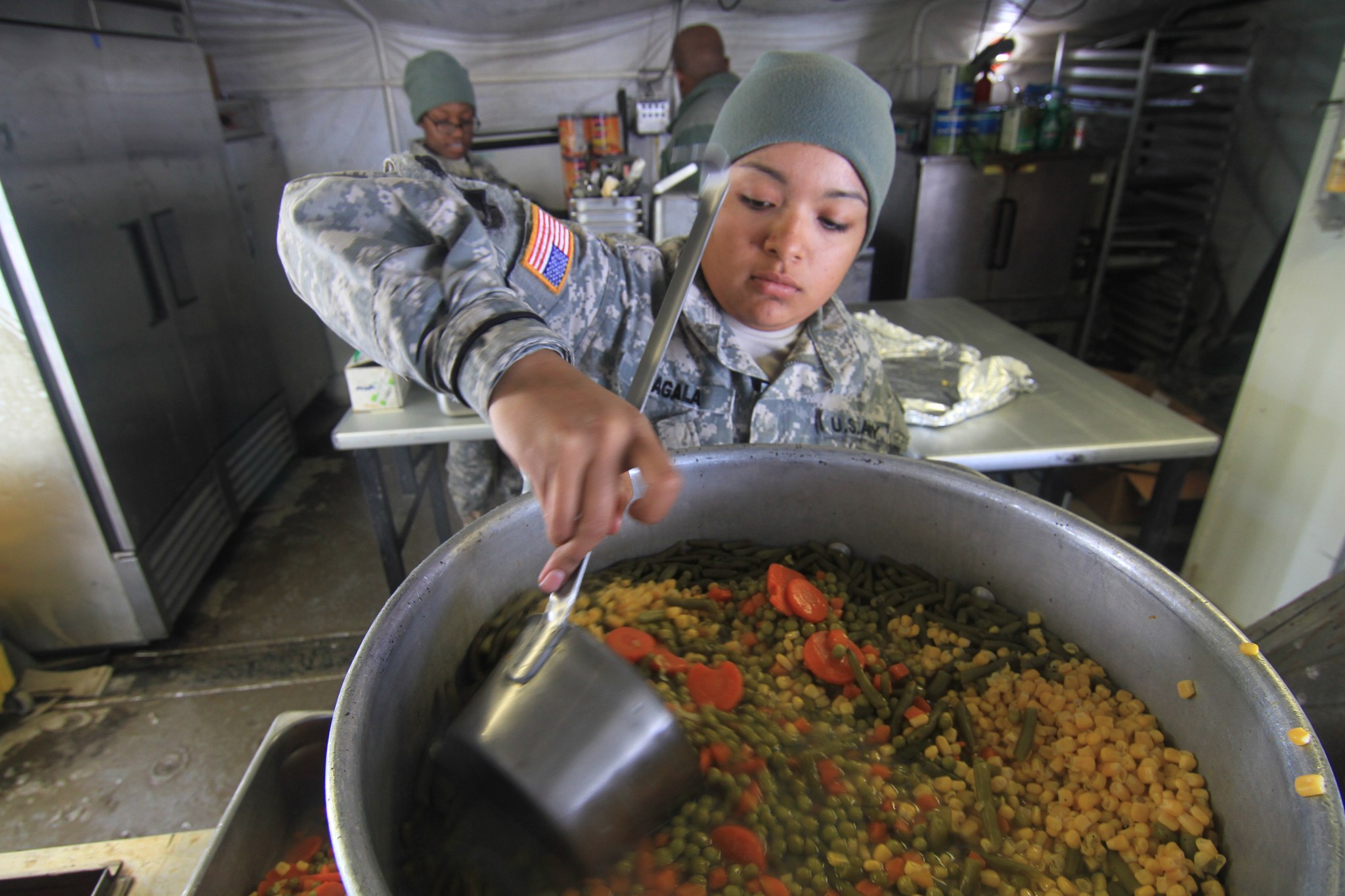
Soldiers who once carried the title of “culinary specialist” under the 92G Military Occupational Specialty (MOS) will now be called “tactical field feeding specialists.” The Army announced the redesignation this week following a ceremony held in late October at Fort Lee, Virginia, as Stars and Stripes first reported.
The title change isn’t about optics. Army officials say it reflects the evolving demands placed on soldiers who feed the force — particularly as the service repositions itself to train for contested, high-intensity combat environments where logistics can be just as decisive as firepower.
More Than a Name Change
Col. Stacy Moore-Callaway, Quartermaster commandant, made clear that the redesignation carries real operational significance.
“When we change an MOS title in the Army, we do it not for superficial rebranding or administrative convenience; we do it because the character of war has changed. We formally redesignate our culinary specialists, stepping forward under the title that truly captures the 92G’s operational weight, and that is to turn them into tactical field feeding specialists.”
The Army’s cook position has evolved considerably over the decades. The role was formally established in the 1960s under the designation 94B Food Service Specialist. In 1995, it was redesignated as 92G Culinary Specialist — and now, more than 30 years later, it is being updated again to match the realities of modern warfare.
These soldiers operate Army Field Feeding Systems and Mobile Kitchen Trailers while managing everything from ingredient ordering and inventory to food preparation — often in complex and potentially dangerous field environments.
Feeding Soldiers Is a Combat Multiplier
At the Fort Lee ceremony, Sgt. Maj. Paul Denson of the Installation Operations Directorate, Army G-4, underscored just how critical the role is to battlefield effectiveness.
“Our tactical field feeding warfighters deliver endurance to the force.”
Denson went further, connecting nutrition directly to combat readiness.
“I submit to you that a well-fed warfighter is a lethal, agile, and adapted soldier that will win in a prolonged close fight. We’re not simply producing food; we’re sustaining warfighters; a tactical field feeding specialist has to understand food production, nutrition, and food safety.”
The Army’s decision to rebrand the position signals a wider institutional recognition that sustaining troops in the field — especially during extended operations — is a strategic priority, not an afterthought. For the soldiers who have long worked behind the scenes to keep the force ready, the new title is an acknowledgment of the full scope of what they do.