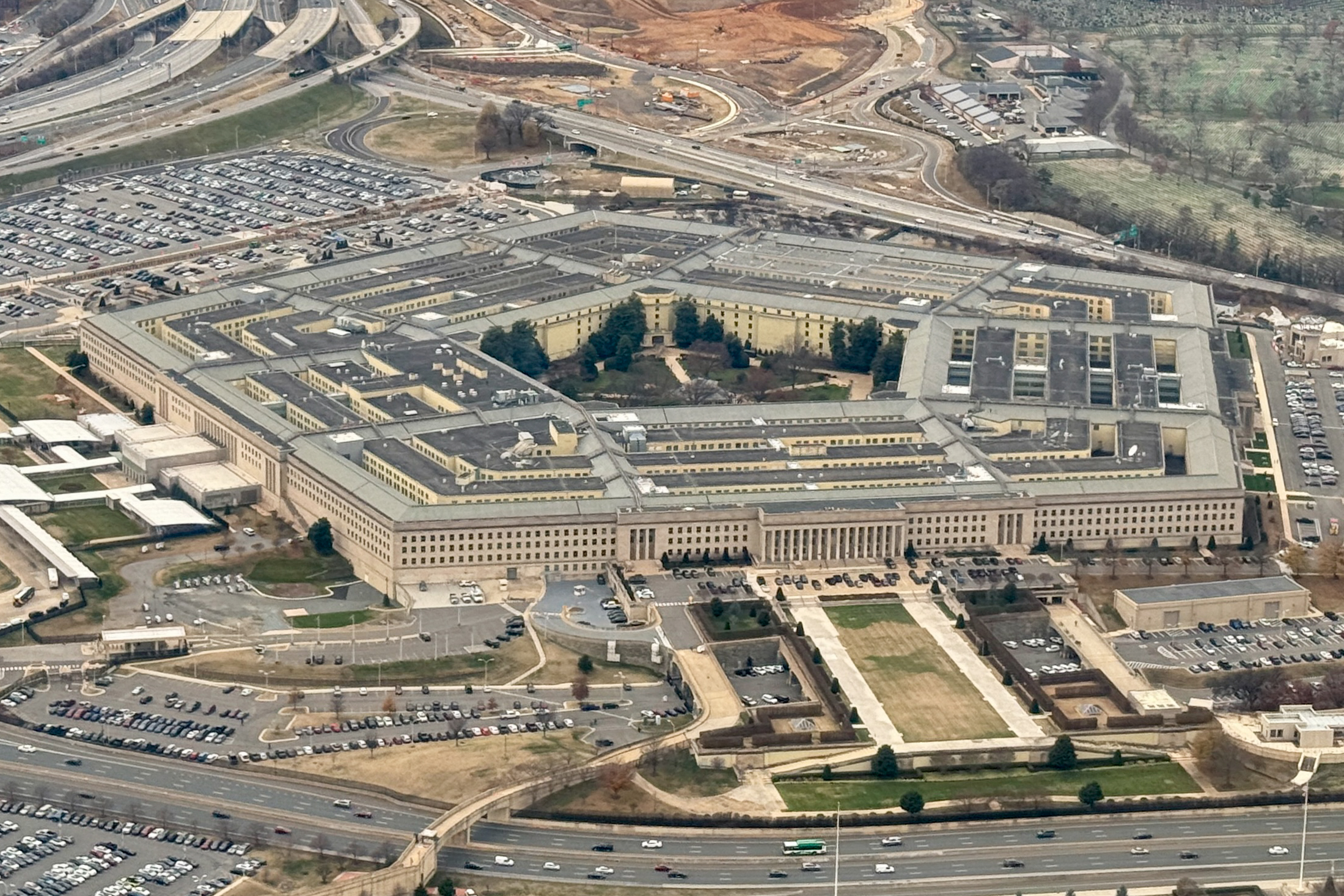
The Pentagon is asking Congress for a record $1.5 trillion in defense funding — and its own watchdog is raising serious questions about whether the department is ready to spend that money responsibly. Days after the Defense Department failed its ninth consecutive financial audit, the Pentagon’s Inspector General released a report outlining the seven most pressing challenges the department must confront in the year ahead.
The Inspector General’s annual report doesn’t rank these challenges in order of priority, but it covers everything from the growing threat posed by China to the financial transparency problems that have plagued the Pentagon for years. Here’s what the watchdog found.
Fraud Risks and Financial Accountability
The IG report was blunt about the Pentagon’s vulnerability to fraud.
“Considering the Department’s extensive operations and sizeable budget, the risk of fraud is inherent,”
the report stated, pointing out that the Defense Department holds the largest discretionary federal budget of any federal agency — and is now seeking a 42% increase on top of that.
Eliminating fraud and passing a clean financial audit were listed among the department’s most urgent priorities. The Pentagon has never passed a full audit since Congress first required one back in 2018. At that time, lawmakers gave the department a decade — until December 31, 2028 — to get its books in order. Though it failed again this year, a Pentagon official told Reuters that 14 of 25 departmental entities now pass their individual financial statements, up from 11 the prior year.
Progress is being made through new tools, including the use of artificial intelligence to process data across many of the Pentagon’s outdated systems. The department also established Joint Task Force-Audit, a group of civilians, service members, and private sector experts assembled to tackle the persistent problems.
Defense Secretary Hegseth has made eliminating government waste a centerpiece of his tenure. Amid an investigation into his own use of the Signal messaging app, he issued a memo calling for reforms to the IG office itself, telling military leaders that its systems had been
“weaponized, putting complainers, ideologues and poor performers in the driver’s seat.”
Defending the Homeland and Western Hemisphere
The Trump administration’s 2026 National Defense Strategy elevated the defense of the U.S. homeland and Western Hemisphere to the top of the military’s priority list — above even countering China. It also formally declared the “Trump Corollary to the Monroe Doctrine,” asserting American dominance in the hemisphere and prioritizing U.S. access to the Panama Canal and the Gulf of Mexico.
The IG flagged strain on forces currently deployed to the U.S. southern border and said it is actively investigating the effectiveness of domestic National Guard deployments. The report also highlighted cybersecurity gaps in critical infrastructure and shortfalls in the military’s ability to counter unmanned aerial systems near key installations.
Deterring China in the Pacific
Even as China drops to second on the priority list, it remains a central concern. The U.S. is investing heavily in its posture within the First Island Chain — a string of Pacific archipelagos considered crucial to deterring Chinese military action. The IG identified specific weaknesses, including problems
“with the readiness of forward-stationed logistics networks, condition and availability of prepositioned equipment, resilience of contested maritime sustainment routes, and the Department’s ability to disperse and operate airpower from multiple locations in the U.S. Pacific Command area of responsibility.”
The military services are actively retooling for a Pacific fight. The Army, for example, is accelerating development of the Cheyenne II, a next-generation assault tiltrotor aircraft purpose-built for operations in the Pacific theater.
Burden-Sharing With Allies
Getting allies to pay more for their own defense has become a defining theme of the Trump administration, from rotational forces in Europe to counterterrorism partnerships in Africa to deterrence arrangements in the Indo-Pacific.
The IG report drew on a decade of findings on the subject, noting that the office
“identified lessons learned from 10 years of reports related to burden sharing with international partners, noting lack of proper reimbursement by international partners for supplies and services provided by the Department.”
No specific countries were named.
Defense Industrial Base: Production and Accountability Gaps
The IG continued to find that major defense contractors are falling short of their commitments — and that the Pentagon is often too dependent on them to push back. The report stated that the Defense Department
“is sometimes so dependent on certain contractors that it continues to give them funds even when they fail to deliver or delay delivery by years.”
Contractors have also failed to deliver agreed-upon quantities of munitions on time, leading to reduced stockpiles of weapons considered critical to U.S. military readiness. Earlier this year, a separate watchdog finding revealed that the Pentagon’s drive to field weapons faster had bypassed acquisition safeguards designed to ensure new systems actually work before they reach troops.
Supporting Troops and Their Families
The report also highlighted quality-of-life concerns for service members. Areas of concern include overseas medical care and patient safety, the health of military trainees, the condition of on-base housing, and gaps in how allegations of child abuse at childcare centers are reviewed and resolved.
In response to some of these issues, a new Pentagon directive now requires all military services to resolve emergency living conditions within 24 hours or relocate the affected service member to suitable housing.