The potential redefinition of the Voting Rights Act by the Supreme Court could reshape political landscapes across the United States. This shift could largely benefit Republicans in their quest to secure a long-term majority in the House of Representatives.
Recent deliberations by the Supreme Court’s conservative majority suggest a possible restriction on race-based districting under Section 2 of the Voting Rights Act, a key component of the law that ensures legislative districts facilitate minority representation. This provision has led to the establishment of majority-Black and Latino districts, typically favoring Democrats, even in some of the most conservative states. Read more here.
A pivotal case from Louisiana, where federal judges mandated a redraw of the state’s congressional map to create a second majority-Black district, underscores this issue. If the court sides with the plaintiffs, the district could revert to likely Republican control, potentially affecting another Democratic-held seat established under the Act.
The ramifications could extend throughout the South, where the Democratic group Fair Fight has identified 19 Democratic seats mandated by the Voting Rights Act that Republicans might redraw to their advantage.
“I’m really worried that, given the political climate that we’re in and the conservative nature of this court, and then rolling back affirmative action and giving more executive power to the president, that this will not end well for us,” commented Rep. Terri Sewell, an Alabama Democrat.
The GOP’s Potential Congressional Gains
Republican leaders have expressed frustration with Section 2, arguing that it poses a constitutional dilemma by compelling race-based districting while also threatening legal action if minority representation isn’t adequately considered. “We are damned if we do and damned if we don’t,” said Louisiana Attorney General Elizabeth Murrill.
Should the court’s decision favor Louisiana, some Democrats hope for a narrow ruling rather than a comprehensive weakening of the Voting Rights Act. Still, any adjustments are unlikely to affect district maps until after the 2026 midterm elections, given the current tight control of the House by a three-vote Republican majority.
Jonathan Cervas, a political scientist at Carnegie Mellon University, noted that eliminating Democratic districts complicates efforts for Democrats to form a majority. He added, “None of us can even know this,” highlighting the limits on potential Republican gains.
Impact of Gerrymandering and Future Map Changes
Even without Section 2, Democratic-leaning voters would remain, forcing Republicans to incorporate them into existing Democratic districts. In Tennessee, for example, a partisan map has already resulted in seven Republican and one Democratic seat. Cervas pointed out that altering the Memphis district to favor Republicans could risk turning surrounding districts competitive.
Other states, like Missouri and South Carolina, face similar challenges with their heavily Democratic seats, which comply with the Voting Rights Act. States like Georgia are too politically competitive to remove Democratic seats without risking Republican ones. However, Mississippi might find it easier to eliminate its single Democratic district, while larger states like North Carolina and Florida could redraw maps more freely.
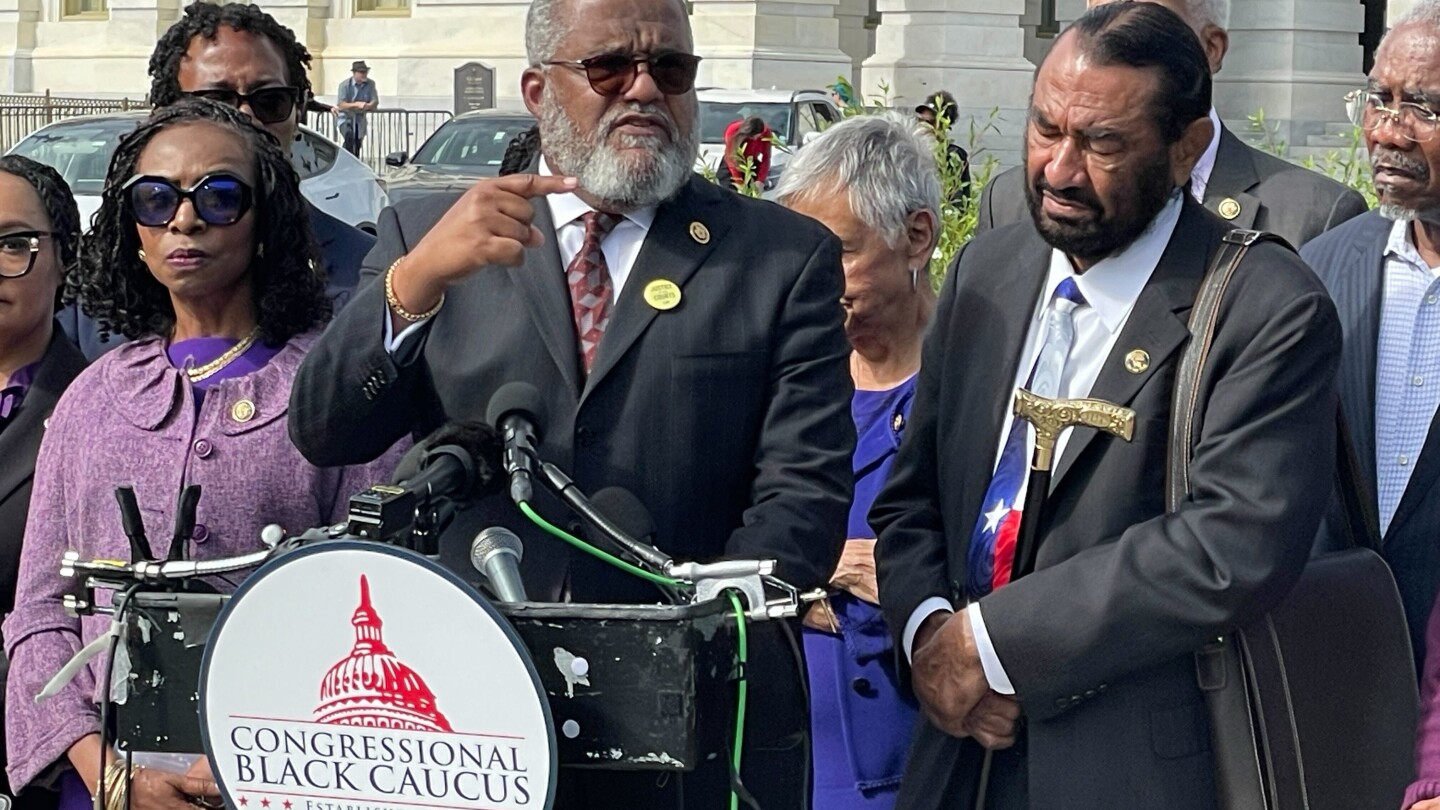
Congressional Black Caucus members have warned that a broad ruling against Section 2 could lead to extreme gerrymandering, leaving many Black voters without substantial representation. Rep. Troy Carter of Louisiana remarked, “If you take away the elements that create the opportunity for it to look like its people, it won’t be a democracy as we hoped it would be.”
Anticipated Delays in Implementing Map Changes
Republicans are intensifying efforts to redraw district maps in response to President Donald Trump’s push to optimize winnable seats for the 2026 midterms. However, a favorable Supreme Court decision might not come in time to influence those elections, as it could be issued after filing deadlines for congressional races.
While some states might attempt drastic measures to utilize a favorable ruling, most changes are expected to be incorporated into maps for 2028 and beyond. This uncertainty leaves Democrats, like Rep. Sheila Cherfilus-McCormick of Florida, wary of potential aggressive redistricting.
House Minority Leader Hakeem Jeffries emphasized the importance of the Voting Rights Act, stating, “The Voting Rights Act is the most important piece of civil rights legislation ever enacted and continues to remain relevant in an environment where there are people across this country who want to undermine our free and fair elections, particularly as it relates to communities of color.”
According to Kareem Crayton from the Brennan Center for Justice, the broader impact of any legal changes would affect state and local government offices more significantly than Congress.