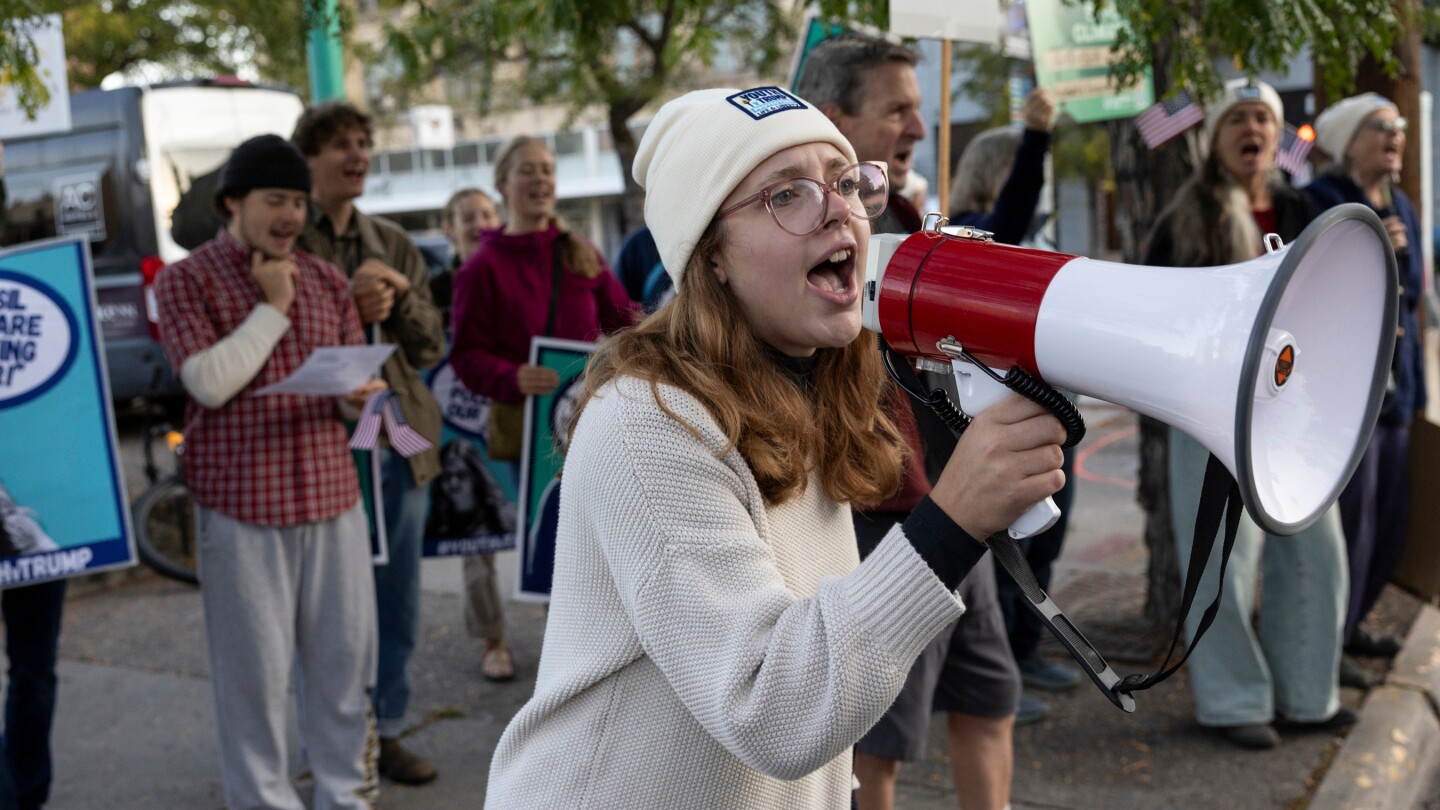
In a significant legal development, a federal judge in Billings, Montana, has dismissed a lawsuit initiated by youth climate activists. The lawsuit aimed to challenge former President Donald Trump’s executive orders, which favored fossil fuels over renewable energy sources, arguing that these orders exacerbate climate change.
U.S. District Judge Dana Christensen acknowledged the strong evidence presented by the plaintiffs showing the adverse impacts of climate change. However, he stated that their request was beyond judicial capabilities, as it required creating environmental policies, which is not within the court’s jurisdiction.
The group of 22 plaintiffs, who had previously succeeded in a landmark climate trial against the state of Montana, argued during a recent hearing in Missoula that Trump’s actions to increase drilling and mining and to discourage renewable energy posed a significant threat to children and the planet.
Amid rising concerns about climate change, a United Nations agency reported a record increase in carbon dioxide levels in the atmosphere, contributing to severe weather conditions.
Legal experts noted the challenges faced by the young activists, represented by Our Children’s Trust, due to the absence of a constitutional provision in the U.S. Constitution that guarantees a “right to a clean and healthful environment,” unlike the Montana state constitution.
White House spokeswoman Taylor Rogers described the ruling as a triumph for the administration, emphasizing the agenda to establish American “energy dominance.” “President Trump saved our country from Joe Biden’s wildly unpopular Green Energy Scam and he will continue to ‘DRILL, BABY, DRILL’,” Rogers asserted in a statement.
Judge Christensen, in his 31-page ruling, explained that the injunction sought by the activists would have effectively necessitated a return to the environmental policies of the Biden administration. This would involve extensive monitoring of federal agency actions related to climate change since Trump took office, making it “an unworkable request.”
Despite the setback, the climate activists, led by Julia Olson, chief legal counsel at Our Children’s Trust, plan to appeal the decision. Olson stated, “Every day these executive orders remain in effect, these 22 young Americans suffer irreparable harm to their health, safety, and future.”
Similar legal efforts have faced challenges before, as evidenced by a previous federal climate lawsuit in Oregon that lasted a decade, only to be declined by the U.S. Supreme Court earlier this year.
Judge Christensen expressed concern over the harms of climate change but clarified, “This concern does not automatically confer upon it the power to act.”
The U.S. Department of Justice, alongside over a dozen states led by Montana, supported the dismissal. Acting Assistant Attorney General Adam Gustafson described the lawsuit as a broad and unfounded challenge to Trump’s energy policies. Montana Attorney General Austin Knudsen supported the ruling, criticizing the lawsuit as a “show trial” that wasted taxpayer money.
While a few states, including Montana, enshrine environmental protections in their constitutions, the ruling reflects ongoing challenges for climate activists seeking federal judicial intervention.