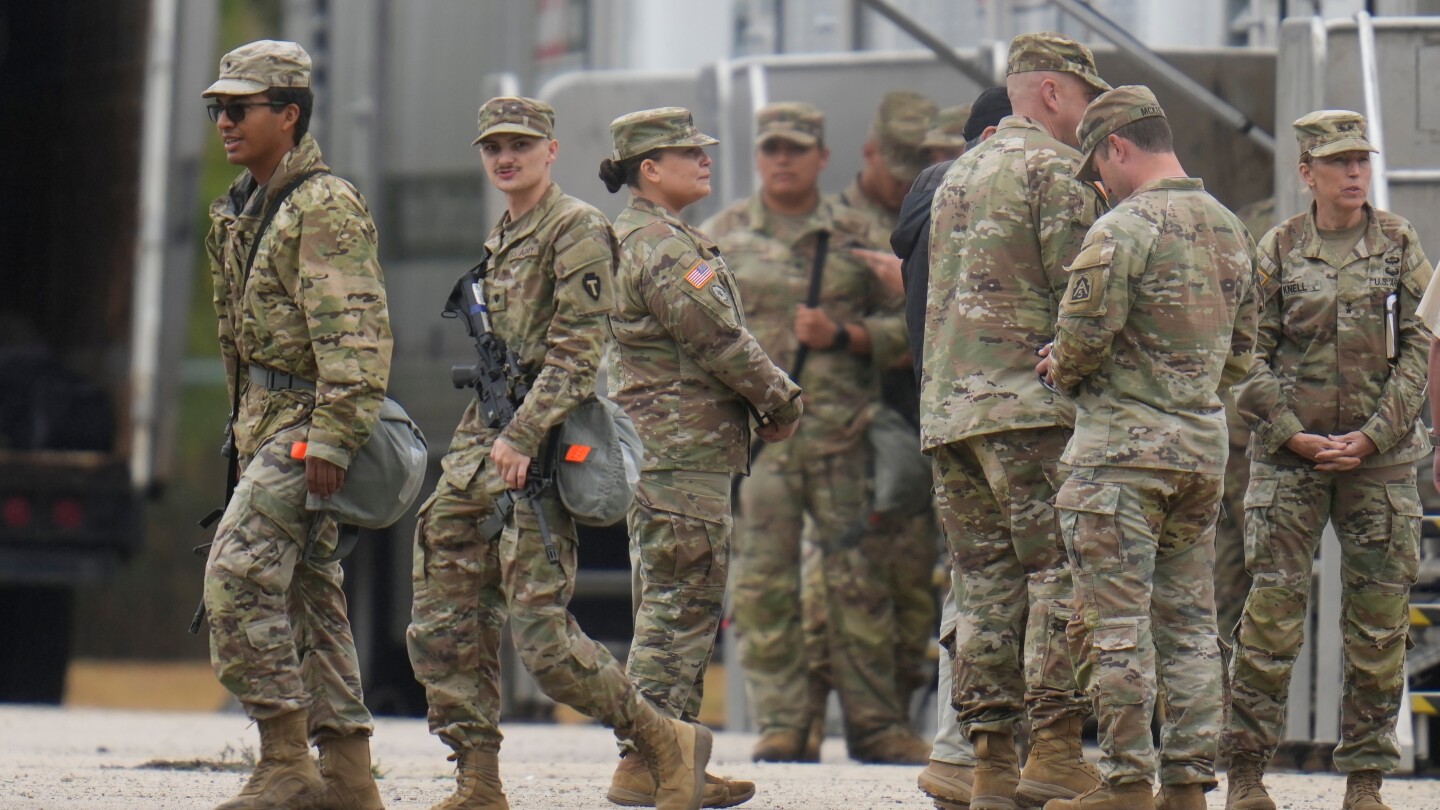
In a significant legal move, the Trump administration has appealed to the Supreme Court in an effort to deploy National Guard troops in Chicago. This request amplifies the ongoing tension between President Donald Trump and Democratic governors regarding the use of military forces within U.S. borders.
The administration’s emergency appeal was prompted by a court ruling that temporarily blocked the deployment of Guard members from Illinois and Texas for immigration enforcement activities. The lower court’s decision was upheld by a federal appeals court, maintaining the block for at least two weeks.
Historically, the conservative-leaning Supreme Court has often sided with Trump in emergency appeals. Notable decisions have allowed the administration to implement policies such as the transgender military ban and to make significant budgetary and administrative changes.
U.S. District Judge April Perry, in her ruling against the deployment in Illinois, highlighted the lack of substantial evidence suggesting a “danger of rebellion” linked to Trump’s immigration policies. Despite this, Solicitor General D. John Sauer argued that the ruling “impinges on the President’s authority and needlessly endangers federal personnel and property.”
Meanwhile, tensions are also high in the Chicago suburb of Broadview, where a protest outside a U.S. Customs and Immigration Enforcement facility led to the arrest of eleven individuals. Law enforcement had delineated specific “protest zones” for demonstrators. The area has been a flashpoint with federal agents previously deploying tear gas during protests.
The legal challenges are not isolated to Illinois. In Oregon, a federal judge has also temporarily halted the deployment of National Guard troops. Similarly, in Tennessee, Democratic officials have filed a lawsuit to prevent the Guard’s continued presence in Memphis, arguing that the deployment violates the state constitution.
Memphis City Council member JB Smiley expressed concerns that the deployment “sets a dangerous precedent for military intrusion into local communities.” Despite these objections, troops have been patrolling Memphis since October 10, though they lack arrest powers.
Governor Bill Lee, with Trump’s backing, justified the deployment as a measure against crime, stating, “We’re in a unique spot in this city to have the resources available to us to remove the crime element in Memphis.” Memphis has long struggled with violent crime, though recent statistics indicate some improvement.
Elsewhere, in California, a judge ruled in September that the National Guard deployment in Los Angeles was illegal. While thousands of troops were initially sent, only 300 remained at the time of the ruling, and the judge did not mandate their removal.