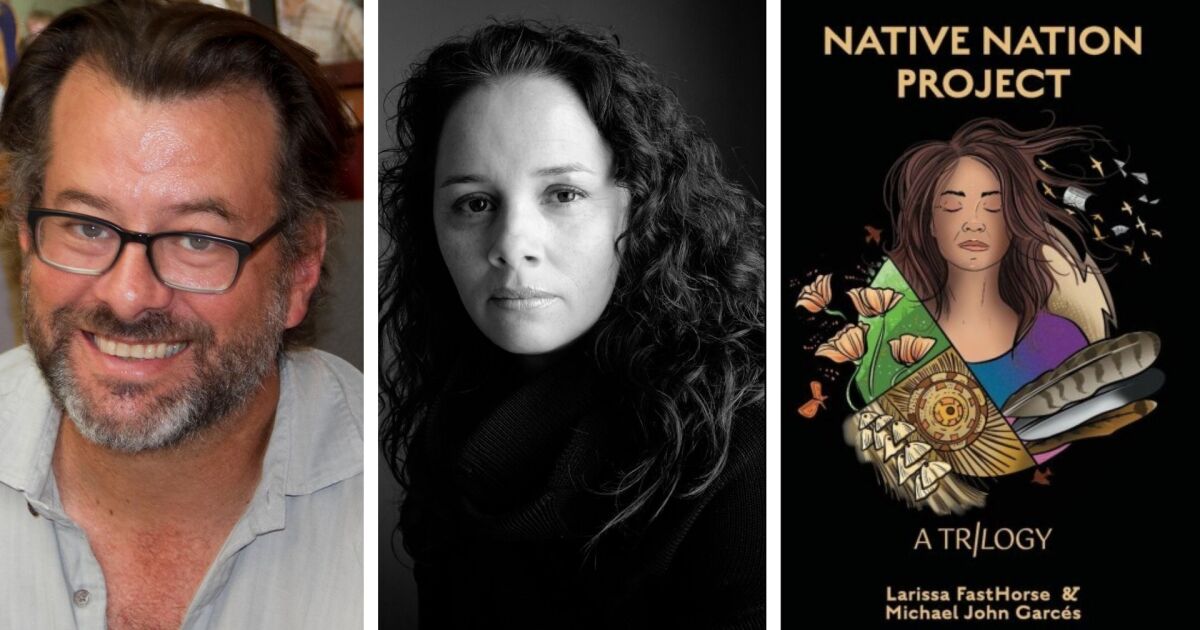
In an ambitious effort to capture the diverse voices of Indigenous communities, Larissa FastHorse and Michael John Garcés have spent years engaging with tribal members across the United States. Their work in “talking circles” has culminated in a trilogy of plays that explore the nuanced intersections of identity, culture, and history.
The plays “Urban Rez,” “Wicoun,” and “Native Nation” form the backbone of what FastHorse and Garcés call “The Native Nation Project.” The scripts, along with essays on their development, are now available in a newly released book, providing insight into the creative process that was deeply informed by conversations with Indigenous people in places like Los Angeles, South Dakota, and Arizona.
FastHorse explained during an interview how the talking circles influenced the plays by prompting participants to reflect on their names and identities. “It’s always a very large, sometimes very fraught question,” she said. Through stories shared in California, for instance, it became evident how Indigenous people adopted Spanish names for safety during periods when Native people were hunted and even declared extinct by the federal government.
The Creative Ethos
FastHorse has described the plays as offering “intentionally incompatible experiences for non-Indigenous audiences.” She elaborated on this concept, noting that the work aims to make non-Indigenous audiences uncomfortable, allowing them to feel unwelcome in spaces they might otherwise take for granted. This approach was requested by community members who hope to foster understanding and allyship.
Michael John Garcés explained how the plays are staged to immerse audiences physically and emotionally. “We created space in the urban res in a way that people had to really be touching the ground,” he said. The experience often left audience members grappling with uncertainty, culminating in a communal circle dance that symbolized potential resolution.
Exploring Complex Themes
“Native Nation,” one of the plays in the trilogy, delves into themes such as military service among Native Americans and the complexities of gender within tribal communities. FastHorse highlighted that Native Americans serve in the military at a higher rate than any other racial group, driven by a desire to protect their lands and people.
Gender identity is another significant topic explored in “Native Nation.” A scene featuring a trans character’s role in a traditional ceremony sparked important conversations within the community. Garcés recounted a performance where a community leader expressed anger—not at the play itself, but at the lack of open dialogue about such issues.
The plays aim to surface these conversations, not to provoke, but to reflect the concerns and narratives that community members want to see represented. FastHorse and Garcés are committed to centering community voices, even if it means addressing challenging topics.
The collection of plays, “Native Nation Project,” is a testament to the power of art as a medium for dialogue and understanding. As FastHorse and Garcés continue their collaboration, they remain dedicated to amplifying Indigenous stories and perspectives.