This report has been updated.
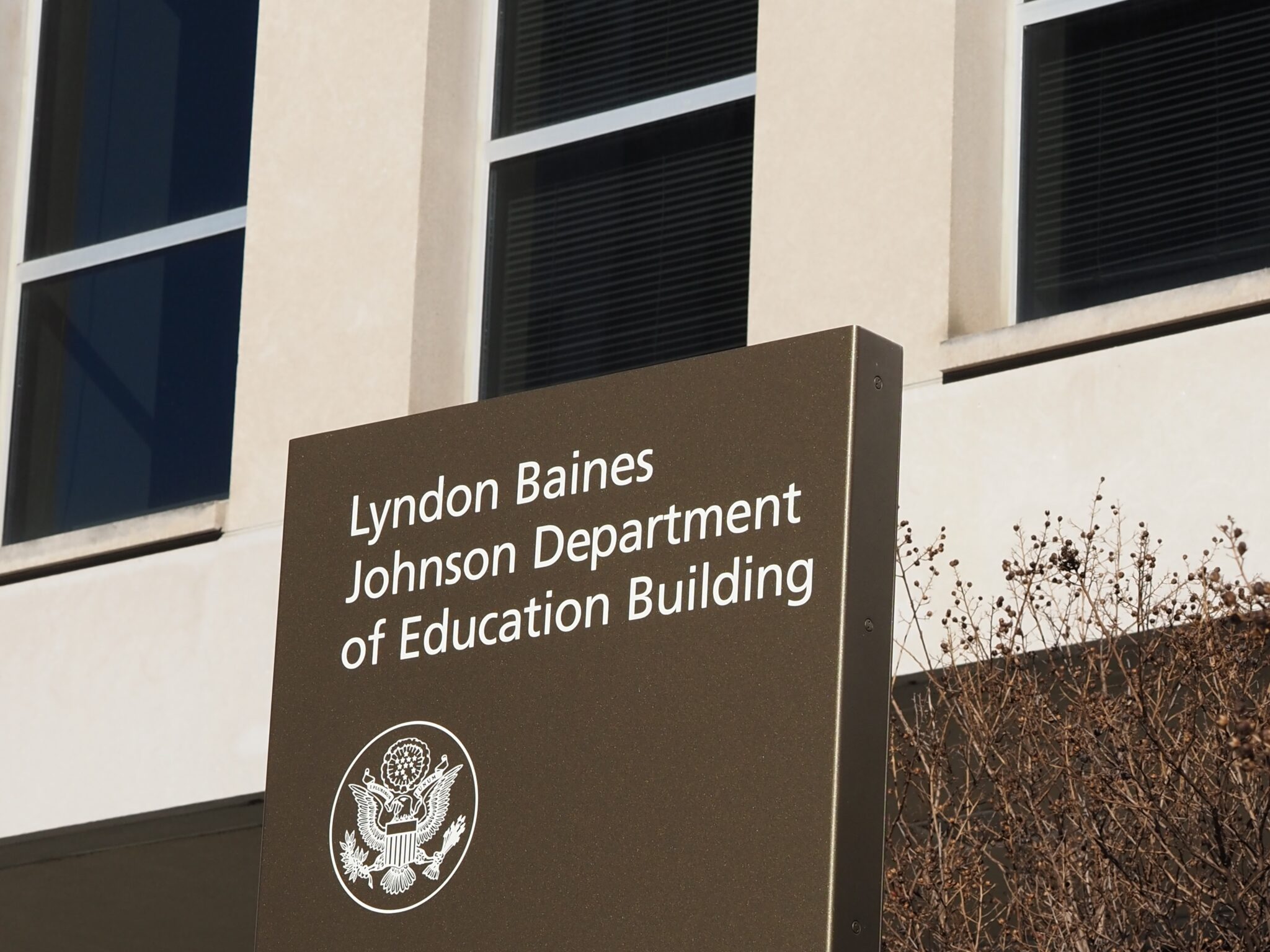
WASHINGTON — In a bold move reflecting its long-term vision, President Donald Trump’s administration on Tuesday unveiled six interagency agreements to redistribute several functions of the U.S. Department of Education to other federal departments. This strategic realignment, part of Trump’s ambition to decentralize education governance, has sparked immediate controversy among Democrats and labor unions.
With the agreements involving the departments of Labor, Interior, Health and Human Services, and State, this initiative echoes Trump’s campaign promise to return educational control to the states. Education Secretary Linda McMahon, appointed to execute this plan, explained, “The announcement really follows the plan that President Trump has had since Day One, and that is returning education to the states — he fully believes, as do I, the best education is that that’s closest to the child and not run from a bureaucracy in Washington, D.C.” McMahon described the initiative as a “test run” to evaluate efficiency gains by transferring these responsibilities.
Despite the administration’s intentions, this endeavor faces significant legislative hurdles. The Senate, where Republicans hold 53 seats, requires a minimum of 60 votes to advance most legislation, complicating the enactment of permanent changes. The U.S. Supreme Court recently allowed the Trump administration to proceed temporarily with a downsizing plan for the Education Department, initially outlined in a March executive order.
Framework of the Education Reorganization
According to department fact sheets, the Education Department will retain statutory responsibilities but transfer the management of certain programs to other agencies. A notable shift involves the Department of Labor, which will now handle elementary and secondary education programs previously managed by the Office of Elementary and Secondary Education. This includes oversight of technical assistance and program integration, as outlined in a fact sheet.
Additionally, the Labor Department will assume a larger role in overseeing higher education grants like TRIO and GEAR UP, as well as other significant programs, as detailed in another agreement. The Interior Department will expand its role in Indian Education programs, and the Health and Human Services Department will oversee the National Committee on Foreign Medical Education and Accreditation’s work, among others.
The State Department will oversee all foreign education programs under its new agreement, as per a fact sheet.
Political and Union Reactions
Senator Patty Murray criticized the move as an “outright illegal effort to continue dismantling the Department of Education,” emphasizing the potential negative impact on students and families. Representative Rosa DeLauro echoed similar concerns, suggesting this strategy is less about efficiency and more about undermining the department’s purpose.
Representative Bobby Scott urged bipartisan opposition to what he described as an “inefficient and wasteful” transfer of programs, warning of inconsistent federal education policy enforcement.
Union leaders also voiced strong opposition. Rachel Gittleman of the American Federation of Government Employees labeled the move “unlawful” and detrimental to the students’ educational access. Randi Weingarten of the American Federation of Teachers argued that dispersing services across multiple departments would lead to confusion and inefficiency, threatening the foundational mission of public schools.