Indo-Pacific Air Defense: A Rising Priority for the U.S. Army
The role of the U.S. Army’s Indo-Pacific air defenders has shifted from the periphery to the forefront of military strategy, gaining significant traction amid rising tensions in the region. As geopolitical challenges intensify, this position is now one of the most sought-after roles within the military.
During the 2026 Land Forces of the Pacific Symposium in Hawaii, Brig. Gen. William Parker, commander of the 94th Army Air and Missile Defense Command (AAMDC), reflected on the past, recalling early days when air defense was undervalued. He humorously mentioned standing outside a headquarters with a sign reading, “Will work for food,” highlighting the stark contrast in the command’s current global demand.
“But now, I’m a cool guy,” Parker stated, emphasizing the command’s growing importance. “We are a very, very much demanded resource globally because of the challenges within the operating environment that we face.”
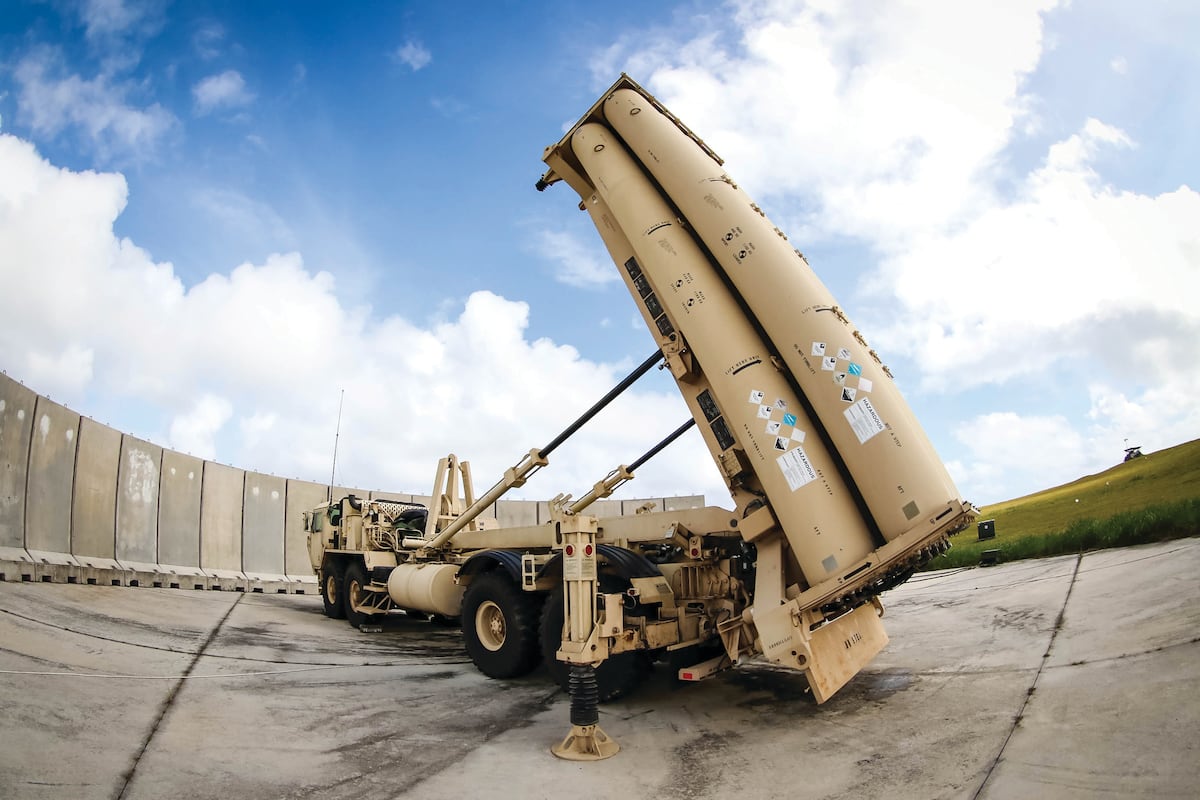
The 94th AAMDC is tasked with safeguarding essential assets across the vast Indo-Pacific theater against potential threats including missiles, aircraft, and drones. Since its reactivation in 2005, the command has been pivotal in providing layered defense strategies amid escalating security concerns from nations like China and North Korea.
Parker expressed the urgency felt over the past decade as China advances its military capabilities. He remarked on the ongoing modernization of the U.S. air and missile defense systems, describing it as the most significant upgrade in history.
A key development in this modernization is the deployment of the Integrated Air and Missile Defense Battle Command System (IBCS). This sophisticated network integrates sensors, command systems, and interceptors, allowing for a customized defense against threats such as cruise missiles and drones. “The IBC’s capability really brings us to the concept of any sensor,” Parker explained. “They are the most effective shooter … that allows us to break the paradigm of having to rely solely on Patriot Radar Systems.”
Collaboration with international allies remains crucial, Parker emphasized, highlighting the importance of joint efforts in countering adversarial threats. “We can’t do any of what we do today without allies and partners,” he remarked. “We don’t fight alone, and we haven’t fought alone for a long time. Our partners help us protect our critical assets and critical formations that we have within this theater.”
In line with this cooperative approach, the U.S. military recently concluded the 41st Exercise Balikatan with the Philippine forces, a key bilateral exercise that expanded to include participation from Australia, Japan, New Zealand, France, and Canada. This exercise underscored a shift towards a multinational defense strategy in the region. “Balikatan 2026 marked a strategic evolution from a bilateral exercise to a full-scale, multinational mission rehearsal for the defense of the Philippines,” stated U.S. Navy Adm. Samuel J. Paparo, commander of U.S. Indo-Pacific Command. “That growth reflects the security environment. It reflects the sovereign choices of free nations.”
At the LANPAC event, Parker highlighted the increased involvement of partner nations as a testament to the Indo-Pacific’s strategic importance. “It’s both an interesting and challenging time,” he noted. “It’s a great time to be an air defender. If you don’t believe it, just watch the news every night.”