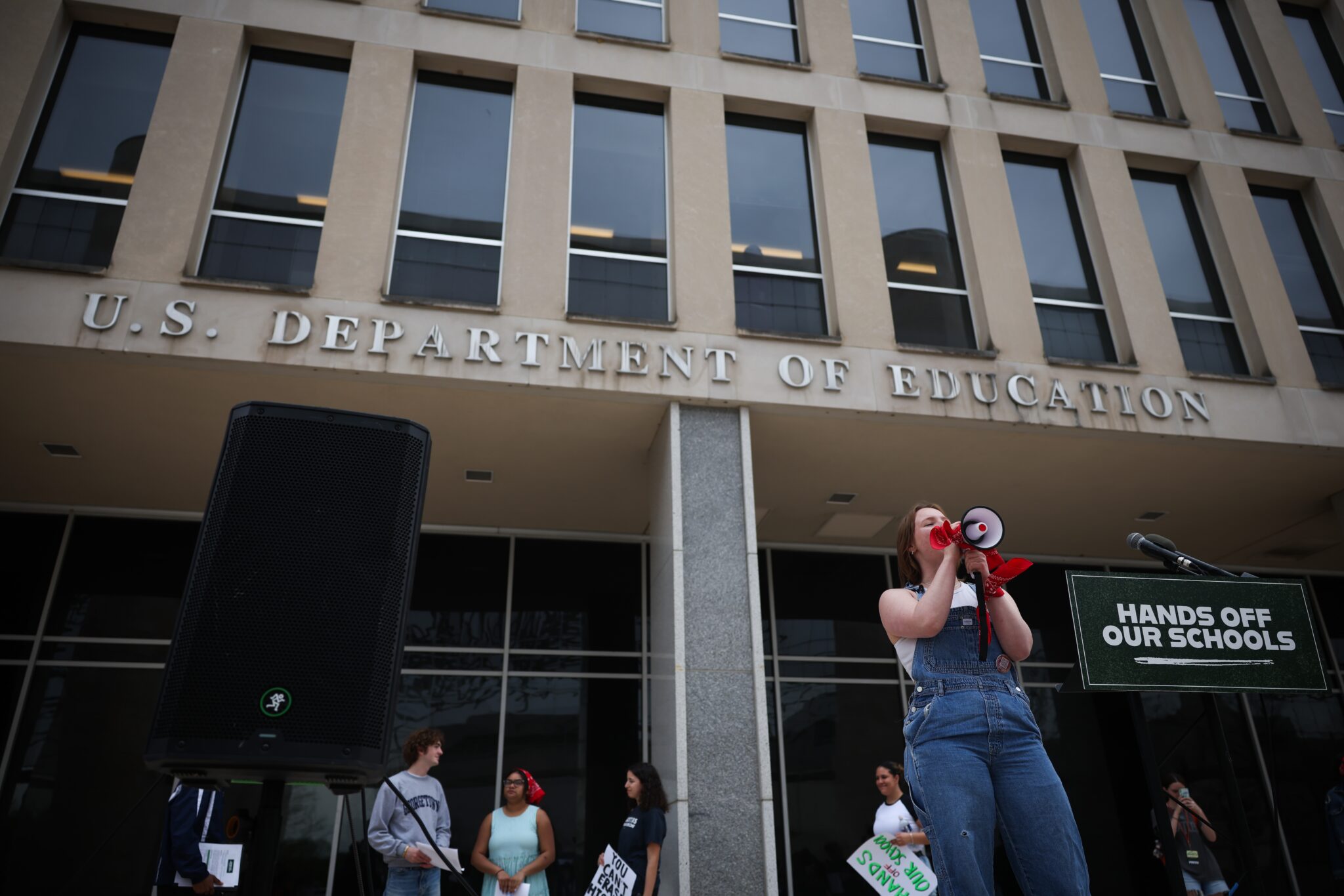
In a climate of mounting criticism, President Donald Trump faces opposition from Democratic lawmakers and student leaders over plans to overhaul the U.S. Department of Education. The proposed changes aim to redistribute the department’s responsibilities across other agencies, raising concerns about their potential impact on education nationwide.
U.S. Sen. Ed Markey from Massachusetts and Rep. Lauren Underwood of Illinois have openly criticized the initiative. Joining forces with students, they have expressed alarm over the Trump administration’s efforts to dismantle the 46-year-old Education Department. They argue that such actions could have detrimental effects on students and families.
During a virtual press conference organized by “Hands Off Our Schools,” a coalition of student leaders, Markey warned of the consequences: “When a parent or superintendent needs support or technical assistance, there will be no one to pick up the phone.” He emphasized that the dismantling of the department would “have immediate negative consequences for students, for families, for local schools nationwide.”
While the administration defends the move as a means to reduce bureaucracy and empower local entities, critics remain unconvinced. Education Secretary Linda McMahon stated at a White House briefing that the changes are designed to shift educational authority to “state education agencies, local superintendents, and school boards — entities that are accountable to you.”
Underwood, however, contends that the administration’s approach is part of a broader assault on constitutional rights and democracy. She argues, “By tearing down the Department of Education, this administration has made an explicit choice to abandon students and families.”
Concerns Over Student Loan Limits
Underwood, a registered nurse, also highlighted the potential negative impact of a proposal that would impose stricter loan limits on graduate nursing students. She described this measure as “devastating for our already overburdened nursing workforce” and a potential disaster for the healthcare system, particularly in rural areas.
Student Reactions
Students from various states, including California, Texas, Virginia, and Washington, D.C., have voiced their disapproval of the plan. Darius Wagner, a Georgetown University student, referred to the decision to shift programs as “unnecessarily cruel” and warned that other federal departments lack the resources to manage these responsibilities effectively.
High school student Ayaan Moledina from Austin, Texas, who is involved with the advocacy group Students Engaged in Advancing Texas (SEAT), stressed the importance of federal oversight. He stated, “Without a federal department, there will be no federal oversight of institutions to guarantee the basic and fundamental rights of students.”
Legal and Practical Concerns
The plan, which involves six interagency agreements with departments such as Labor, Interior, Health and Human Services, and State, has drawn sharp criticism from Democratic officials, labor unions, and advocacy groups. These entities question the legality of the effort and worry about its potential harm to students and schools.
Despite the criticism, the Education Department assured that it would “maintain all statutory responsibilities and will continue its oversight of these programs.” The department has already faced significant changes, including layoffs and downsizing, approved by the U.S. Supreme Court.