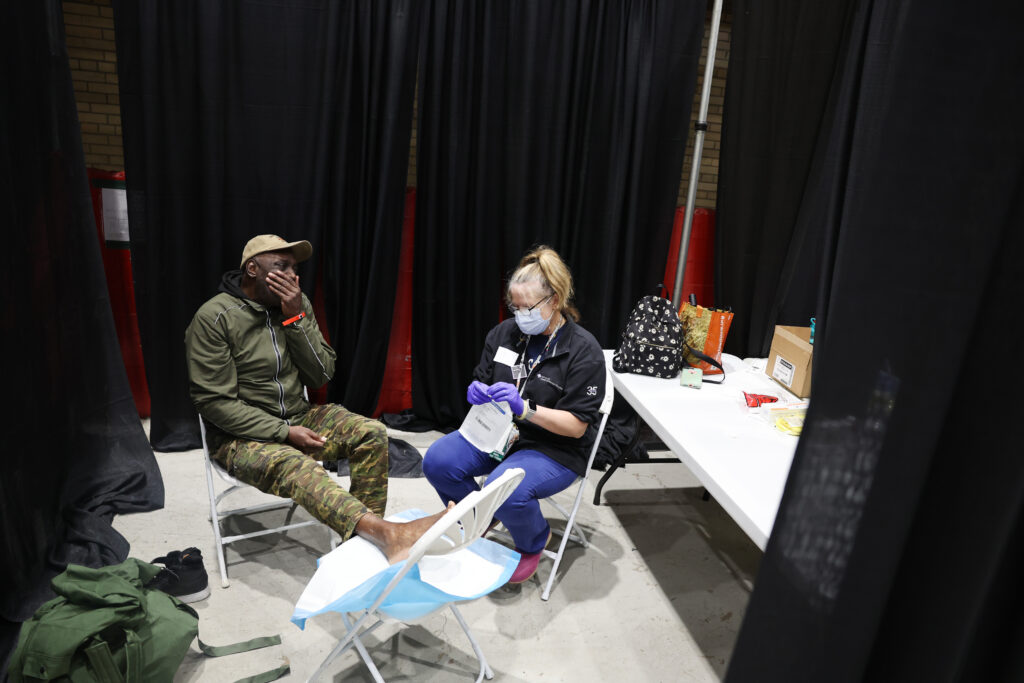
As the demand for healthcare professionals continues to rise, a new federal regulation has sparked concern among nurses aspiring to advance their careers. Zoe Clarke, a registered nurse in Asheville, North Carolina, faces potential setbacks in her educational goals due to recent changes in student loan policies.
Clarke, who has been working as an ICU nurse for two and a half years, is eager to continue her education to become a nurse practitioner or a certified registered nurse anesthetist. However, she now confronts the possibility of financial barriers, as the One Big Beautiful Bill Act has introduced new borrowing limits on federal student loans for graduate students.
The U.S. Department of Education’s recent draft rule, designed to streamline the loan process and curb tuition hikes, limits graduate students’ borrowing to $20,500 annually and $100,000 in total. Exceptions are made for students in specific professional categories, such as those studying medicine or law, who can borrow up to $50,000 per year and $200,000 in total. Unfortunately, advanced nursing degrees do not fall under this category.
Healthcare associations express concern that these restrictions will hinder the ability of many nurses to pursue advanced degrees, which are crucial for addressing healthcare shortages, particularly in rural areas. Advanced practice nurses often serve as primary care providers, and their absence could exacerbate the current shortfall of healthcare professionals.
The U.S. Bureau of Labor Statistics projects a 35% increase in demand for nurse practitioners, nurse midwives, and nurse anesthetists over the next decade. “We depend heavily on nurse practitioners,” said Sandy Reding, president of the California Nurses Association and vice president of National Nurses United. “But if they don’t have access to getting further education, we’re not going to see additional nurse practitioners come into the field.”
For many pursuing post-bachelor’s nursing programs, tuition and living costs can exceed $50,000 annually. Clarke reflects on the potential impact of the new loan caps: “Potentially, this could devastate a whole generation of nurses getting their advanced practice degrees.”
It’s a slap in the face to the nurses that go to work every day doing our very best to care for our patients.
– Sandy Reding, a president of the California Nurses Association
Educational institutions are already facing faculty shortages, with nursing schools reporting over 2,100 full-time faculty vacancies in 2022, leading to the rejection of approximately 80,000 students. The potential loss of future educators due to financial constraints may worsen this situation, impacting the training of new nurses.
Amid backlash from the nursing community, the Department of Education defended the proposal, stating that it does not reflect a “value judgement about the importance of programs” and is open to public feedback. The new borrowing limits are set to take effect on July 1, 2026.
Rural and Underserved Communities
Advanced practice registered nurses (APRNs) are essential in rural areas, often filling gaps left by physician shortages. For instance, nurse anesthetists provide 80% of anesthesia services in rural counties. Approximately 20% of APRNs nationally worked in rural settings in 2022. Heidi Lucas, executive director of the Missouri Rural Health Association, emphasizes the importance of these roles: “Putting barriers in the way to keep [nurses] from getting degrees—that’s just going to exacerbate the problems that we already have.”
Nurse practitioners serve as primary care providers for many Medicaid and Medicare patients, yet the new loan policy may deter future professionals from entering the field. “At a time when America needs more healthcare providers, we can’t afford to put more obstacles in place for nurse practitioner students,” warns Valerie Fuller, president of the American Association of Nurse Practitioners.
‘Clipping the Wings’
Rich Rasmussen of the Oklahoma Hospital Association voices concerns over the rule’s impact on certified nurse midwives and rural maternal healthcare. The restriction may compel nurses to seek private loans, which lack federal loan forgiveness benefits crucial for rural healthcare recruitment.
Teshieka Curtis-Pugh, executive director of the South Carolina Nurses Association, highlights the potential negative effects on diversity and opportunities for marginalized groups. Federal loans often support not just tuition but also essential living expenses, including childcare, for students balancing education with family responsibilities.
The exclusion of advanced nursing degrees from the professional loan category feels particularly unjust to nurses who worked tirelessly during the COVID-19 pandemic. Reding reflects on this sentiment: “We were all heroes in 2020. Now, what are we?”