With its rapid expansion, Charlotte, North Carolina, is now recognized as the quickest-growing major city in the U.S.. The city saw an increase of over 20,000 residents between 2024 and 2025, nearing a population milestone of 1 million.
This growth can be attributed to Charlotte’s appeal to businesses and individuals seeking economic opportunities and a lower cost of living.
However, the city’s infrastructure is feeling the strain of its burgeoning population, leading to a significant housing crisis. In 2026, the number of homeless individuals rose sharply to 2,018, compared to 444 the previous year.
Urban researchers focusing on urban development and housing insecurity are examining the effects of rapid urban growth, particularly how it impacts vulnerable populations.
The challenges facing Charlotte are not unique. They mirror broader trends seen across the United States, where economic growth often coincides with housing inequality.
The Housing Crisis
In Charlotte, the rental market has seen substantial increases, with median rents climbing from $1,146 in 2019 to $1,627 in 2024.
Longtime residents, especially in historically Black neighborhoods, face displacement pressures as redevelopment drives up property values, making it challenging for low-income individuals to stay.
For many, these economic pressures could mean the difference between staying housed and experiencing homelessness. There are approximately three extremely low-income households for every affordable rental unit in the area. Additionally, the percentage of those transitioning from homelessness to permanent housing dropped from 38% in 2020 to 25% in 2024.
Tiny House Villages
Where traditional infrastructure and housing markets fall short, resident-led alternatives like tiny house villages offer solutions.
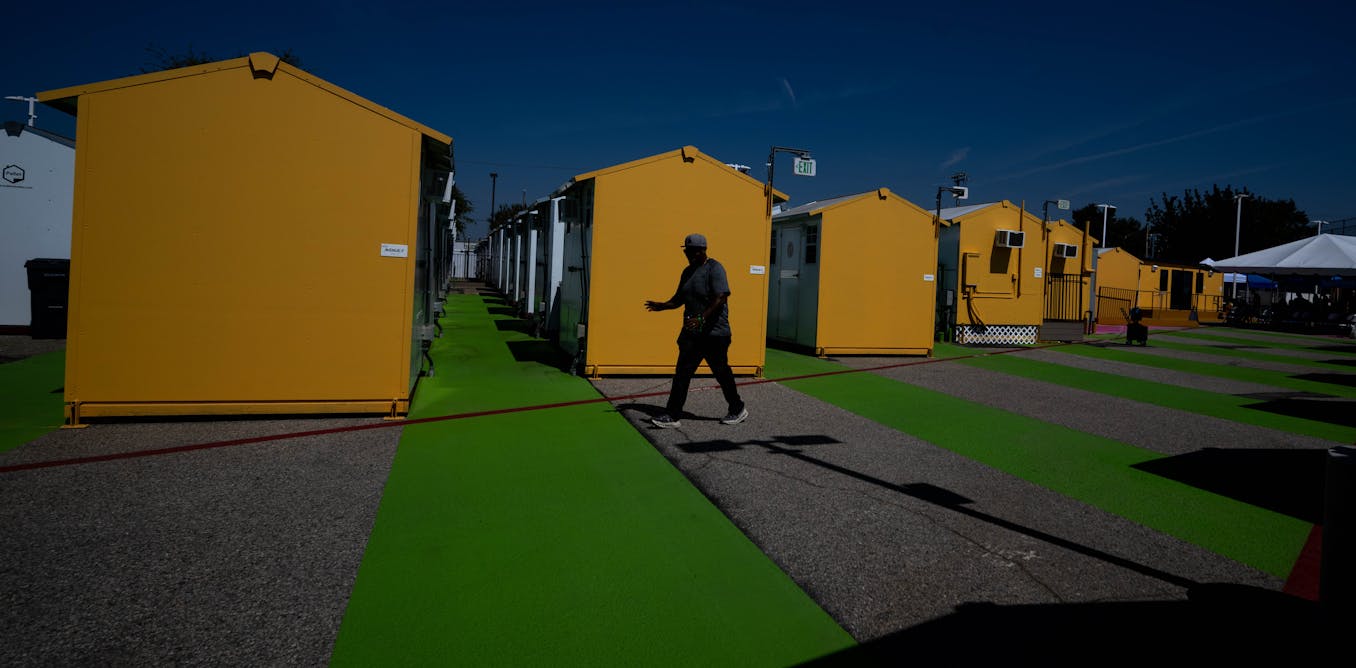
These villages, consisting of small home clusters, provide shelter and community for those experiencing homelessness.
Villages may include shared facilities like kitchens and healthcare services. Their models vary, offering either temporary or long-term housing solutions. A 2024 study noted the number of tiny house villages increased from 34 in 2019 to 123 in 2024, often driven by nonprofits and faith-based organizations.

Melina Mara/The Washington Post via Getty Images
Portland’s Dignity Village
Portland, Oregon’s Dignity Village represents a grassroots housing response. Originating from a 2000 encampment by homeless activists, it now houses around 60 people in a self-governed community.
Residents manage their village and participate in maintaining shared spaces. The City of Portland provides the land, while residents contribute through program fees and private donations.
Austin’s Community and Beyond
In Austin, Texas, a different model exists with the Community First Village, developed by a nonprofit to offer permanent housing solutions for the chronically homeless.
This larger community hosts over 500 residents and has attracted significant investment, including $35 million in federal COVID-19 relief funds for expansion.
Similar models are emerging nationwide, in cities such as Seattle, Los Angeles, and Springfield, Missouri.
Access to All
In the past, urban policy primarily tackled population decline. Today, fast-growing cities like Charlotte face the challenge of ensuring housing remains accessible amid rapid growth.
This trend is seen in other cities such as Austin and Phoenix, where population increases are coupled with persistent housing and homelessness issues.