
Why do we keep underestimating Mark Zuckerberg? As the summer unfolded, worries about AI’s impact grew, hitting Meta particularly hard. Investors expressed doubts over the company’s hefty capital expenditures, especially as Meta seemed more focused on AI than other tech giants like Microsoft.
The unexpected triumph of Muse, Meta’s personal AI agent, has sparked new conversations about AI applications. This breakthrough also highlights potential market winners and losers in this evolving landscape.
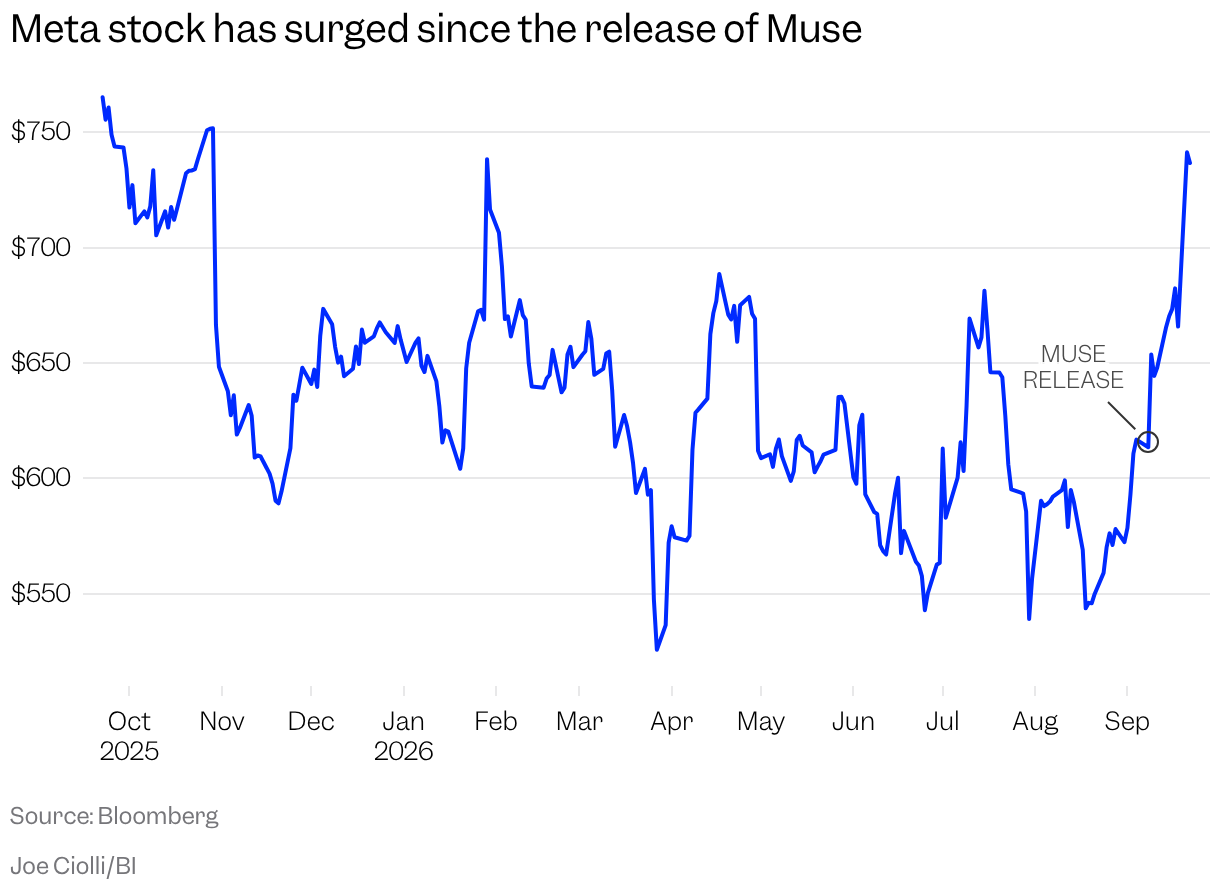
Meta itself has seen substantial gains. The company’s stock has climbed 19% since the September 8th launch of Muse, reaching its highest point since last October. This surge was largely driven by Muse’s achievement of becoming the top-ranked app on Apple’s App Store.
Despite this success, Meta’s stock performance has been inconsistent over time. However, it appears that Zuckerberg consistently finds ways to revive the company’s fortunes.
While Muse’s rapid consumer adoption is promising, converting that into revenue remains a challenge. Investors are optimistic that Meta can leverage its vast user base and app ecosystem to create a profitable new business.
The Trust Question
As Meta Connect, the company’s annual developer conference, gets underway, Muse’s impressive debut provides an opportunity for Meta to capitalize on the excitement and reveal what’s next. Meta aims to transform Muse into a revenue stream beyond advertising, offering premium tiers priced at $20 and $100 a month for intensive users. The next hurdle is to convince users to entrust their lives to Muse and pay for the service.
Muse doesn’t just gather data; it can also access apps and websites to perform tasks like shopping, travel planning, and email writing. This functionality poses a significant challenge for Meta, a company often embroiled in controversies.
A Shuffle of Winners and Losers
The story extends beyond Meta, impacting chipmakers. The Philadelphia Semiconductor Index surged over 6% in two days. Within the sector, CPU-exposed companies such as Intel, AMD, and Arm, which provide essential computing power, saw gains.
Conversely, GPU-makers like Nvidia didn’t experience the same uplift. Although previously favored for their data processing capabilities, they faced challenges in this recent market shift.
Other sectors, including cloud infrastructure, networking, cybersecurity, payments, and e-commerce, are expected to benefit from this technological evolution. Notably, Shopify has seen significant gains following its announcement to integrate Muse with Shop Pay.
The list of potential losers is less clear, but one standout is Amazon, which blocked Muse from its platform, resulting in stagnant share performance for the week. This decision underscores potential risks for closed e-commerce ecosystems.
Additionally, businesses such as online travel agencies, insurance brokers, and comparison-shopping sites could face disruption as AI automates clerical tasks, potentially eliminating the need for middlemen.
Muse serves as a reminder that Meta can still defy market skepticism. Now, it’s up to Zuckerberg and his team to prove that Muse is more than just a fleeting trend.