In the midst of political promises to revitalize the labor market, the reality of recent immigration policies paints a different picture. President Donald Trump’s aggressive immigration stance, featuring a large-scale deportation drive, was expected to open up job opportunities for American workers. However, the anticipated benefits have not materialized as expected.
Treasury Secretary Scott Bessent highlighted the administration’s approach in July 2025, asserting, “For too long, Washington ignored how mass illegal immigration artificially suppressed wages, hurting working-class Americans – especially young men.” His statement aimed to underscore the administration’s belief in the economic benefits of stricter immigration enforcement.
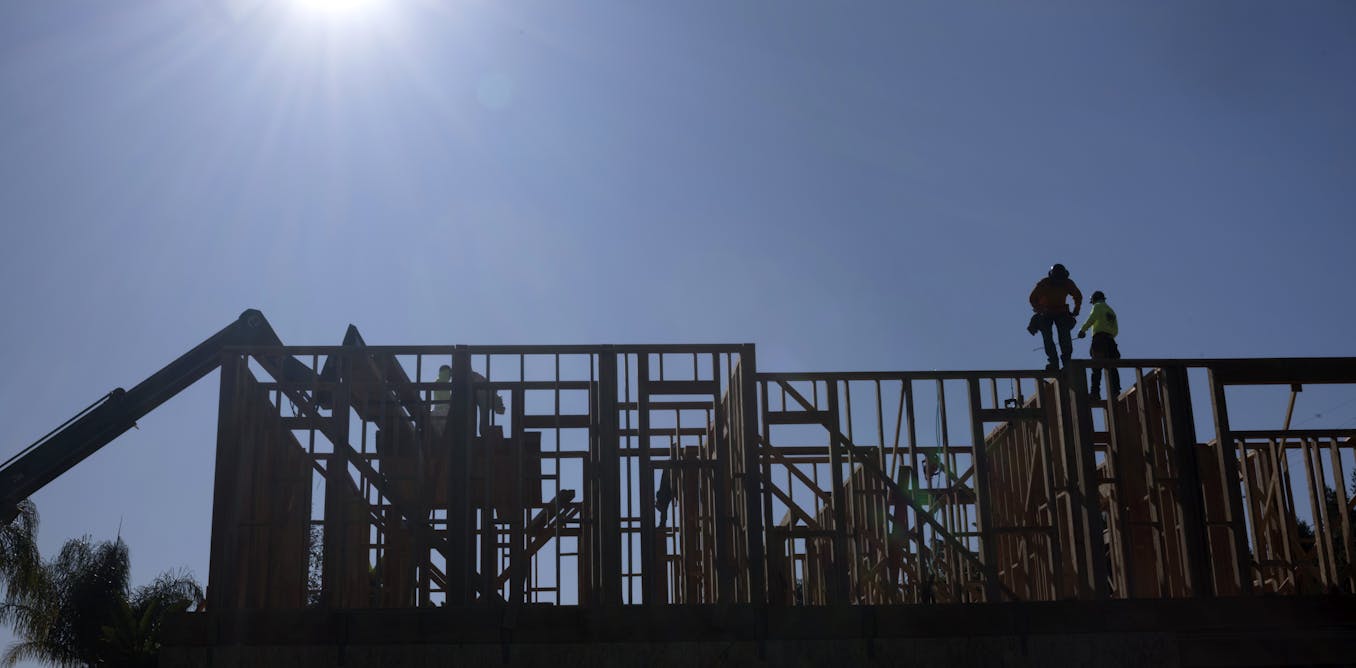
Contrary to these claims, the actual impact on the labor market during Trump’s second term has been underwhelming. Despite promises of job creation, the first year saw an increase in unemployment, a slowdown in hiring, and stagnant wage growth. The construction sector was notably affected.
Immigrant Workers’ Employment Decline
Research analyzing data from October 2023 to November 2025 reveals a significant reduction in employment among undocumented immigrants in regions with heightened ICE activities, particularly in industries like agriculture and construction. This decline wasn’t due to deportations but rather a widespread fear of arrest, a phenomenon known as the chilling effect.
A Pew Research survey from summer 2025 found that 43% of foreign-born respondents feared deportation, influencing their participation in the workforce. The chilling effect observed is notably larger than during prior mass deportation efforts.
Economic Ripple Effects
Trump’s campaign emphasized targeting criminals through ICE enforcement, but data suggests otherwise. The proportion of ICE-arrested immigrants with criminal convictions decreased significantly in 2025. The economic impact extended beyond immigrants, affecting consumer behavior and spending in cities with increased ICE raids.
For instance, Minneapolis reported an economic loss of US$203 million by February 2026, attributed to reduced revenues in sectors like hospitality and retail. A study observed a 1.7 percentage point drop in credit and debit card spending in states with intensified ICE enforcement.
Impact on U.S.-Born Workers
Despite the promise of job creation for U.S.-born workers, areas with increased ICE activities saw a decline in their employment as well. The expected wage increase did not occur, as employers reduced their demand for labor instead.
This trend challenges the assumption that deporting immigrants would lead to more jobs for American workers. Instead, it highlights how immigrants and U.S.-born workers often occupy complementary roles in the labor market.
The construction industry exemplifies this dynamic, where fewer undocumented workers lead to reduced work opportunities for U.S.-born electricians, roofers, and supervisors. This pattern of broader employment stagnation mirrors historical precedents, such as the economic effects of Obama-era deportations.
Ultimately, the research suggests that mass deportations do not create new job opportunities for American citizens, prompting a reevaluation of strategies for strengthening the labor market.

AP Photo/Abbie Parr