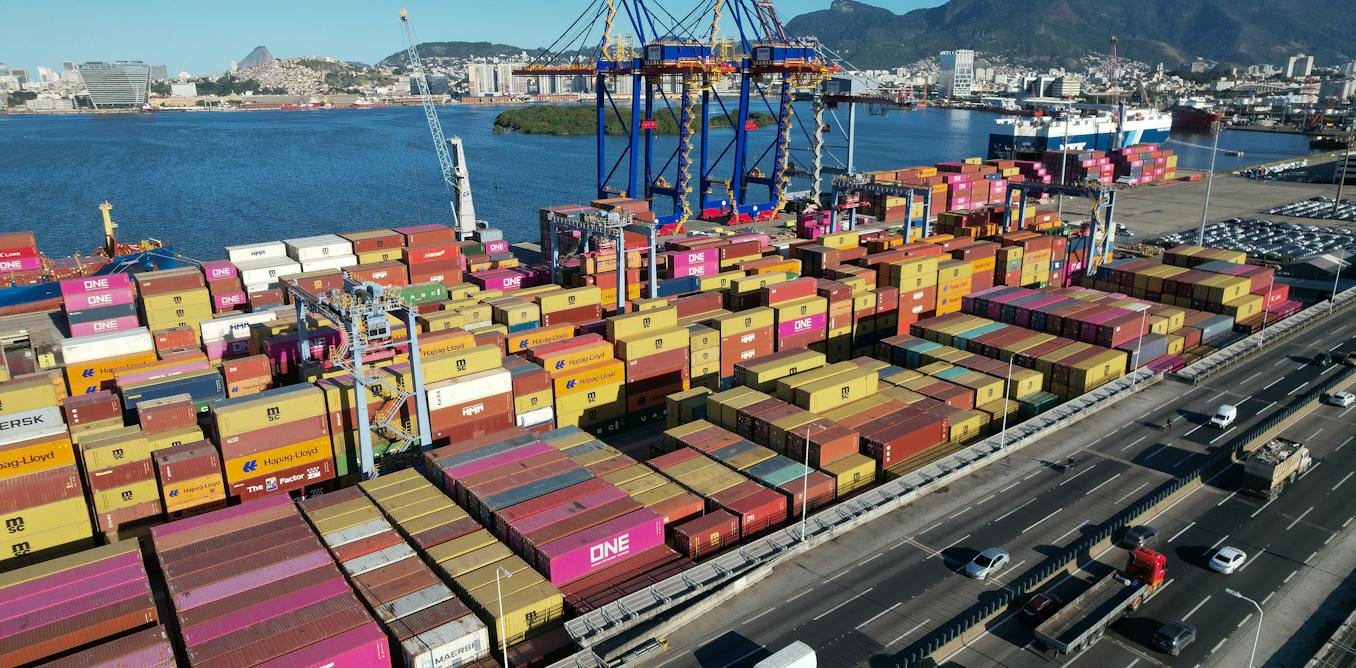
The recent escalation in trade tensions between the United States and Brazil has marked a significant shift in international economic relations. At the heart of this issue lies a decision by the U.S. to impose substantial tariffs on Brazilian imports, a move that has drawn attention from global trade analysts and political economists.
In July 2026, the U.S. announced a 25% tariff on Brazilian goods, which later increased by an additional 12.5% on certain products, culminating in a 37.5% tariff for overlapping goods by July 24. Interestingly, this decision comes despite Brazil running a trade deficit with the United States, reversing the typical rationale for such tariffs.
In 2025, the U.S. enjoyed a $14 billion trade surplus with Brazil, exporting around $54 billion worth of goods, including aircraft parts and electronics, while importing approximately $40 billion in Brazilian products like crude oil and coffee.
This tariff imposition marks President Donald Trump’s second attempt to curb Brazilian imports. In 2025, a proposed 50% tariff was struck down by the U.S. Supreme Court in early 2026, but the administration has since found alternative legal justifications for the new tariffs.
Exemptions and Economic Impact
The U.S. administration has exempted 471 Brazilian products from the tariffs, notably commodities such as coffee and crude oil, which are challenging for American buyers to replace quickly. However, manufactured goods like shoes and machinery remain subject to tariffs, impacting U.S. companies that import these industrial inputs.
Despite the tariffs affecting a relatively small portion of U.S.-Brazil trade, given the larger trading volumes with partners like Canada and China, Brazil remains a significant U.S. trade partner, ranking among the top 17 globally.

Pablo Porciuncula/AFP via Getty Images
Political Underpinnings
The tariffs are believed to be more politically motivated than economically driven. The roots of this dispute trace back to U.S. objections over a criminal case against former Brazilian President Jair Bolsonaro, an ally of Trump. As Brazil approaches a presidential election, standing firm against U.S. tariffs could bolster the current administration under President Luiz Inácio Lula da Silva.
Brazil has responded by initiating its legal framework, akin to the U.S. Section 301, to counter perceived unfair trade practices. Additionally, Brazil has taken the matter to the World Trade Organization, with China and other countries supporting its stance.

Al Drago/Getty Images)
Future Implications
While Brazil has started its legal and diplomatic processes, actual retaliatory measures remain uncertain due to the economic disparity between the two nations. The larger U.S. market and its global financial influence make it difficult for Brazil to engage in a prolonged trade conflict. However, the ongoing dispute serves as a platform for Brazil to assert its stance on the global stage and may influence the outcome of its upcoming elections.