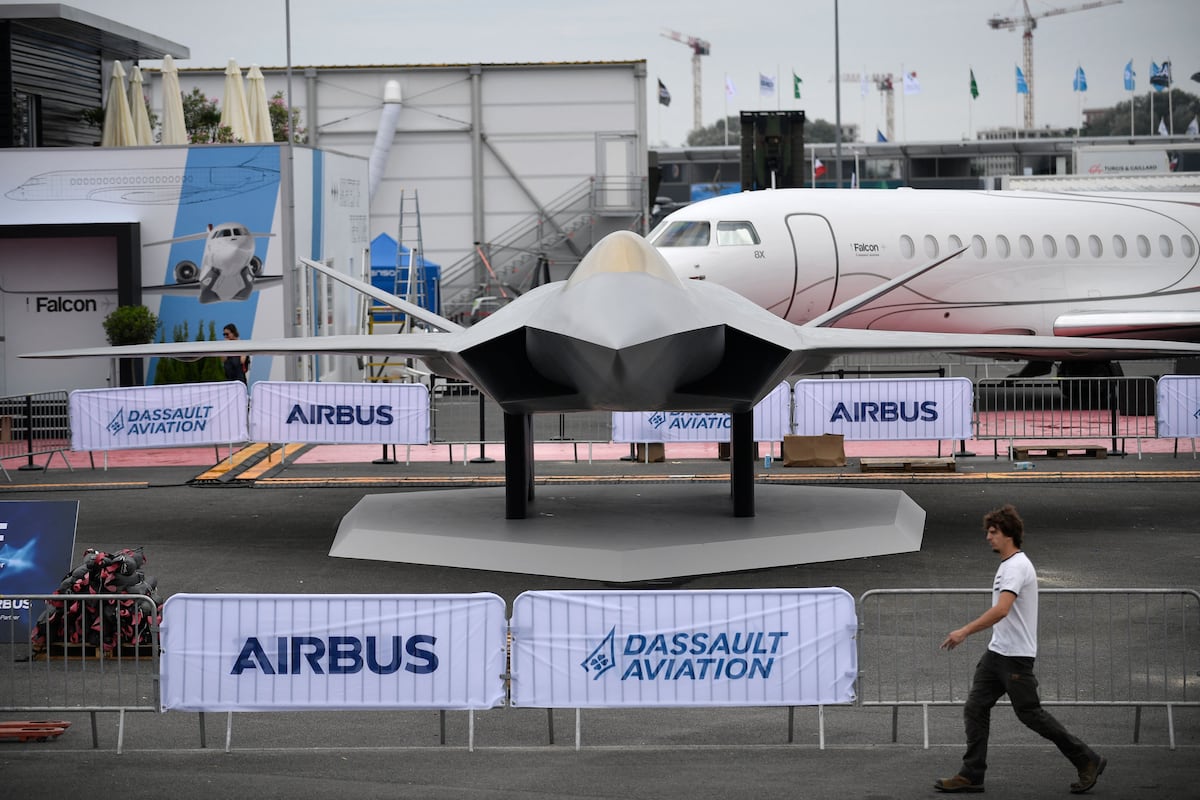
In a bid to resolve ongoing tensions surrounding the Future Combat Air System (FCAS), Airbus has signaled its willingness to consider a dual-fighter strategy. This potential solution aims to address the current impasse in the development of the next-generation fighter jet, a crucial component of the FCAS program involving France, Germany, and Spain.
Challenges in FCAS Development
Speaking at Airbus’s annual earnings presentation in Toulouse, CEO Guillaume Faury described the FCAS as being at “a difficult junction.” While certain segments like the combat cloud and remote drone carriers are advancing steadily, the next-generation fighter (NGF) component remains a sticking point. Faury emphasized, “The deadlock of a single pillar should not jeopardize the entire future of this high-tech European capability, which will bolster our collective defense.”
The FCAS initiative, launched in 2017, has encountered delays due to disputes over work distribution and technology transfer. Frustrations have grown as a previously set deadline by France and Germany to clarify the program’s future passed without resolution.
Faury noted that the onus is on the program’s clients to address governance issues, stating, “We need to find a way forward on the NGF pillar, expecting decisions from customers.”
National Requirements and Divergent Views
German Chancellor Friedrich Merz has expressed skepticism about the need for a shared aircraft model with France, indicating that divergent national requirements could hinder the project’s progress. France has consistently highlighted the need for a fighter capable of operating from aircraft carriers and carrying nuclear weapons, reinforcing its sovereign defense capabilities. This stance has been clear from early stages of the project.
The challenges in aligning these national needs have led to speculation about the future of the FCAS. Belgian Minister of Defence Theo Francken, reflecting on Merz’s comments, suggested in a social media post that “FCAS is dead according to the German Chancellor,” prompting Belgium to reconsider its observer role in the program.
Exploring New Partnerships
As Airbus considers alternatives, Faury mentioned the possibility of collaborating with new partners, although the decision lies with the program’s clients. When asked about potential alliances, possibly with Sweden or the Global Combat Air Programme led by Britain, Italy, and Japan, Faury stated, “We would be wrong to be right too early.”
Despite the hurdles, the need for a collaborative European air combat system remains, according to Faury. The transition towards unmanned aircraft is being considered by many air forces, but Faury believes there is still a significant role for manned fighters alongside growing autonomous capabilities.
Concerning the Eurodrone program, also led by Airbus, Faury noted that discussions on its future continue, with most partners supporting its continuation. Nonetheless, France is reportedly negotiating to exit the program, as reported by Challenges.