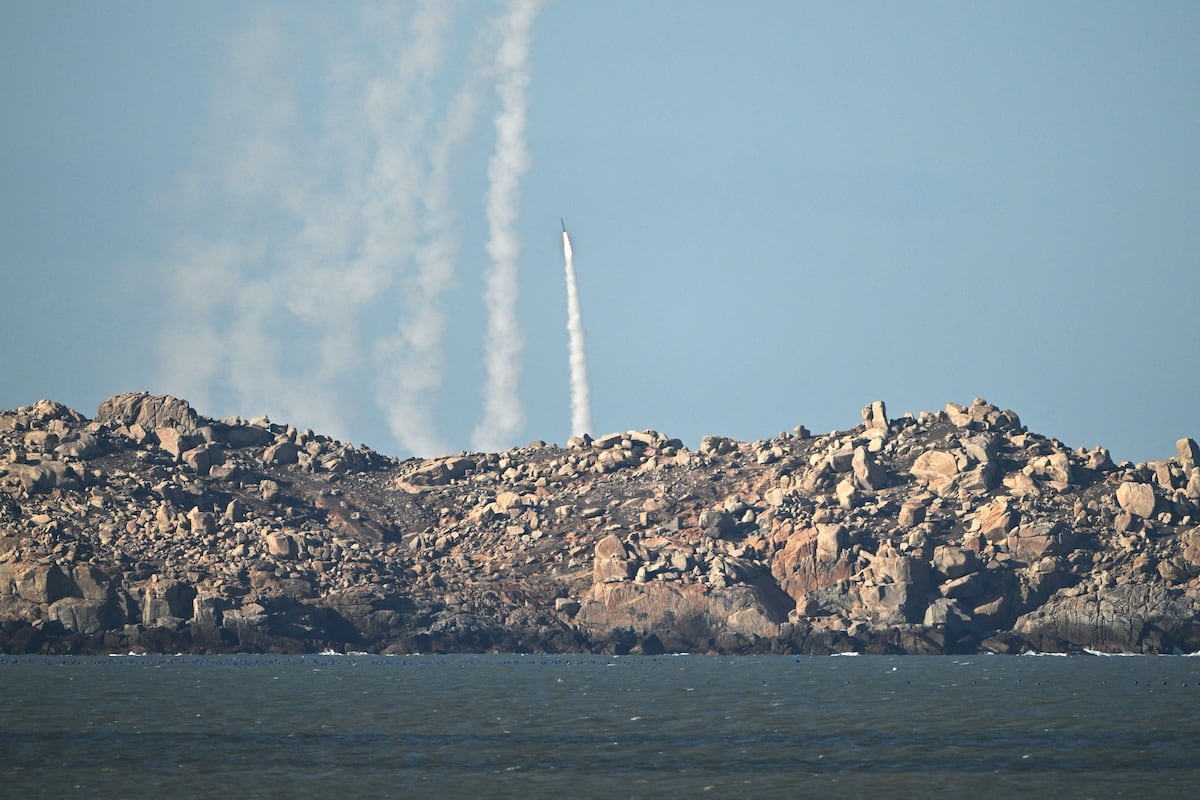
In recent weeks, the skies near Taiwan have witnessed a noticeable decrease in Chinese military aircraft activity, sparking various interpretations of this trend. Experts are dissecting potential reasons, ranging from political strategies to economic constraints, behind this unexpected reduction.
Possible Political Calculations
The People’s Liberation Army (PLA) has remained silent on the reasons for the decreased military presence near Taiwan, leaving analysts to hypothesize. One prevailing theory suggests political maneuvering; China may be seeking to maintain a peaceful atmosphere ahead of a significant meeting between U.S. President Donald Trump and Chinese President Xi Jinping. “China would hope not to anger the U.S. president before he meets with his Chinese counterpart Xi Jinping, especially with Trump tied up in the Iran war,” explained Alexander Huang, a Taiwanese professor and chairman of the Council of Strategic and Wargaming Studies in Taipei.
Beijing’s longstanding claim over Taiwan, which it considers part of its territory, adds another layer of complexity. The U.S., while not formally recognizing Taiwan, supports the island through arms sales and defense commitments as per the 1979 Taiwan Relations Act. Yet, according to Denny Roy, a senior fellow at the East-West Center in Hawaii, the drop in aircraft sorties does not equate to a concession. He stated, “If anything, Beijing would want to remind Trump that tensions are high over Taiwan and would argue that to lower tensions the US must reduce its support for Taipei.”
Impacts of Domestic Affairs
Domestic political events in China may also have influenced military activity. The annual “Two Sessions” from March 4-11, where Chinese delegates review national policies, likely diverted attention from military operations. Brian Hioe from the Taiwan Research Hub notes, “While there has been much speculation on the decline in incursions, it’s all the case that PLA military activity declines ahead of the Two Sessions.”
Additionally, the removal of high-ranking military officials earlier this year may have left a temporary void in leadership affecting operations near Taiwan, according to Huang.
Economic Considerations
Rising oil prices, exacerbated by ongoing conflicts in the Middle East, could be another factor. Jet fuel costs surged over 80%, posing potential financial burdens. Yet, China’s ability to absorb such costs suggests that while economic factors are influential, they are not decisive. “It’s definitely a waste of energy and of course a burden, but they wouldn’t have the same concern as in a democratic country,” noted Huang Chung-ting from the Institute for National Defense and Security Research.
Uncertain Future
The Taiwanese Ministry of National Defense has observed as few as two PLA aircraft sorties on certain days since early March, a stark contrast to the usual dozen or more. However, recent data indicates a return to previous levels of activity, with the ministry reporting significant sorties on consecutive days through March 19.
While the brief lull in activity has ended, experts like Hioe caution against overinterpretation, emphasizing that the return to routine sorties should not be mistaken for an escalation. “It is important not to see a return to regular activity as large-scale military exercises, as some media reports have framed it,” he clarified.