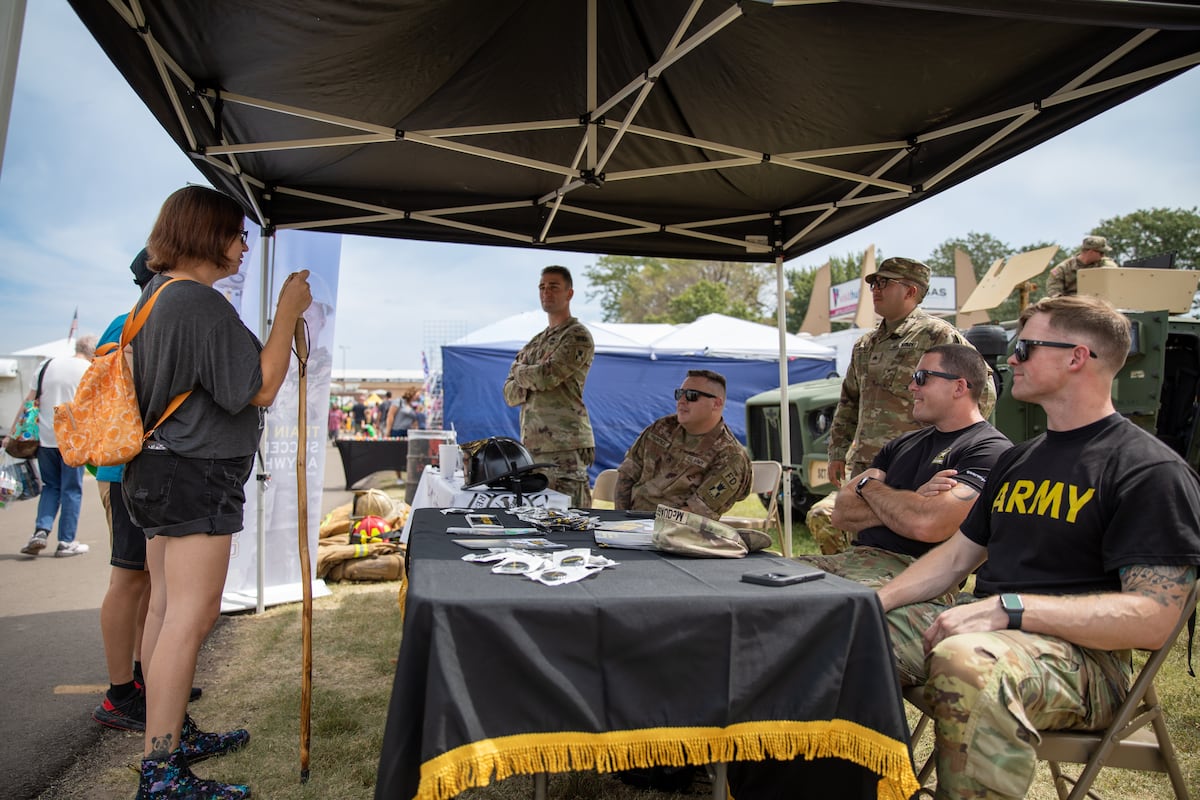
For decades, the U.S. Army’s Hometown Recruiter Assistance Program (HRAP) has provided a unique opportunity for new Advanced Individual Training graduates. These soldiers could return to their hometowns for a 14-day paid leave before reporting to their first duty station, with the expectation of assisting local recruiters during this period. However, the program is now on hold.
Lt. Gen. Johnny Davis, head of the U.S. Army Recruiting Command, announced at an Association of the United States Army forum that HRAP has been suspended. The decision stems from challenges in achieving the program’s intended outcomes. Davis noted that while the initial investment yielded a modest return of “about, you know, one or two percent,” the execution over time had not met expectations.
“But, bottom line, what we’ve learned over the years is that 20, 30,000 young superstars, when they were headed back home, were good; they got to go home,” Davis said. “But they weren’t really working with the recruiters as much as we wanted them to.”
The human element played a significant role, Davis explained, as new graduates often prioritized reconnecting with family and friends over fulfilling their recruiting duties. The Army has also extended similar leave opportunities to National Guard and Reserve soldiers during the Christmas Exodus, with the expectation of recruiting support, but with limited success.
Davis questioned the return on investment of these programs, stating, “During that Christmas holiday, was there a lot of recruiters in the recruiting stations working with them? No. So we’re really thinking through: is this return on investment, and is it worth the cost to the Army? Or can we take those funds and spend them in other ways to help our men and women.”
While the Army seeks alternative ways to provide soldiers with hometown leave, the suspension of HRAP has been discussed on Army recruiting social media platforms since January, though official public acknowledgment came only recently.
HRAP, which dates back to the 1980s, required soldiers to be selected and approved by their company commanders. According to a 2022 Army news release, Staff Sgt. Colton Dunbar emphasized the program’s potential success hinged on “how the soldiers are leveraged.” He stated, “We try to get the most out of them while they’re here by bringing them to the high school where they graduated and their communities to show everyone that this person was in your community six months ago as a civilian, but look at them now.”
Despite its potential, HRAP’s success has been hampered by a lack of defined metrics and service requirements. A 1983 study from the U.S. Army Research Institute for the Behavioral and Social Sciences found it challenging to evaluate the program’s effectiveness beyond increased foot traffic to recruiting offices. The study acknowledged the non-quantifiable benefits of visible soldier presence in hometowns, suggesting that soldiers could “plant seeds” for future enlistments.
The Army has yet to announce when a final decision regarding the future of HRAP will be made.