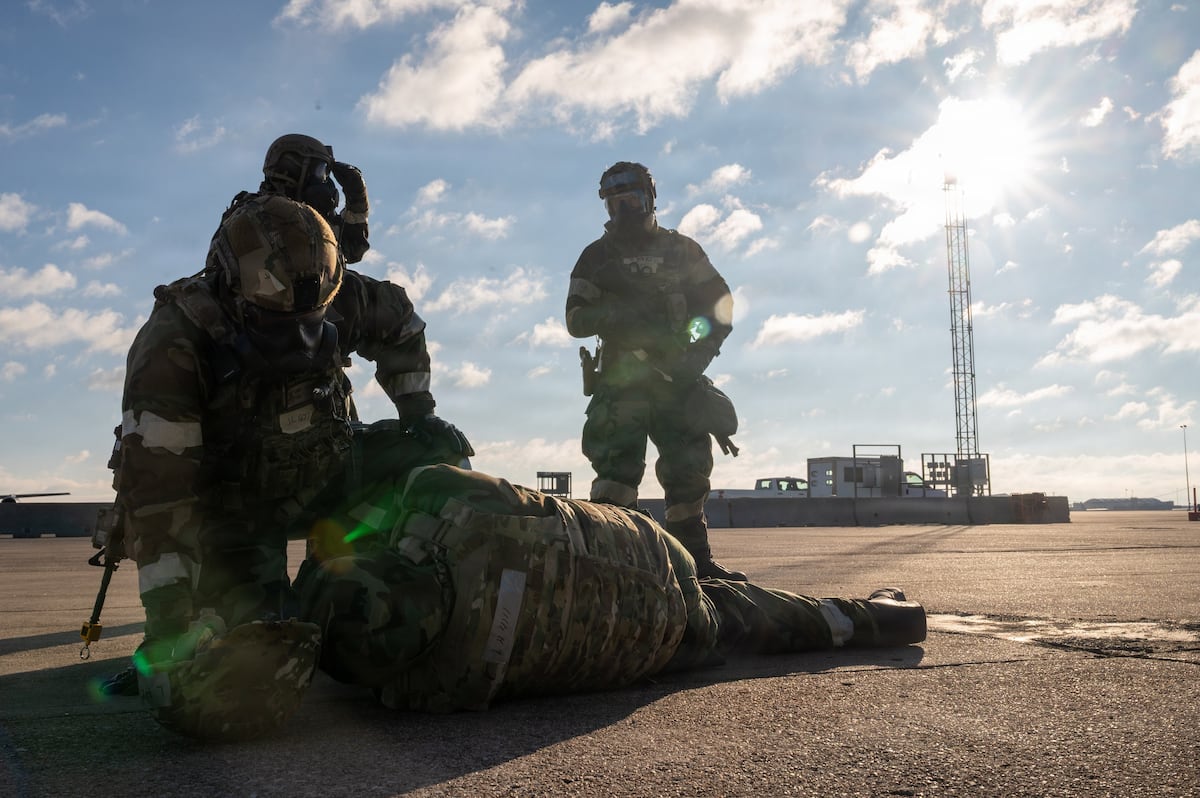
As the demands of modern warfare evolve, the U.S. Defense Advanced Research Projects Agency (DARPA) is pioneering a new approach to battlefield medical care through the use of advanced robotics. In scenarios where traditional medical response becomes insufficient during intense combat, DARPA is exploring the potential of robot medics to manage casualties effectively.
DARPA’s vision includes deploying swarms of autonomous robots capable of performing critical tasks such as extracting injured soldiers from danger zones, administering emergency medical treatment, and even reconfiguring themselves to provide structural support for injuries, as highlighted in a recent solicitation for Small Business Innovation Research. This initiative aims to establish a self-deploying robotic system capable of lifesaving interventions right at the point-of-need, with a submission deadline set for June 3.
Addressing Large Scale Combat Challenges
The current medical systems in place are tailored for small-scale engagements, but DARPA recognizes the limitations when facing large-scale combat scenarios. According to the agency, future conflicts may result in “massive casualty incidents, delayed evacuation, and insufficient capacity of the medical system.” A primary concern is the risk of death from uncontrolled bleeding, a leading cause of preventable fatalities in both military and civilian emergencies.
To mitigate these risks, DARPA is investigating whether robotic systems can effectively manage hemorrhage control. Advances in swarm robotics and medical applications give the agency confidence in this approach. The proposed robotic solutions should meet at least two out of four specified requirements, including the ability to transport a wounded soldier over a short distance and form protective supports around injuries.
Innovative Robotic Solutions
Key capabilities being considered include the ability of robots to administer medication and create tourniquets autonomously. The solicitation describes the creation of “smart tourniquets” that can adjust to control bleeding effectively. Additionally, DARPA is exploring the integration of these medicbots with unmanned ground vehicles currently under consideration by the U.S. Army for evacuating the wounded.
Given their potential compact design, these medicbots could be highly adaptable, fitting into small spaces such as an Individual First Aid Kit or being deployed by drone swarms. The initial phase of development will focus on demonstrating essential functions like swarming, injury assessment, and navigating challenging terrain. These tests can occur in controlled environments using medical mannequins.
The second phase will involve creating prototypes for field testing using various models, including perfused cadavers and high-fidelity training phantoms. This phase also requires a comprehensive manufacturing plan aligned with U.S. Food and Drug Administration standards.
Applications Beyond the Battlefield
DARPA also foresees civilian applications for these robotic systems, particularly in scenarios like building collapses, fires, or hazardous chemical situations where human access is restricted. Initial robotic interventions could provide critical care, buying time until traditional medical teams can take over.