In the frigid expanse of the Arctic, Greenland’s strategic role in North American defense has become more crucial—and more vulnerable—than ever before. As tensions evolve and new threats emerge, the historic early warning systems on the island now face the daunting challenge of potential attacks from hypersonic missiles, a concern that experts are urging U.S. defense planners to address.
The Emerging Hypersonic Threat
Since the Cold War, Greenland’s radar installations have served as a pivotal line of defense against nuclear assaults via intercontinental ballistic missiles. However, as Troy Bouffard, director of the Center for Arctic Security and Resilience at the University of Alaska, noted, these systems are not equipped to fend off hypersonic threats. “The U.S. does not have a standing integrated air and missile defense shooter layer in Greenland today,” Bouffard explained to Defense News. The advent of hypersonic cruise missiles, which current defense mechanisms cannot counter, has transformed the strategic landscape.
Proposals for a Robust Defense System
In an article for Small Wars Journal, Bouffard and co-authors advocated for a comprehensive air and missile defense strategy tailored to Greenland’s unique environment, especially at the Pituffik Space Base. While the base is protected by an Air Force Security Force squadron, these units focus on ground threats rather than defending against Mach 5-plus hypersonic missiles.
The authors propose a “layered air defense using short- and medium-range systems adapted to Arctic operations,” which could incorporate Patriot batteries, National Advanced Surface-to-Air Missile Systems, or NASAMS, and short-range air defense systems (SHORAD). This multi-faceted approach would require a sophisticated array of sensors, including ballistic missile radars and over-the-horizon systems, to provide comprehensive coverage.
Challenges in the Arctic Environment
The harsh Arctic conditions present significant challenges for defense systems, with temperatures plunging to nearly 100 degrees below zero Fahrenheit, affecting radar performance and visual sensors. Technological innovations like adaptive optics and polarimetric radar may help mitigate these issues, but success hinges on specialized Arctic warfare capabilities.
Greenland’s Geopolitical Landscape
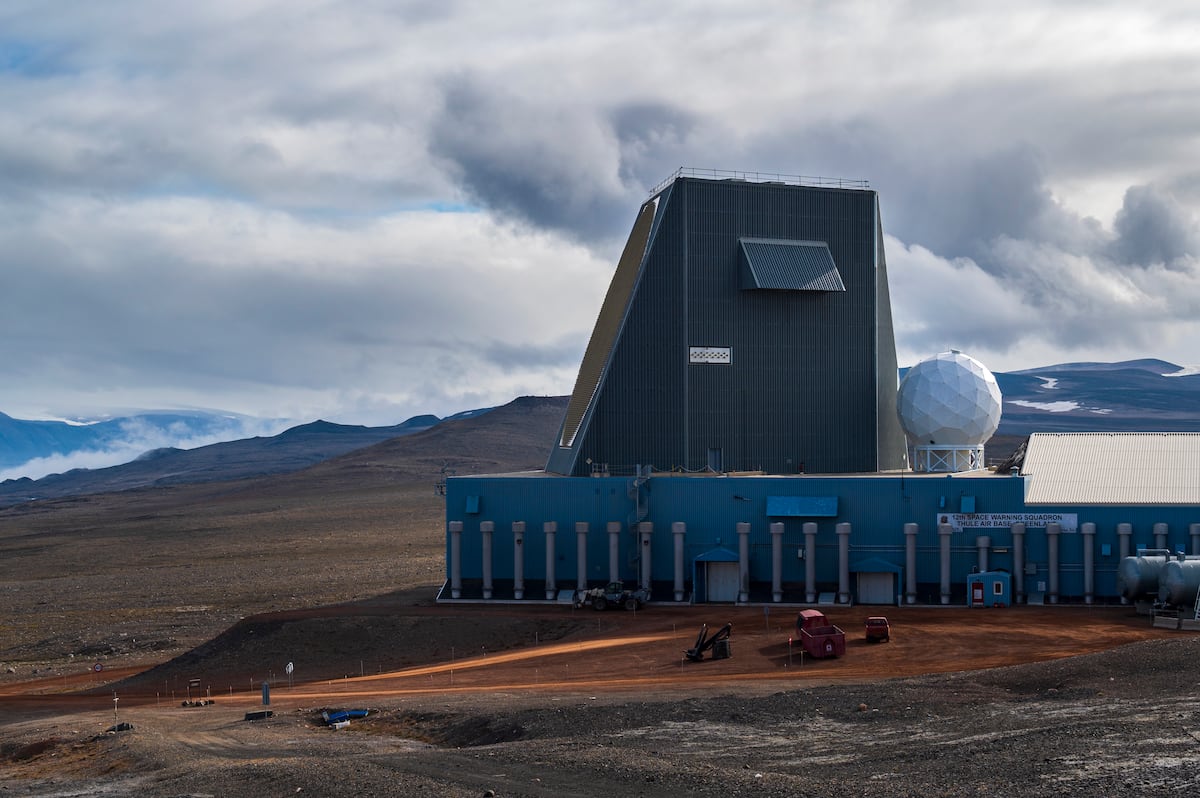
Since 1960, with the establishment of the Ballistic Missile Early Warning System (BMEWS), Greenland has been a key player in U.S. early warning strategies. Now part of the Upgraded Early Warning Radar system within the 12th Space Warning Squadron, these radars continue to scan for missiles and track space objects.
Politically, defending Greenland is complex. Though part of North America, it remains an autonomous territory of Denmark, intertwining American, European, and NATO interests. The Trump administration’s interest in purchasing Greenland was met with resistance from both Greenlanders and Danes.
Strategic Realignments and Future Defense
In June, the U.S. Northern Command assumed responsibility for Greenland from the U.S. European Command, underscoring the island’s importance in homeland defense. The Pentagon’s Unified Command Plan now requires cooperation among multiple commands, as detailed in the Small Wars Journal article, which stressed integrating Greenland’s defense within NATO’s regional strategies and U.S. homeland defense operations.
The essay emphasized that defending Greenland demands resources, patience, and a shift in focus towards the Arctic, moving beyond the post-Cold War era’s oversight. By aligning defense strategies with both U.S. and allied objectives, Greenland’s role as a missile defense hub can be effectively fortified.