Panamanian Expertise Shapes U.S. Army Jungle Training
In a dramatic encounter on Panama’s Pacific coastline, gunfire erupted towards a boat carrying Panamanian soldier Albis Fajardo and his team on a counter-drug mission. As they attempted to counterattack, the realization of a failed mission hit hard when a bullet wounded one of Fajardo’s friends.
More than ten years later, under the setting autumn sun at Panama’s Aeronaval Cristóbal Colón base, Fajardo, now a first sergeant at 47, revisited that perilous moment. His friend’s survival left a lasting impact, propelling Fajardo to expand his military knowledge and eventually instruct at the U.S. Army’s Jungle Operations Training Course in Panama.
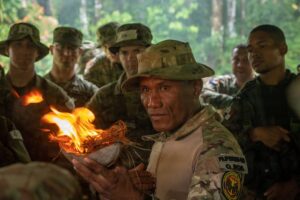
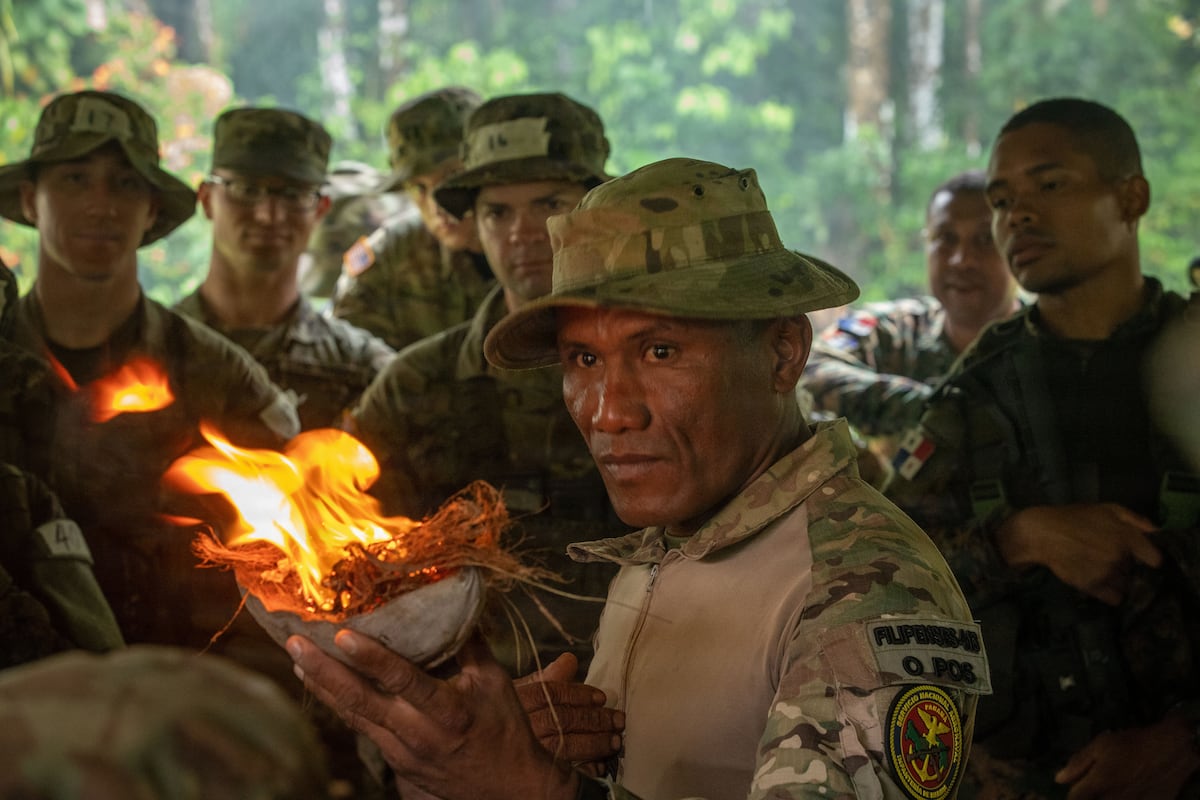
The course, which had been inactive since 1999, is now back in operation through a U.S.-Panamanian collaboration. Panamanian instructors lead and participate in the 18-day program, offering their expertise in jungle environments where they have lived and fought, earning them the reputation as masters of the terrain.
Lt. Col. Andrew Eagen, leading the U.S. Jungle Operations Training Center in Panama, acknowledged the skill of Panamanian forces. “They are the experts of this environment. We will never catch up,” he remarked during an interview at the jungle school, emphasizing the unique challenges of the jungle that are absent in the continental U.S.
Fajardo is one of nine instructors from Panama’s armed forces who teach at the school. They guide students in jungle survival training, drawing from their extensive experience. Eagen noted that Panamanian troops are seamlessly integrated with U.S. personnel during exercises, fostering a learning environment through direct observation.
A practical exercise illustrated the Panamanian troops’ keen skills when a squad, tasked with hiding in the jungle, was discovered due to a Panamanian’s sharp eye for a too-straight vine setting off a tripwire. This exercise underscored the real-world applications of these techniques, as trip wires are still actively used by cartels in areas like the Darién Gap.
Fajardo and other instructors have honed their skills at Panama’s own jungle school, Panajungla, where survival in the Teribe region demands resourcefulness, such as procuring food from the “supermarket de la selva” using machetes. Fajardo even describes the machete as his most crucial jungle tool, humorously calling it “mi esposa.”
The U.S. Army plans to allocate 20 spots for partner forces, including at least 15 for Panamanians, in the course. While no other countries have yet participated, Colombia is expected to join soon, reflecting the interconnected military ties among the U.S., Panama, and Colombia.
Eagen highlighted the importance of respecting Panama’s sovereignty and ensuring that the course emphasizes environmental skills rather than the local security situation. The course serves as a testament to the effective collaboration between U.S. and Panamanian military forces, set against the backdrop of a complex historical relationship.