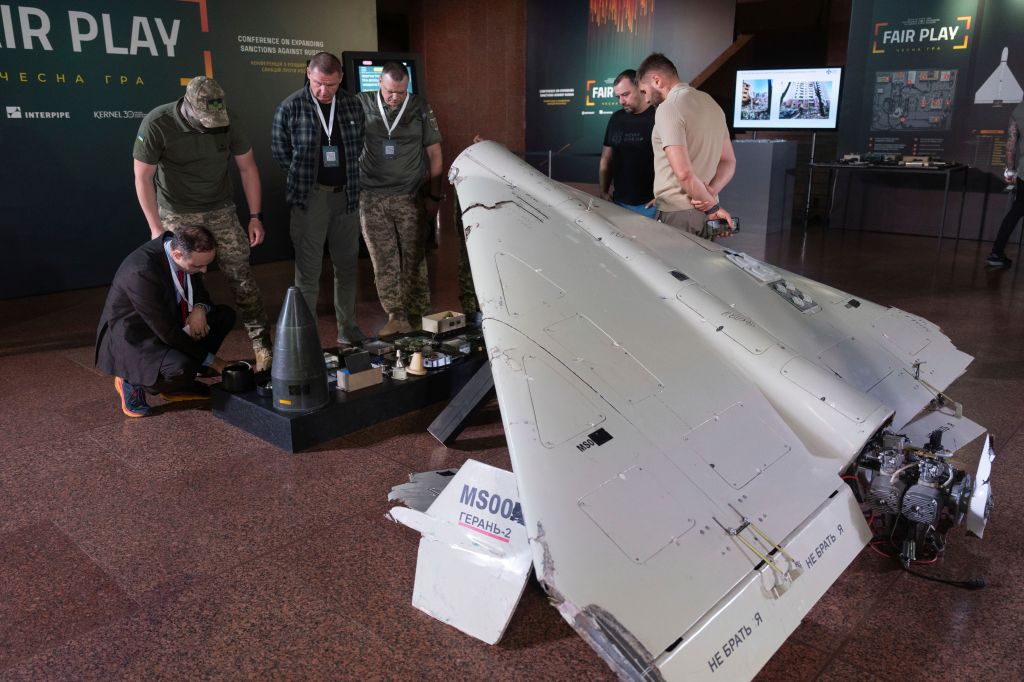
Russia’s enhanced drone technology is presenting new challenges for Ukrainian defense systems. With the integration of larger, jam-resistant antennas, it is becoming increasingly difficult for Ukraine to disrupt these drones’ navigation, creating a significant tactical advantage for Russian military forces.
Advancements in Drone Technology
Russian drones, including Geran models and various missiles, are now equipped with Kometa navigation modules developed by VNIIR-Progress. These modules are designed with patch antennas, which allow them to maintain satellite navigation even under jamming conditions. The Ukrainian military intelligence agency, HUR, identifies these modules in several Russian weapon systems, emphasizing their proliferation and importance.
The Kometa modules are currently being deployed with 16-element antenna arrays, and plans for mass production of 20-element arrays are underway. Such advances enhance the drones’ ability to pinpoint and counteract jamming sources, according to a report from HUR on October 19.
Impact on Ukrainian Defense
Recent attacks on Kyiv have involved Shahed drones equipped with 32-element antennas, as noted by Serhii “Flash” Beskrestnov, an electronic-warfare specialist advising Ukrainian President Volodymyr Zelenskyy. “The more elements, the more electronic-warfare signal sources the antenna can suppress,” Beskrestnov explained on Telegram in October.
This development creates a strategic dilemma for Ukraine, as increasing the number of antenna elements is easier and faster for Russia than expanding Ukraine’s electronic warfare capabilities. Consequently, drones that bypass Ukraine’s electronic warfare defenses must be intercepted by more expensive means such as interceptor drones or missiles.
Countermeasures and Strategies
Despite these challenges, there are tactics to counter the upgraded drones. Jamming multiple satellite bands simultaneously or using networked devices to mislead drones with false coordinates are effective strategies. Alkhimik, the commander of Ukraine’s Night Watch unit, acquired a 32-element antenna from a downed Shahed and noted that it consisted of two 16-element arrays. By targeting these separate bands, effective jamming can be achieved.
Fly Group Ukraine employs a method known as spoofing, where multiple devices create a network to send false coordinates to a drone. “The drone continues to think it is flying toward its target, but its own autopilot, relying on the false coordinates, gradually changes course on its own and steers the craft away from cities into safe areas,” said Anatoliy Khrapchynskyi, the company’s director of development, to Reuters in September.
Ongoing Demand for Kometa Modules
The demand for Kometa modules by Russian defense firms highlights their significant role in modern warfare. Over 100,000 units have been ordered this year alone to support a range of military applications, from guiding missiles to equipping strike drones and guided bombs, as reported by HUR.