As the year 2026 draws to a close, the U.S. Army has shifted its strategic focus across various global theaters, responding to evolving geopolitical challenges. With new commands and restructuring efforts, the Army has placed increased attention on the Western Hemisphere and the Indo-Pacific, influenced by ongoing conflicts involving Iran and Russia.
Western Hemisphere
In a significant restructuring effort, the Army established the Western Hemisphere Command at Fort Bragg, North Carolina, in late 2025. This move consolidated three major commands under one headquarters, in alignment with the 2026 National Defense Strategy. This strategy emphasizes defending the U.S. Homeland and the Western Hemisphere over countering China.
As part of this restructuring, the Army closed some global advisory brigades, retaining only two Security Force Assistance Brigades (SFABs), with one aligned to U.S. Southern Command. The Western Hemisphere Command now oversees responsibilities previously handled by the Security Force Assistance Command.
Additionally, U.S. Southern Command launched the Joint Task Force Western Hemisphere to coordinate regional operations with allied nations, targeting transnational criminal networks. The Army also revived its jungle warfare school in Panama, a skill applicable to the Indo-Pacific region.
Central Command
The U.S. Army’s presence in the Central Command area, encompassing the Middle East, Central and South Asia, and Northeast Africa, is in transition. In mid-April, U.S. troops withdrew from several bases in Syria, ending a decade-long presence.
In September, the U.S. formally exited Iraq after two decades of conflict, raising concerns about Iran’s influence and the resurgence of the Islamic State. Despite this, the U.S. extended the deployment of the 82nd Airborne Division in the region due to its ongoing conflict with Iran. The Army also announced the deployment of a brigade from the 10th Mountain Division, though no specific timeline was provided.
Europe
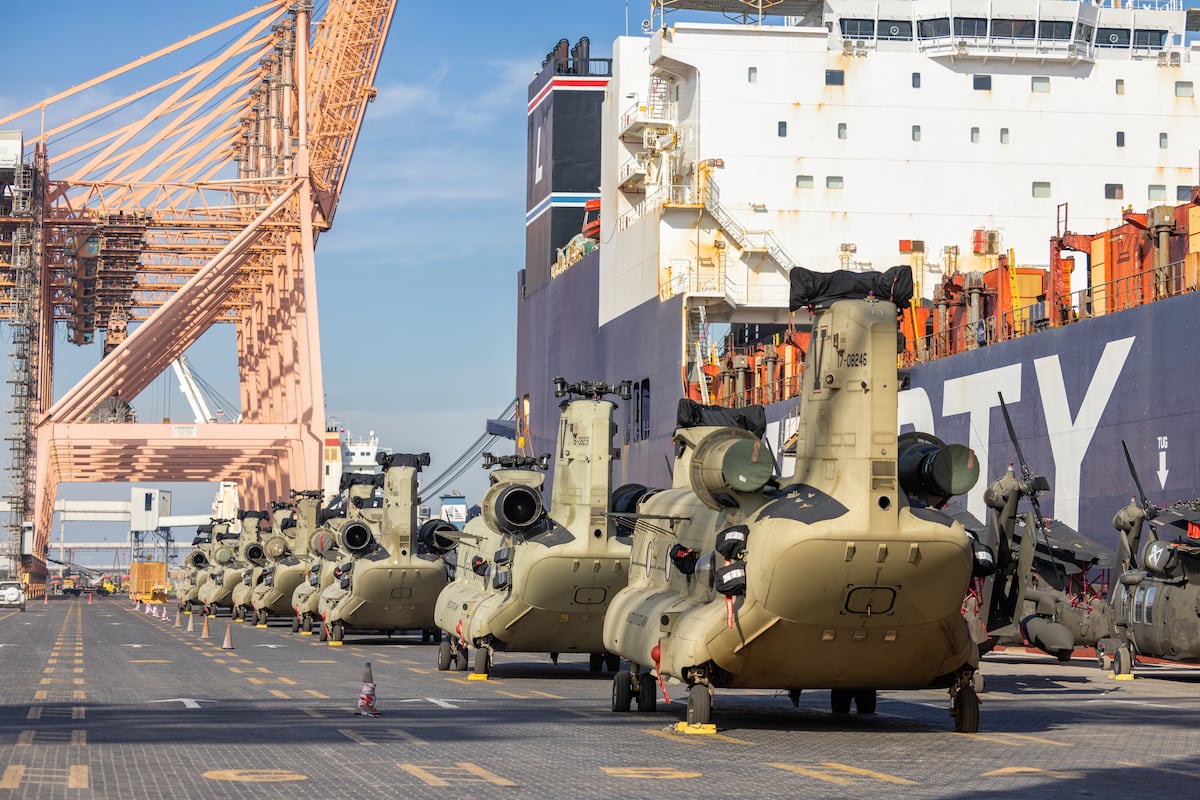
In Europe, the U.S. Army’s force posture is undergoing changes. Initially, the deployment of the 2nd Armored Brigade Combat Team to Poland was canceled, but the Pentagon later deployed 5,000 troops to the country. This was described as a “temporary delay” in plans to reduce Brigade Combat Teams in Europe.
This summer, the Pentagon initiated a comprehensive review of U.S. troops and bases in Europe, expected to last up to six months. Despite this, the Army continues to engage in multinational exercises like Dynamic Front 2026 and Saber Junction.
Indo-Pacific
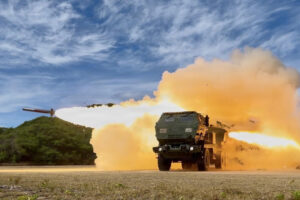
The Indo-Pacific theater in 2026 emphasizes deterrence. “In the big scheme of things, our highest duty is to deter,” Gen. Ronald Clark, commander of U.S. Army Pacific, stated in an interview. Exercise Balikatan 2026 in the Philippines involved multiple nations and shifted its focus to large-scale combat operations.
Despite Chinese ambitions regarding Taiwan, the 2026 National Defense Strategy does not mention the island. The Army launched a new Indo-Pacific multi-domain command, integrating conventional forces and advanced technology.
Africa
The Army has reduced its Africa-focused force, including closing the 2nd Security Force Assistance Brigade, resulting in a 75% force drawdown over ten years. Gen. Dagvin Anderson described this as an “intelligence black hole” during congressional testimony. In Somalia, the U.S. seeks cultural advisors amid regional operations.
The Arctic
The Marine Corps is expanding its presence in Alaska with “Campaign – Alaska,” focusing on Arctic operations and cold-weather training. While the Army has not announced major changes in the Arctic, the Army Corps of Engineers is exploring new operational areas. Research is underway to update helicopter landing protocols on ice, potentially increasing operational terrain.