In the ever-evolving landscape of modern warfare, ensuring the safe transport of supplies and wounded soldiers from the battlefield has become increasingly perilous. Traditional threats from artillery and snipers are now compounded by the presence of drones, prompting the U.S. Army to seek innovative solutions.
The army’s latest strategy involves employing an unmanned ground vehicle (UGV) to undertake the dual tasks of resupply and casualty evacuation for tactical units near the front lines. This development aims to address the challenges highlighted in the Army’s Commercial Solution Opening notice, which emphasizes the vulnerability of movements in a battlefield defined by constant enemy surveillance and swift lethal attacks. The deadline for proposals is April 28.
According to the notice, the UGV should be capable of carrying sufficient cargo to support a dismounted rifle platoon and a company headquarters. The vehicle must also support autonomous operation across varied terrains while maintaining effective communication with the units it serves.
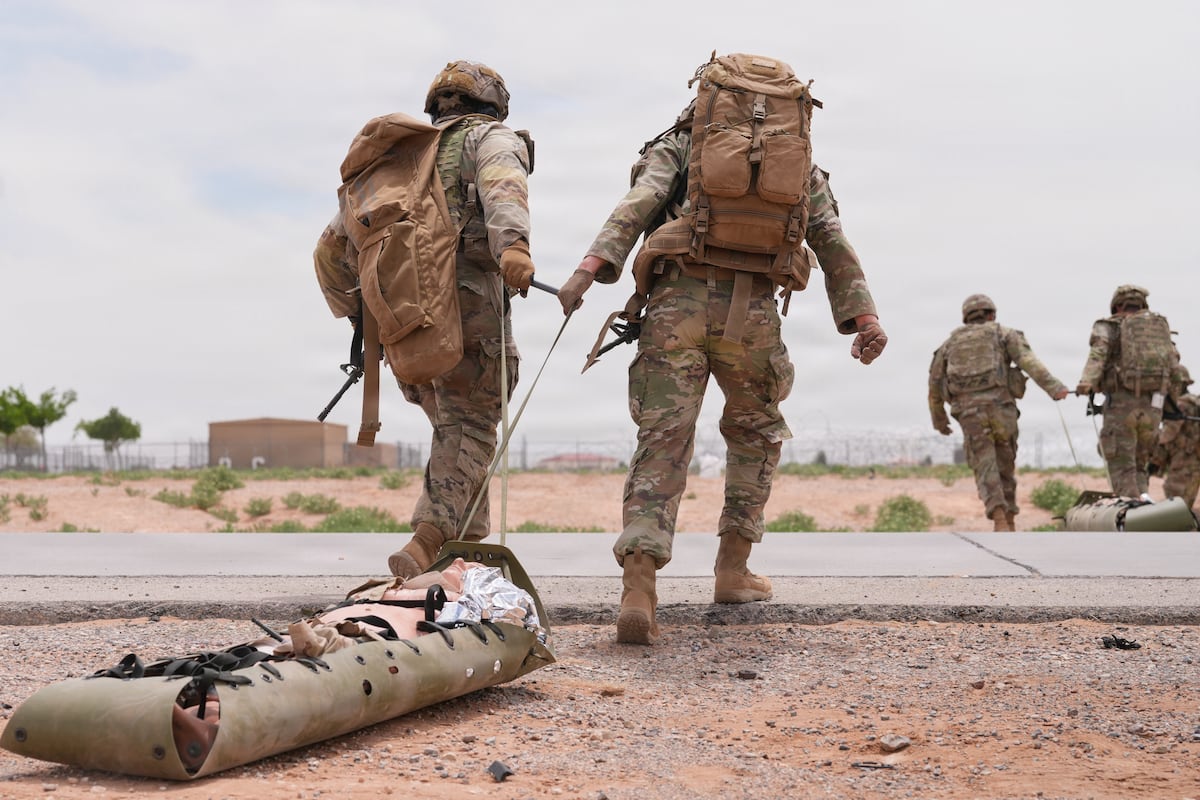
The reconfiguration of the UGV for casualty evacuation is another critical requirement. It must be able to transport at least two injured personnel from the point of injury to a collection point without causing additional harm. While the notice did not specify the dimensions or capacity of the UGV, it did stress the need for autonomy.
“The UGV must be capable of teleoperation, autonomous navigation, and beyond-line-of-sight communications,” the Army stated. “The UGV should be able to navigate both on- and off-road routes, including areas without GPS, and support situational awareness. It should minimize detectable signatures and emissions during operations, including in the final approach to supported units.”
The U.S. military has a history of utilizing robotic technology for tasks such as clearing improvised explosive devices (IEDs). The Army’s current Small Multipurpose Equipment Transport initiative is focused on developing cargo UGVs. One such example is HDT Robotics’s Hunter Wolf, which can transport up to 2,800 pounds of supplies and be equipped with machine guns. A comprehensive study of the requirements for S-MET Increment 2 has recently been completed by the Army.
Currently, Ukraine is at the forefront of employing tactical robots to navigate the dangers posed by Russian drones. Ukrainian forces are increasingly utilizing robots to evacuate casualties and transport supplies amidst the ongoing conflict.