Supreme Court Decision Allows Soldiers to Sue Military Contractors
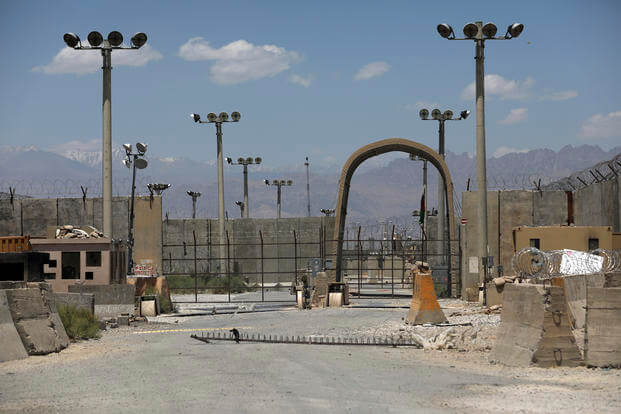
In a landmark decision, the Supreme Court has determined that U.S. troops can pursue legal action against military contractors for injuries suffered due to contractor negligence in combat zones. This ruling aligns with the case of Winston Henceley, a soldier who sustained severe injuries in a suicide bombing at Bagram Airfield.
The incident at Bagram Airfield involved a Taliban operative who detonated a bomb, resulting in the deaths of five soldiers and injuries to 17 others, including the then 20-year-old Henceley. The attack left Henceley with a fractured skull and permanent disability.
In a 6-3 decision, the justices concluded that military contractors cannot rely on federal law or constitutional provisions to escape liability if their negligence leads to soldier injuries. Justice Clarence Thomas penned the majority opinion, garnering support from Justices Sonia Sotomayor, Elena Kagan, Neil M. Gorsuch, Amy Coney Barrett, and Ketanji Brown Jackson.
Justice Thomas, who has previously opposed court precedents barring troops from suing the U.S. government for injuries, stated that such protections should not extend to military contractors. In contrast, Justice Samuel A. Alito Jr., along with Chief Justice John G. Roberts and Justice Brett M. Kavanaugh, dissented. Alito argued that “federal law preempts all state law that substantially interferes with the Government’s exercise of those powers.”
The case against the Fluor Corporation arose after an investigation concluded the company was negligent in hiring and supervising Ahmad Nayeb, an Afghan employee and former Taliban operative. Henceley had attempted to intervene as Nayeb approached soldiers during a Veteran’s Day event in 2016, and his actions were later deemed to have likely prevented a larger tragedy.
Initially, both a federal judge in South Carolina and the 4th Circuit Court dismissed Henceley’s lawsuit. The 4th Circuit had ruled that tort claims against contractors integrated into military operations during wartime should be preempted. However, the Supreme Court’s decision overturned this ruling, allowing Henceley’s lawsuit to move forward.
This article is based on content originally published by the Los Angeles Times.
©2026 Los Angeles Times. Visit latimes.com. Distributed by Tribune Content Agency, LLC.
Read more: Health Experts Weigh In on Effects of DOD’s Optional Flu Vaccine Policy