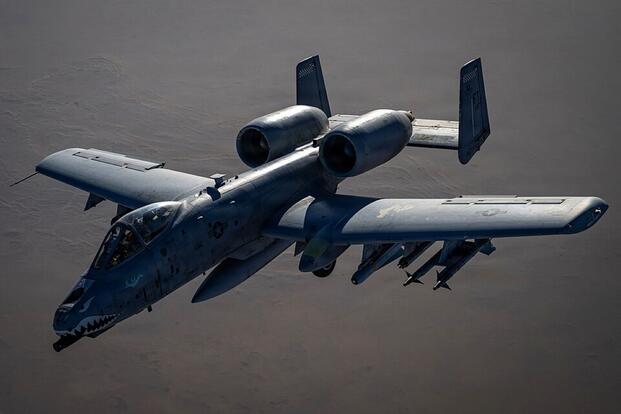
The A-10 Thunderbolt II, known for its rugged design and battlefield prowess, will continue to serve in the U.S. Air Force until 2030. This decision extends the aircraft’s operational life beyond the original retirement plan set for the end of fiscal year 2029.
Secretary of the Air Force Troy E. Meink made the announcement on April 20, citing consultations with President Donald Trump and Defense Secretary Pete Hegseth as pivotal. The extension aligns with the Pentagon’s forthcoming fiscal 2027 budget proposal.
Operations in the Middle East
Meink stated, “In consultation with [Hegseth], we will EXTEND the A-10 ‘Warthog’ platform to 2030,” emphasizing the importance of maintaining combat capabilities while the Defense Industrial Base ramps up production of new aircraft. Hegseth echoed the sentiment with his own statement, “Long live the Warthog.”
An Air Force spokesperson detailed the plan to extend two squadrons of A-10s to 2030, including one active-duty squadron at Moody AFB and one reserve squadron at Whiteman AFB. Another active-duty squadron at Moody will continue flights until 2029. This strategic fleet management ensures the A-10s with the most serviceable life are operational throughout the extension.
The decision follows significant A-10 involvement in Operation Epic Fury, targeting Iranian naval forces near the Strait of Hormuz and providing air support in Iraq and Syria against Iran-backed fighters.
A notable incident occurred on April 3 when A-10s participated in a combat search and rescue mission for an F-15E Strike Eagle crew downed over Iran. During a White House briefing, Gen. Dan Caine described the A-10s as “violently suppressing and engaging the enemy” to protect the rescue operation.
One A-10 sustained damage from enemy fire but managed to reach friendly airspace, allowing the pilot to eject safely. This incident underscores the A-10’s enduring capability to engage and neutralize threats effectively.
The Cost and Challenges of Extending the A-10’s Service
Extending the A-10’s operational life presents logistical challenges as the Air Force has started phasing out support systems for the aircraft. The final class of A-10 pilots graduated in April, and heavy maintenance operations at Hill Air Force Base in Utah ceased earlier this year.
Service leaders argue that resources devoted to the A-10 could support the F-35A Lightning II, F-15EX Eagle II, B-21 Raider, and the upcoming F-47. Additionally, aging components and a scarcity of spare parts make the A-10 increasingly difficult to maintain.
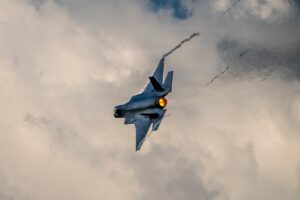
The A-10’s survivability is also questioned, as it may not withstand modern air defenses employed by China or Russia. The Air Force plans to transition close air support missions to the F-35A, with a request to purchase 38 units in fiscal 2027.
The A-10’s Legacy and Future
The A-10 Thunderbolt II, designed for close air support, first took flight in 1972 and entered service in 1977. Known for its resilience and firepower, it has played a crucial role in conflicts from Operation Desert Storm to recent missions in the Middle East.
Despite various retirement proposals, the A-10’s bond with ground troops and its effectiveness in combat have ensured its continued service. With its role in the ongoing blockade of the Strait of Hormuz, the A-10 remains a vital asset, ready for future operations.
While the future replacement for the A-10 remains uncertain, veterans and military personnel hope to see this iconic aircraft continue its mission well into the 2030s.