U.S. Army’s Push for Advanced Missile Defense with NGSRI
As the U.S. Army gears up to modernize its air defense systems, it plans to procure thousands of cutting-edge short-range interceptor missiles, aiming to replace the aging FIM-92 Stinger missiles. This move is part of a broader effort to enhance mobile air defense capabilities in response to emerging threats.
A recent Request for Information (RFI) issued by the Army seeks proposals from companies capable of delivering 11,000 Next Generation Short Range Interceptor (NGSRI) missiles starting in Fiscal Year 2028. Interested companies must submit their responses by July 6.
The RFI outlines the requirement for companies to provide projected unit cost estimates for 11,000 NGSRI missiles and 2,200 Control Launch Assemblies over a decade. Initial procurement plans include 200 missiles and 20 CLAs in the first year, escalating to 500 missiles and 20 CLAs in the following year. The document also considers the potential to double these quantities during the initial production years.
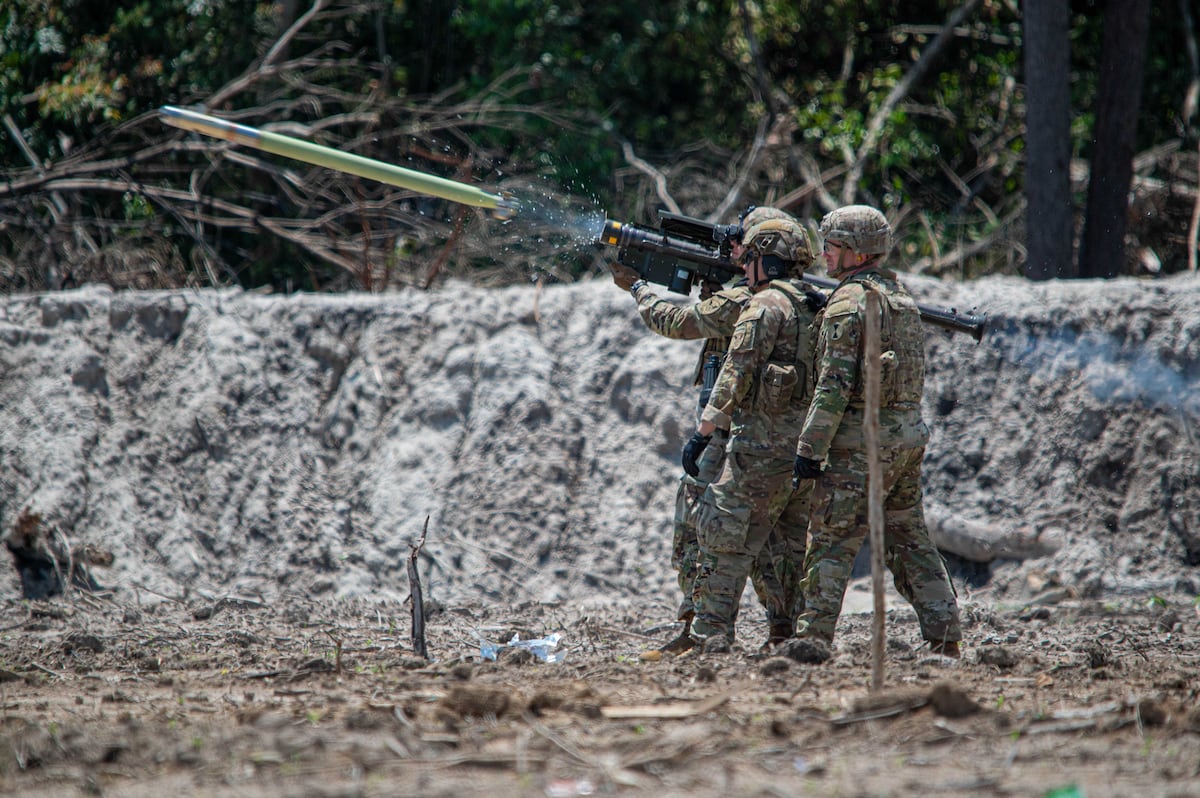
NGSRI is described by the Army as a “high performance, soldier portable, fire and forget, surface to air missile system capable of defeating rotary wing, fixed wing, and Group 2/3 unmanned aircraft system threats.” This initiative falls under the Maneuver Short Range Air Defense (M-SHORAD) program, which aims to revitalize the Army’s air defense systems amidst increasing threats from drones, hypersonic missiles, and other guided munitions.
Previous M-SHORAD trials included the development of the Sgt. Stout system, which combined mounted Stingers, a 30mm cannon, and a 7.62mm machine gun on a radar-equipped Stryker vehicle. Another iteration tested a 50 kW laser mounted on a Stryker.
For the third increment, the Army plans to replace the Stinger with the faster and longer-range NGSRI missiles. While the Stinger reaches speeds of Mach 2, the NGSRI is expected to achieve Mach 3, thanks to a more powerful Highly Loaded Grain solid rocket motor, as tested by RTX and Northrop Grumman last year.
In a demonstration in February 2026, RTX showcased the NGSRI’s ability to track drone targets and be launched from a man-portable launcher. The NGSRI is designed for flexibility, being compatible with both vehicle-mounted and shoulder-mounted launchers, including the existing Stinger missile launchers used in systems like Sgt. Stout.
The Army’s RFI also requests contractors to detail their approach for retrofitting the Sgt. Stout to fire the new NGSRI missiles, specifying cost per kit and planning for 248 Sgt. Stouts with up to two Stinger Vehicle Universal Launcher launchers each.
The Stinger has been a pivotal part of U.S. military operations since its deployment in the early 1980s, notably used by Afghan militants during the Soviet-Afghan War to counter Soviet Mi-24 helicopter gunships. Now, the Army seeks to ensure its air defense capabilities remain at the forefront of military technology.