U.S. Military Presence Grows in Panama Amid Renewed Focus on Western Hemisphere
Camouflage uniforms adorned with muted American flag patches signal a strengthening bond between the United States and Panama. This growing collaboration is evident in various initiatives, from optometrists operating in Panama’s Darién Province to U.S. military dive teams conducting training exercises near the Panama Canal. As the U.S. shifts its strategic focus towards the Western Hemisphere, these efforts represent a significant aspect of the U.S. military’s revitalized presence in the region.
More than two decades after the U.S. relinquished its military bases to Panama, the current partnership underscores a renewed commitment to the hemisphere, as highlighted by Col. Jacob White, deputy commander of Joint Security Cooperation Group-Panama (JSCG-P). “The Western Hemisphere is now the priority hemisphere,” White noted, emphasizing the need for a more robust presence. Read more here.
The relationship between the U.S. and Panama has evolved significantly since the polarizing U.S. invasion aimed at ousting dictator Manuel Noriega. Now, Panama holds strategic importance due to its unique position as the sole land bridge between North and South America, as well as its management of the Panama Canal, a critical maritime passage connecting the Atlantic and Pacific Oceans.
The Trump administration elevated the “defense of the U.S. Homeland” to the top of the national security agenda, shifting focus away from China. This change in strategy was reflected in the April 2025 agreement between the U.S. and Panama to counter Chinese influence and enhance security of the Panama Canal.
Henry Ziemer of the Center for Strategic and International Studies emphasized Panama’s enduring importance to the U.S. military, citing its strategic location and relevance to priorities such as migration and drug trafficking. “Panama’s importance has increased as we’ve seen supply chain disruptions at other critical waterways like the Strait of Hormuz,” Ziemer stated.
Approximately 5% to 6% of global trade transits through the Panama Canal, with a significant portion directly connected to the United States. Kevin Marino Cabrera, the U.S. Ambassador to Panama, highlighted that developments in the region have direct implications for the U.S., stating, “You can’t talk about migration without talking about Panama.” Learn more about migration issues here.
Panama grapples with challenges such as drug trafficking and migration, but the partnership with the U.S. is seen as mutually beneficial. “Our plan is to defeat the cartels, to maintain the Darién closed, so that we can secure the U.S. Southern border and keep our communities safe,” Cabrera explained, underscoring the shared goals of both nations.
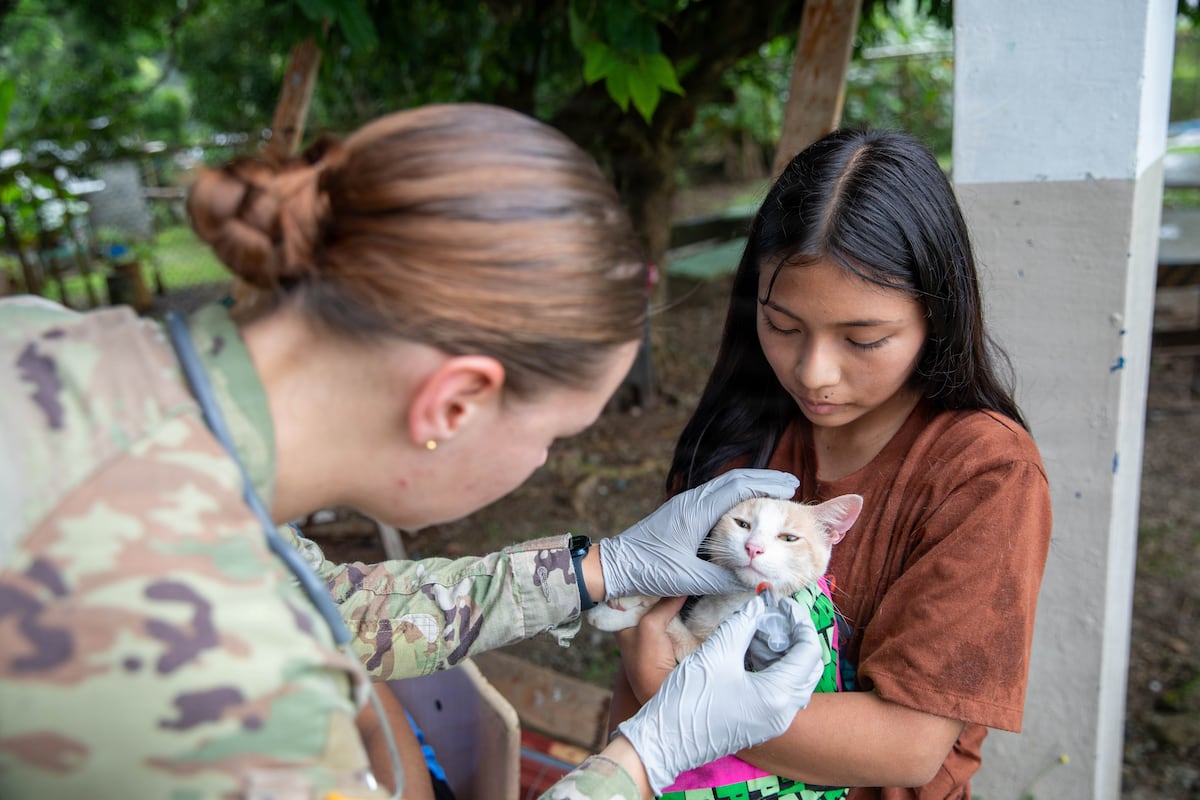
Beyond the jungle school, the U.S. military’s involvement in Panama includes Civil Affairs teams that address infrastructure gaps, military salvage dive operations, and cross-training with Panamanian forces. Additionally, military medical professionals collaborate with local counterparts to deliver essential healthcare services across rural areas.
Col. White acknowledged the importance of building trust, a lesson learned from conflicts in Iraq and Afghanistan, noting, “In a crisis, you simply can’t surge trust.” The ongoing collaboration with Panamanian forces, SENAFRONT and SENAN, is crucial in strengthening bilateral ties.
The expanded U.S. presence in Central and South America raises questions about sovereignty, yet officials stress that there are no plans for permanent military bases. The U.S. contingent operates under the Neutrality Treaty of 1977, ensuring the Panama Canal remains neutral and accessible to all nations.