U.S. Air Force Explores New Suppliers for Advanced Stand-in Attack Weapon Systems
In a strategic move to bolster its future air combat capabilities, the U.S. Air Force has initiated a search for additional industry partners capable of developing a Stand-in Attack Weapon (SiAW) or an equivalent system. This effort aims to equip the forthcoming F-47 fighter and B-21 Raider stealth bomber with cutting-edge weaponry, as detailed in a notice on SAM.gov.
The notice, released by the Air Force Life Cycle Management Center’s weapons division at Eglin Air Force Base, Florida, serves as a market research tool rather than a formal solicitation. It seeks to identify companies capable of producing systems with capabilities akin to or surpassing those of the SiAW. Interested parties are required to submit their responses by March 19.
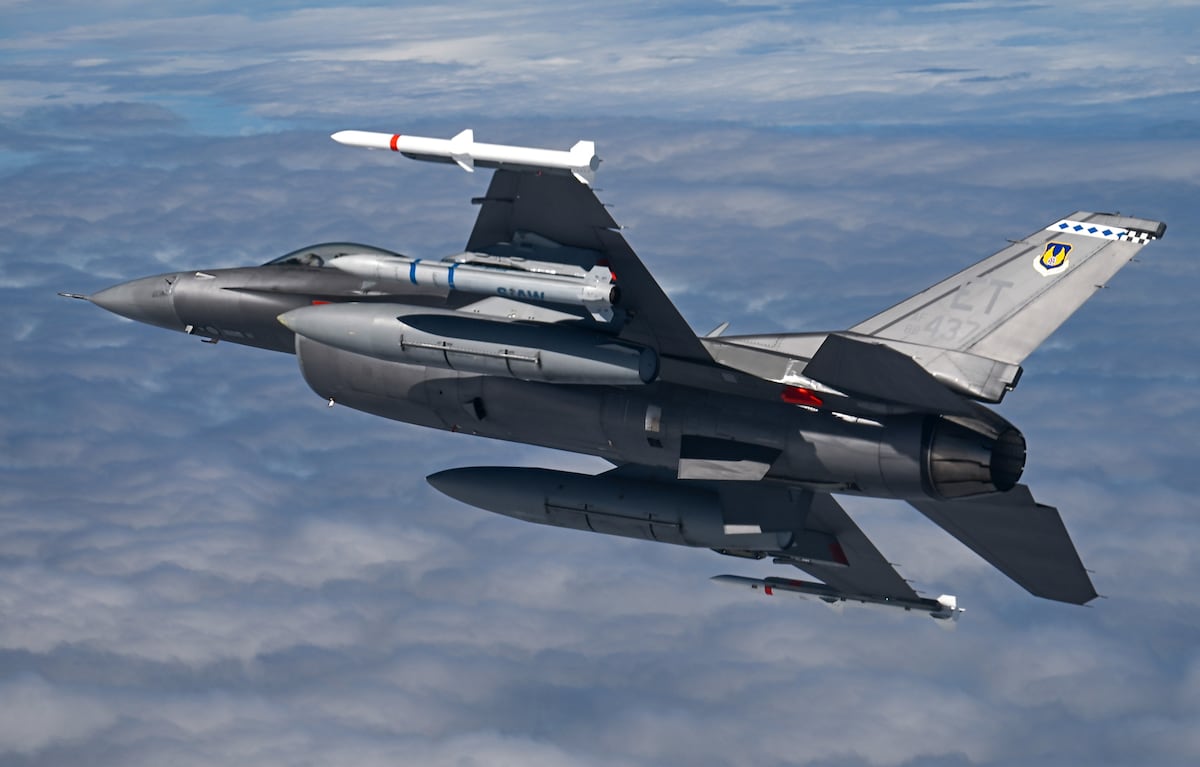
Currently, the SiAW is engineered as a supersonic air-to-ground missile designed for swift engagement of mobile targets, including integrated air defense systems, ballistic missile launchers, GPS jammers, and antisatellite systems within hostile territories.
In September 2023, Northrop Grumman secured a $705 million contract from the Air Force for the SiAW’s development and testing, following a competitive initial phase that also involved Lockheed Martin and L3Harris. Northrop Grumman achieved a milestone by delivering the first SiAW test missile to the Air Force in November 2024 and successfully conducting an F-16 separation test in December 2025.
The recent notice specifies that the SiAW or its equivalent must be compatible with platforms like the F-35, F-16, F-47, and B-21. Notably, this marks the F-47 fighter, Boeing’s Next-Generation Air Dominance aircraft, being explicitly mentioned in a public Air Force acquisition document related to a specific weapon system. The F-35 has been identified as the initial platform for the SiAW, and there’s an indication that the B-21 bomber could also be equipped with this weapon.
Presently, the SiAW program is in its Middle Tier Acquisition Rapid Prototyping phase. The notice outlines a 48-month performance period from the contract’s start, aiming for the first production lot to be delivered by 2030. According to fiscal 2026 budget documents, prototype development is expected to continue until the first quarter of fiscal 2027.
Key capabilities required for the system include extended standoff range, an advanced antiradiation seeker to engage frequency-agile and low-probability-of-intercept radar systems, precise GPS/INS navigation with antijamming features, comprehensive electronic counter-countermeasures, and the ability to perform reattacks. The Air Force is looking for a production capacity of up to 600 complete rounds annually, with a service life expectancy of 15 years.
This initiative coincides with growing concerns about munitions stockpiles and industrial base capacity, particularly in light of Operation Epic Fury against Iran, as highlighted in a report by the Center for Strategic and International Studies.
The notice remains silent on the reasons behind seeking additional sources for a SiAW equivalent or how this might impact the existing Northrop Grumman program.