Trump Administration’s Immigration Detention Policy Struck Down by Federal Appeals Court
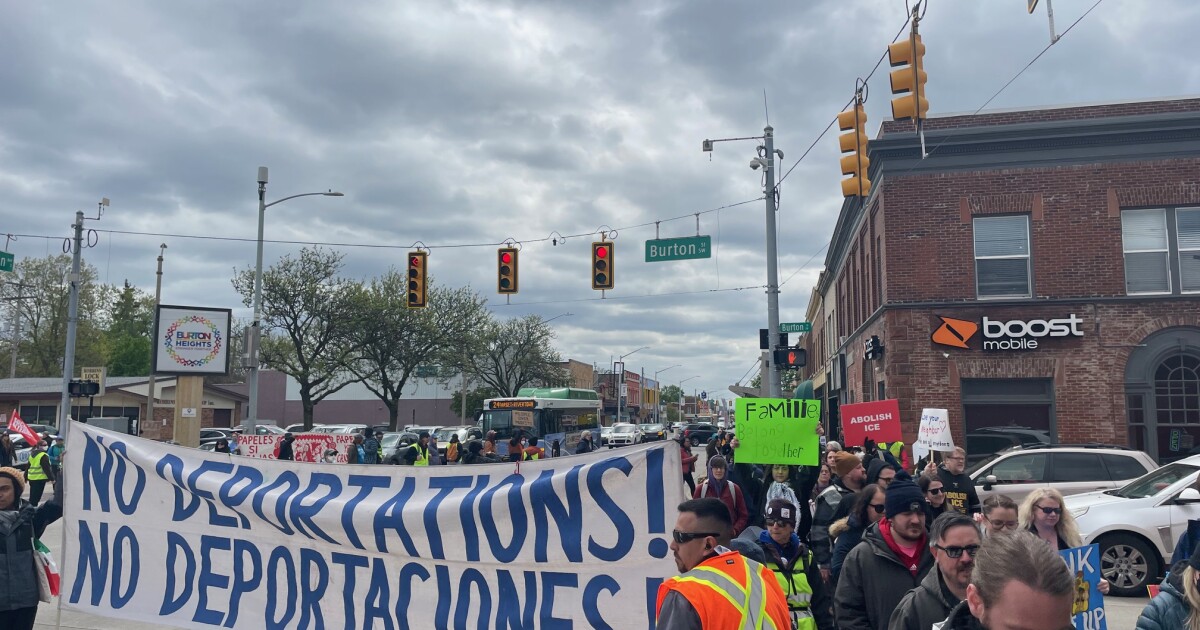
A recent decision by the 6th Circuit Court of Appeals has overturned a Trump administration policy that mandated individuals in immigration detention to remain detained while their cases are being decided. The court, which oversees cases in Michigan, Ohio, Kentucky, and Tennessee, ruled against this policy in a 2-1 decision, citing a violation of the U.S. Constitution by denying these individuals an opportunity for bond hearings.
The court majority emphasized that subjecting long-term law-abiding residents to mandatory detention without due process was unconstitutional and overturned decades of established precedent for bond hearings in immigration cases. This decision is expected to impact thousands of detained non-citizens in Michigan and three other states, according to the American Civil Liberties Union of Michigan.
Impact on Detained Individuals
One notable case that highlighted the consequences of this policy was that of Juan Manuel Lopez-Campos, a 46-year-old Mexican father of five U.S. citizen children. Lopez-Campos, who had no criminal record, was detained for nearly two months at the Monroe County Jail after a minor traffic violation. His case, along with several others, shed light on the challenges faced by detained individuals, including inadequate access to medical treatment.
Judges’ Rulings and Legal Challenges
Despite the Trump administration’s claims that federal judges are acting against the law by granting bond hearings to detained immigrants, data from the Western District of Michigan suggest otherwise. The decisions made by judges in this district were not influenced by party affiliations, indicating a fair and impartial approach to habeas corpus petitions.
Furthermore, even if an immigrant is granted bond, it does not guarantee their release, as highlighted in a report by Michigan Public. The high costs and government appeals often prolong the detention of individuals even after being granted bond.
Adam Yahya Rayes contributed to this reporting.