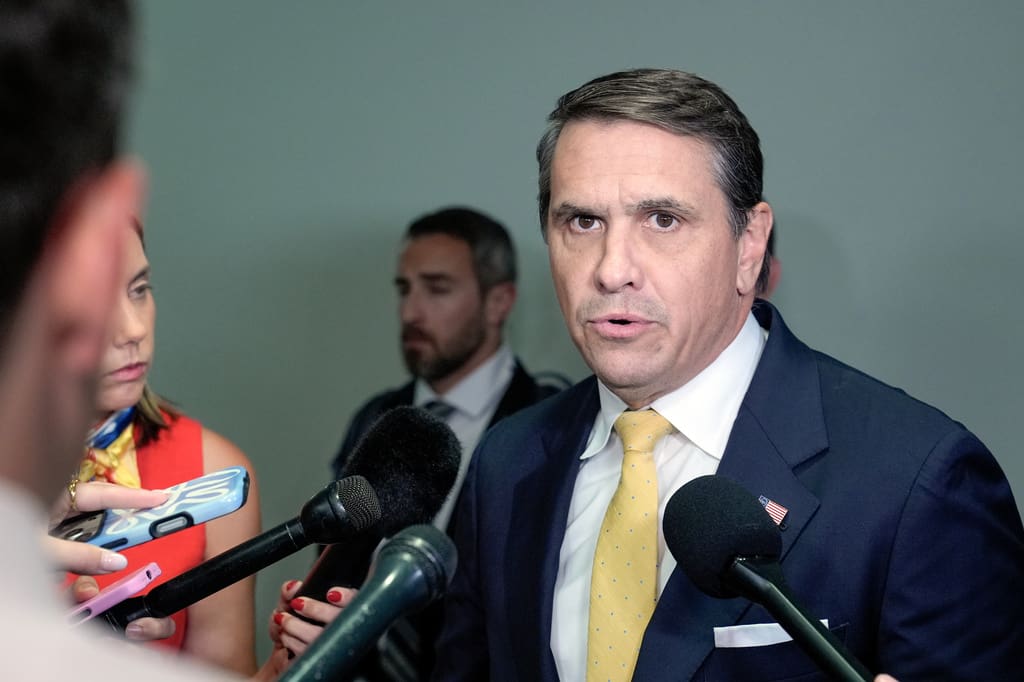
This story first appeared on Bonnie Fuller’s Substack.
Republican Senators Push for Restriction on Mailing Abortion Pills
During a heated confirmation hearing for Todd Blanche, the acting Attorney General, Republican senators from Texas made a significant move toward restricting the distribution of abortion medication by mail. On July 15, amidst intense questioning, Blanche conceded to reviewing the Department of Justice’s current stance on the 1973 Comstock Act, which permits the mailing of mifepristone, an abortion pill.
Senators John Cornyn and Ted Cruz urged Blanche to reevaluate the DOJ’s legal opinion from the Biden administration, which posits that the 1873 Comstock Act’s prohibition on mailing “abortion-causing articles” does not apply to modern abortion drugs. Blanche agreed to reassess this interpretation, potentially influencing future access to mifepristone.
Senator Cruz asked for a commitment from Blanche to ensure the review aligns with the original 1873 statute, to which Blanche responded, “yes, I will.” If the DOJ changes its interpretation, it could empower the Trump administration to block the mailing of abortion pills in states with abortion bans, affecting many women’s access to safe home abortions.
Debate Over Mifepristone Safety and Access
Cornyn inaccurately claimed during the hearing that mifepristone is being distributed without medical oversight. In truth, the drug is dispensed following a telemedicine consultation with a licensed healthcare provider. Mifepristone, used alongside misoprostol in a two-pill regimen, has been deemed safe and effective by numerous medical organizations, including the American College of Obstetricians and Gynecologists.
Despite Cornyn’s assertions about the drug’s risks, data shows that adverse reactions are less than 1% since its FDA approval in 2000. Julie F. Kay, Founder of Reproductive Futures, emphasized the stringent state laws governing telemedicine prescriptions to counter Cornyn’s claims about unsafe practices.
Political Motives Behind the Push
The hearing also saw Senator Katie Britt of Alabama and Senator Josh Hawley of Missouri echoing concerns about mifepristone’s safety. Hawley presented unspecified data suggesting an increase in abortions since the reversal of Roe v. Wade, while Britt argued that mailing mifepristone puts women at risk.
In Missouri, where abortion laws have fluctuated since Roe’s overturn, the availability of clinics remains a significant barrier, despite recent legal changes. The state’s legislature continues to push for measures that could further restrict abortion access.
The rising number of medication abortions—accounting for 65% of all abortions by 2023—has intensified Republican lawmakers’ efforts to curb the use of mifepristone. In states like Wyoming and Montana, medication abortions via telehealth represent a substantial portion of all procedures.
Ongoing Legal Battles and Advocacy
Advocates for abortion rights vow to challenge any attempts to restrict mifepristone access. Lizzy Hinkley of the Abortion Coalition for Telemedicine and Liz Wagner from the Center for Reproductive Rights assert that medication abortion remains a critical option, regardless of political pressure.
“Attacks like Todd Blanche’s are yet another humiliating bid for support from anti abortion extremists, but abortion medication isn’t ever going away,” Hinkley stated. Meanwhile, Wagner emphasized the ongoing efforts to protect telemedicine as a reliable avenue for medication abortion.