Momentum Grows for Stricter Regulations on License Plate Readers in Michigan
As concerns over surveillance and privacy violations continue to rise, Republican state Senator Jim Runestad of White Lake has introduced legislation in Michigan that aims to impose new restrictions on automated license plate reader technology, particularly those used by local law enforcement agencies.
The proposed bill put forward by Senator Runestad emphasizes the need for sensible safeguards when utilizing license plate readers, stating that constant monitoring of individuals is an overreach that exceeds public safety requirements. The legislation seeks to strike a balance by allowing the technology to assist in emergency situations while ensuring that data collected is handled responsibly.
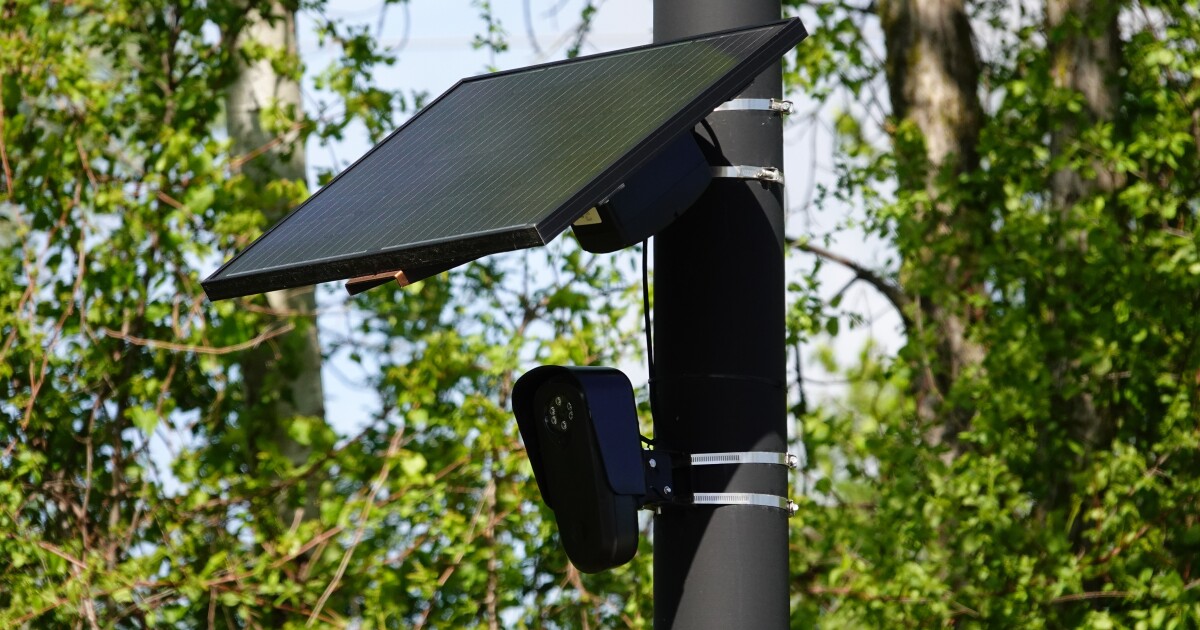
Currently, more than 180 law enforcement agencies in Michigan utilize license plate readers, with a significant number relying on cameras manufactured by Flock Safety. These cameras are primarily used to recover stolen vehicles and aid in criminal investigations by tracking vehicle movements.
If the bill is passed, local law enforcement agencies will be mandated to delete captured data after 14 days and obtain a warrant to access the information beyond active criminal cases or missing persons investigations. The move comes as several communities in metro Detroit have already terminated their contracts with Flock Safety due to concerns regarding privacy and data sharing.
Advocates like Gabrielle Dresner from the American Civil Liberties Union of Michigan caution that the data gathered by license plate readers could potentially be misused to track sensitive personal information, raising alarms about the implications of widespread surveillance. Dresner underscores the need for stringent regulations to safeguard individual privacy.
While the bill proposed by Senator Runestad echoes similar initiatives introduced by Democrats in the state House, there remains a lack of cohesive collaboration between lawmakers, law enforcement, and privacy advocates in shaping comprehensive guidelines for license plate reader usage. Ron Wiles, executive director of the Michigan Association of Chiefs of Police, acknowledges the necessity for oversight but warns against regulations that could hinder the effectiveness of these tools.
Flock Safety, a prominent manufacturer of license plate readers, has expressed support for reasonable regulation to ensure accountability and transparency in the technology’s implementation. The company’s spokesperson, Courtney Terlecki, emphasizes the importance of maintaining the balance between law enforcement capabilities and community expectations for privacy protection.