Michigan Senatorial Candidate Abdul El-Sayed Faces Anti-Muslim Sentiment
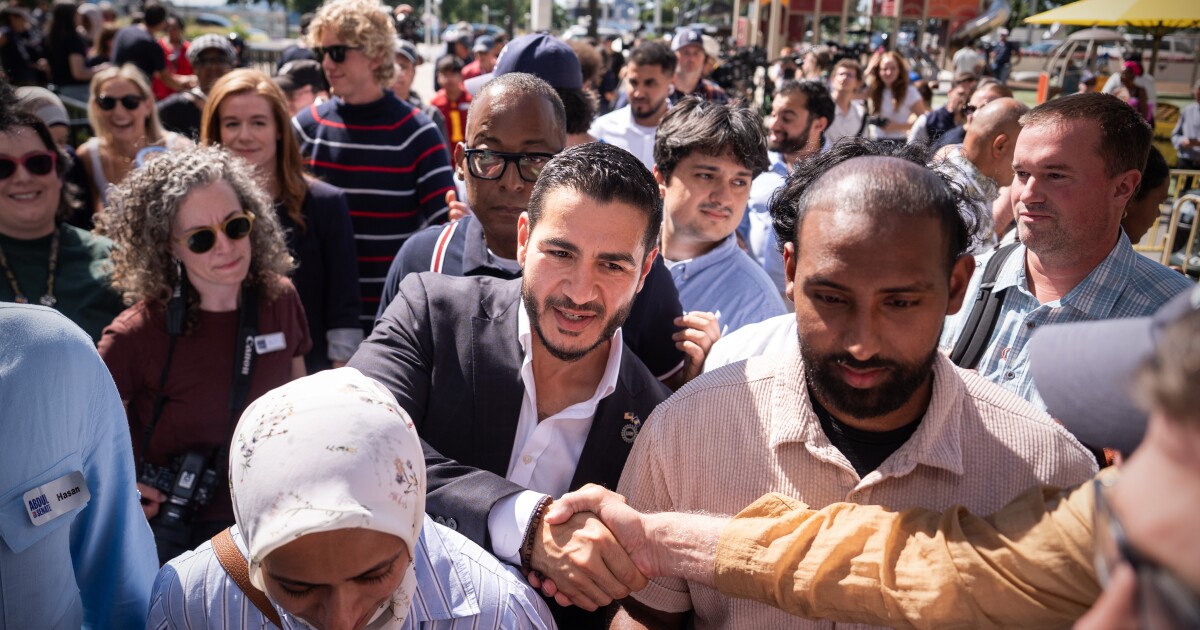
Abdul El-Sayed made history in Michigan by becoming the first Muslim nominated by the Democratic Party to run for the U.S. Senate. This milestone achievement was celebrated by many, but it also shed light on the prevalent anti-Muslim sentiment in the country.
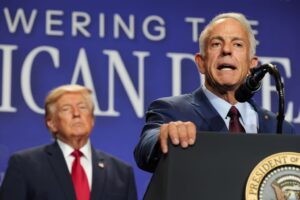
Some Republicans, including former President Donald Trump, wasted no time in attacking El-Sayed, emphasizing his full name, Abdulrahman Mohamed El-Sayed, while portraying him as a threat to America. U.S. Rep. Nancy Mace from South Carolina went as far as calling every Muslim holding public office a danger to national security and the republic.
El-Sayed responded to these attacks by highlighting the common goals and aspirations shared by all Americans, regardless of their faith. He stated, “We all pray for the same things. … We want what’s good for our kids and our families. They’re going to use Islamophobia, because their ideas are tired.”
Anti-Muslim Sentiment Evident Across Communities
Issues related to anti-Muslim sentiment have surfaced in various communities nationwide, leading to tense situations. The Council on American-Islamic Relations (CAIR) noted that despite the progress made by American Muslims in different spheres, there is a significant backlash marked by increased hate speech and attacks on mosques.
Challenges in Approving New Mosques
In places like McKinney, Texas, and Mooresville, North Carolina, approval for new mosque projects faced opposition and hostility from some residents. In McKinney, despite a unanimous council vote to approve the mosque, there were heated anti-Islam sentiments expressed during the meeting.
A similar situation unfolded in Mooresville, North Carolina, where residents voiced concerns about a mosque project that had already been approved. The town commissioners reiterated the need for respect and adherence to zoning regulations for religious assembly projects.
Resistance in Oklahoma Against a New Mosque
The city council of Broken Arrow, Oklahoma, rejected a proposal for a new mosque earlier this year, citing concerns about infrastructure impact and other issues. However, the Islamic Society is continuing its efforts to establish a mosque in the area despite the initial setback.
These instances illustrate the challenges faced by Muslim communities seeking to establish places of worship across the United States in the midst of persistent anti-Muslim sentiment.
In a recent development, the Council on American-Islamic Relations (CAIR) has taken legal action against the mayor and four councilors of a city, alleging discriminatory behavior towards a proposed mosque. The lawsuit claims that the council’s decision to reject the mosque’s rezoning request was fueled by prejudice and violated state and federal laws governing religious land use.
During a news conference, Meghan Murphy, an attorney with CAIR’s Legal Defense Fund, stated that the council’s actions were motivated by intolerance towards Muslims. She emphasized, “They did not want a mosque in their city. They did not want Muslims here. So they made up a reason, and in doing so they violated the law.”
This incident is not an isolated case, as opposition to mosque construction has been a recurring issue in some communities. In Murfreesboro, Tennessee, a similar situation unfolded in 2010, where efforts to block a mosque project led to public protests, vandalism, arson, and even a bomb threat. Despite these challenges, the mosque was eventually built following legal proceedings.
The resistance to mosque projects coincides with a broader trend of anti-Muslim rhetoric from some Republican officeholders. Concerns about sharia law, Muslim populations in major cities, and alleged ties to terrorism have been raised by some politicians. However, civil rights groups like CAIR argue that these fears are unfounded and are being exploited for political gain.
Furthermore, Republican governors in Texas and Florida have supported initiatives to shut down CAIR, citing alleged ties to terrorism. In response, CAIR has refuted these claims and filed lawsuits challenging the constitutionality of such actions.
Muslim American leaders perceive the current climate as a form of political scaremongering, particularly during election years. Ibrahim Hooper, a spokesperson for CAIR, highlighted the increase in anti-Muslim hate speech, stating, “Every election year, we expect a rise in anti-Muslim hate. It’s been worse this year than it has been in years.”
As debates surrounding religious freedom and tolerance continue, it is crucial to address these issues with sensitivity and respect for diverse beliefs within communities. The legal battle initiated by CAIR underscores the importance of upholding the principles of religious liberty and combating discrimination based on faith.