Analyzing President Trump’s Visit to Michigan
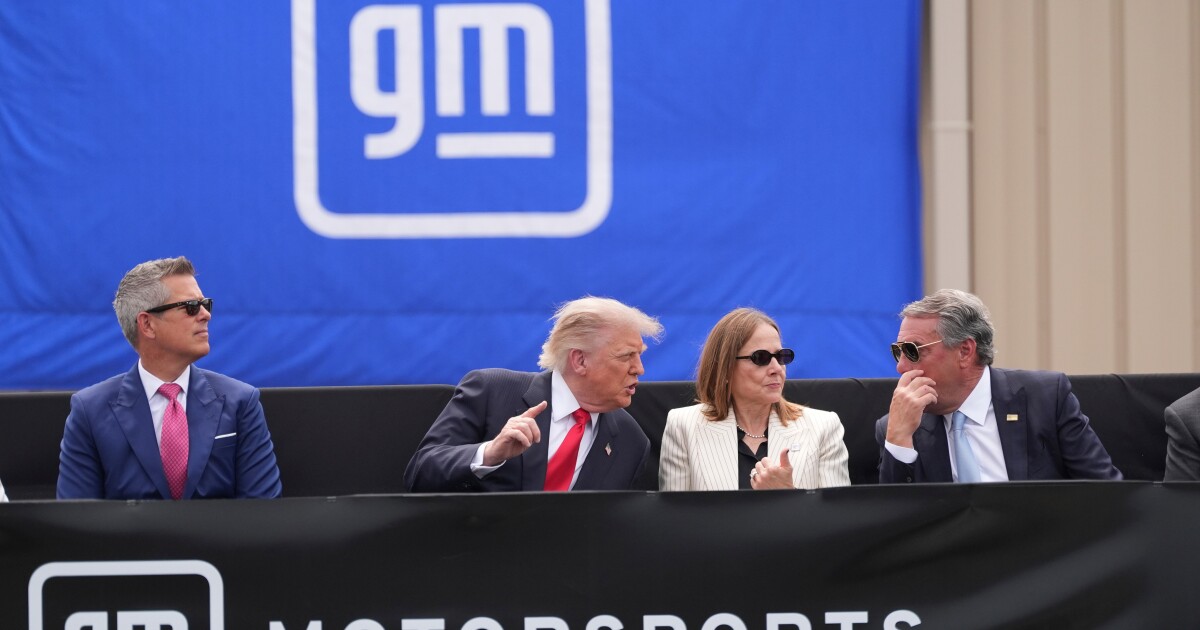
President Donald Trump visited Michigan on Monday, touting his economic policies that he claims have revitalized the auto industry and American manufacturing. Despite criticisms of the tariffs he imposed against Canada and other countries, Trump defended his actions while visiting a General Motors facility in Milford. During his speech, he praised GM’s plans for expanding production domestically and positioned himself as a president supportive of auto workers.
Trump’s Support for Auto Industry
During his visit to the GM facility, President Trump took the opportunity to showcase his administration’s efforts to boost the auto industry. He watched Corvette, Cadillac, and Hummer vehicles compete in drag races, emphasizing the progress made under his economic policies.
Impact of Tariffs on GM
Despite criticisms of tariffs, Trump claimed that they have been beneficial for GM. He stated, “It’s amazing what tariffs are doing for GM,” highlighting his support for the company. While acknowledging that the rest of the world may not approve of his tariff policies, Trump remained steadfast in his defense of the measures.
Standing Up for Auto Workers
Throughout his visit, President Trump made it a point to declare his unwavering support for auto workers. He joked with the workers, saying, “I’ve done more for you than your parents, OK?” His visit and speeches aimed to portray him as a president who prioritizes the interests of American workers.
President Trump’s visit to Michigan underscored his commitment to the auto industry and his belief in the positive impact of tariffs on American manufacturing.
President Donald Trump made a significant appearance in Michigan just days before the state’s primary elections, garnering attention for his remarks and endorsements. During his speech, Trump called out several Republican candidates, notably endorsing Representative John James in the gubernatorial contest against businessman Perry Johnson. Despite missing Trump’s endorsement, Johnson is attempting to align himself with the president’s image as the state’s political landscape heats up.
The upcoming primary elections in Michigan, scheduled for August 4, are crucial for both parties as they prepare for the general election. In the Senate primary, Republican Mike Rogers remains unopposed, while the Democratic Senate primary between Representative Haley Stevens and progressive Abdul El-Sayed attracts national interest. The outcome of these primaries will shape the political landscape leading up to the general election.
One of the key issues highlighted during Trump’s visit was the impact of new tariffs on Canada, a move that could potentially harm Michigan’s economy. Michigan, a state that Trump flipped in the 2024 elections after it supported Joe Biden in 2020, has already felt the effects of the president’s tariffs on imported cars and auto parts. With new steep import levies taking effect, Trump’s targeted tariffs on Canada, including high tariffs on cars, could further strain Michigan’s economic ties with its northern neighbor.
Michigan’s economy heavily relies on Canada, making the new tariffs a cause for concern among residents and businesses alike. Coupled with persistent inflation, rising gas prices, and ongoing geopolitical tensions, such as the conflict in Iran, Michigan faces additional economic challenges. These factors have contributed to a growing dissatisfaction among voters with Trump’s economic policies, potentially impacting the upcoming elections.
Trump’s visit to Michigan, strategically timed close to the primary elections, aims to bolster support for his endorsed candidates and solidify Republican positions in the state. However, the president’s association with top Republicans before the general election poses risks, with critics cautioning against aligning too closely with Trump. As the political landscape intensifies in Michigan, the November elections loom large, with economic concerns and voter sentiment shaping the narrative for both parties. Amidst ongoing tensions between the United States and Canada, President Trump’s recent visit to Michigan has reignited discussions surrounding tariffs and trade disputes. The Supreme Court’s decision to strike down several of Trump’s tariffs prompted his administration to explore alternative ways to impose them, citing alleged discriminatory practices by Canada against American exports, particularly automobiles.
Trump’s visit to Michigan marks his third trip to the state during his second term, emphasizing the significance of the region in the broader political landscape. Previously, the president visited a Ford plant in Dearborn and addressed the Detroit Economic Club, defending tariffs despite criticism from auto industry leaders regarding increased business costs.
Notably, Trump’s latest visit coincides with strained relations between his administration and Canada, notably impacting the inauguration of the Gordie Howe International Bridge connecting Detroit and Windsor, Ontario. Canada’s decision to hold its own event celebrating the bridge’s opening, instead of a joint celebration with U.S. officials, underscored the escalating trade tensions following Trump’s announcement of new tariffs on Canadian imports.
These developments highlight the complex interplay between economic policies, international relations, and regional dynamics, shaping the discourse around trade practices and tariff negotiations between the United States and Canada. As both countries navigate these challenges, the implications of such decisions reverberate across industries and communities on both sides of the border.