The Supreme Court Decision’s Impact on Black Representation in Congress
Following a landmark decision by the U.S. Supreme Court that further weakens the Voting Rights Act, there is concern about a potential historic drop in representation by Black members of Congress. The court’s reinterpretation of Section 2 of the Voting Rights Act has sparked Republican calls for redistricting, leading to uncertainty about the fate of several House districts.
Redistricting and Minority Representation
Republican-controlled state legislatures in the South are expected to redraw House districts, potentially eliminating some districts with sizable racial minority populations currently represented by Black Democrats. At least 15 House districts, primarily in the southern states, are at risk of elimination, according to an NPR analysis.
While the exact impact of redistricting remains uncertain, some Democratic-led states may consider undoing certain majority-minority districts to gain additional seats. Conversely, GOP-led states may retain these districts for partisan reasons to maintain Democratic-leaning voters within specific boundaries.
Black Representation in Congress
If even a few of these districts are eliminated, it could lead to the largest decline in the number of Black representatives in Congress. Since the passage of the Voting Rights Act in 1965, the number of Black-represented districts has grown to 63, comprising around 14% of the House. This potential drop in representation has drawn criticism from members of the Congressional Black Caucus.
Reactions and Legal Responses
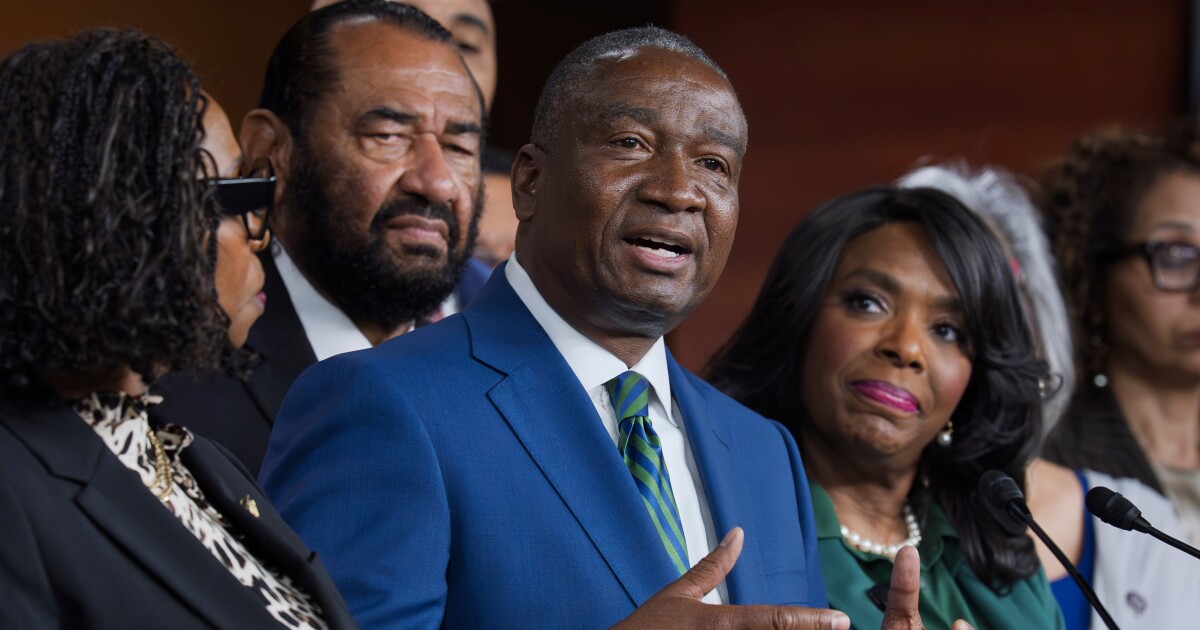
Democratic Rep. Yvette Clarke of New York denounced the Supreme Court’s decision, calling it an attack on Black voters and a power grab to silence Black voices. Rep. Terri Sewell of Alabama, a proponent of strengthening the Voting Rights Act, plans to revise her bill to address the court’s ruling.
Legal experts, like Atiba Ellis, foresee an escalation in partisan gerrymandering between Republicans and Democrats, further impacting the representation of communities of color in government. The ongoing battle over redistricting could have far-reaching consequences for political representation in Washington.