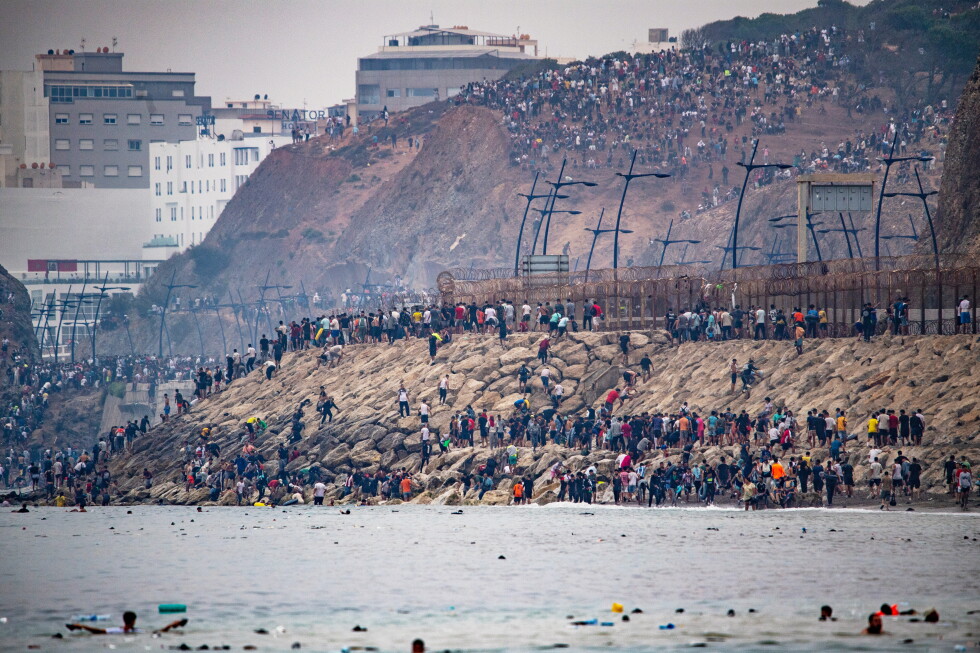
In a sudden and significant border incident, around 60,000 migrants crossed from Morocco into Spain’s Ceuta territory within a span of 24 hours. This influx equates to approximately 70% of Ceuta’s population, according to the territory’s president. Tragically, at least 57 individuals lost their lives during this perilous journey.
The majority of these migrants, however, opted to return voluntarily shortly after crossing, as the influx created chaos and a humanitarian crisis, according to Spanish authorities. Many undertook the hazardous journey by swimming several miles, facing Spanish authorities who used water cannons, tear gas, and warning shots to deter them. The deaths included those who drowned or were trampled in a rush to cross a breakwater barrier.
Spain responded by deploying armed forces and additional police to regain control in Ceuta, a Spanish possession since 1580, located at the entrance to the Mediterranean Sea. On the Moroccan side, security forces engaged in clashes with migrants. The situation also prompted Italy and France to enhance their border controls for arrivals from Spain.
A migrant runs from Spanish police officers as they cordon off access to the beach for people crossing from Morocco into the Spanish enclave of Ceuta, Friday, July 31, 2026. (AP Photo/Antonio Sempere)
“The situation that Ceuta is going through is absolutely unsustainable,” Ceuta President Juan Jesús Vivas told journalists.
Simultaneously, migrants from Morocco also attempted to cross into Melilla, Spain’s other territory at the tip of North Africa, where they clashed with police.
Spanish Prime Minister Reacts
During a visit to Ceuta, Spanish Prime Minister Pedro Sánchez described the event as “a violation of Spain’s territorial integrity.” He attributed the crisis to human smugglers who mislead migrants, often resulting in their deaths.
The Spanish Interior Ministry’s data estimated that approximately 50,000 migrants had crossed from Morocco since Thursday, with 48,300 returning by Friday evening. The situation was described as a “serious humanitarian crisis” by Rachid Sbihi, leader of a local workers’ association, highlighting the plight of migrants, including unaccompanied children, sleeping on streets and parks.
The Moroccan Interior Ministry did not provide a comment regarding the figures reported by Spain. European Commission President Ursula von der Leyen condemned the situation, calling it “unacceptable” and emphasized the need for adherence to Union rules and dismantling smuggling networks.
Migrants rest outside the Temporary Center for Immigrants (CETI) after crossing from Morocco into the Spanish enclave of Ceuta, Friday, July 31, 2026. CETI is the Spanish acronym for the migrant reception center. (AP Photo/Antonio Sempere)
Fatal Consequences
The tragedy saw the loss of 57 lives, with many drowning or being crushed during attempts to cross the breakwater fence at Tarajal Beach. Belongings were left floating in the waters near the border, underscoring the chaos. Many young Moroccans, driven by the hope of better opportunities, expressed regret over the conditions in Ceuta, opting to return home.
Abdulah Buji, a 21-year-old from Tetouan, expressed his disappointment: “There’s nothing at home. I’d have to work 12-hour shifts for a meager wage. That’s why I came here,” he said. “But I haven’t found any opportunities here either, so I have to go back.”
Moroccan authorities attempted to prevent crossings using water cannons and warning shots, while Morocco’s ambassador to Spain emphasized their commitment to orderly migration.
Migrants return to Morocco from the Spanish enclave of Ceuta, Friday, July 31, 2026. (AP Photo/Antonio Sempere)
Legal Context and International Reaction
The situation in Ceuta is partly attributed to a recent Spanish Supreme Court ruling prohibiting summary deportations of sea-arriving migrants, unlike those crossing by land. This ruling was reportedly misinterpreted by human traffickers, leading to the surge, according to Sánchez.
Spain’s approach to migration, as seen in recent policies granting residency to undocumented migrants, faces criticism. While intended to benefit the economy and address demographic challenges, critics argue it spurs more migration. The U.S. has expressed support for Spain, condemning the situation as a violation of sovereignty and human rights.
Belongings left behind by migrants float in the sea after they crossed from Morocco into the Spanish enclave of Ceuta, Friday, July 31, 2026. (AP Photo/Antonio Sempere)
Challenges in Melilla
Migrants also targeted Melilla, Spain’s other North African territory. In Bni Nsar, the Moroccan town bordering Melilla, clashes with police were reported, involving rock-throwing and vehicle fires, according to local media. The situation led to injuries among security forces and several arrests.
Both Ceuta and Melilla are self-governing Spanish cities, often viewed by Moroccans as occupied territories.