Arizona Governor Considers New Measures for Political Gift Disclosures
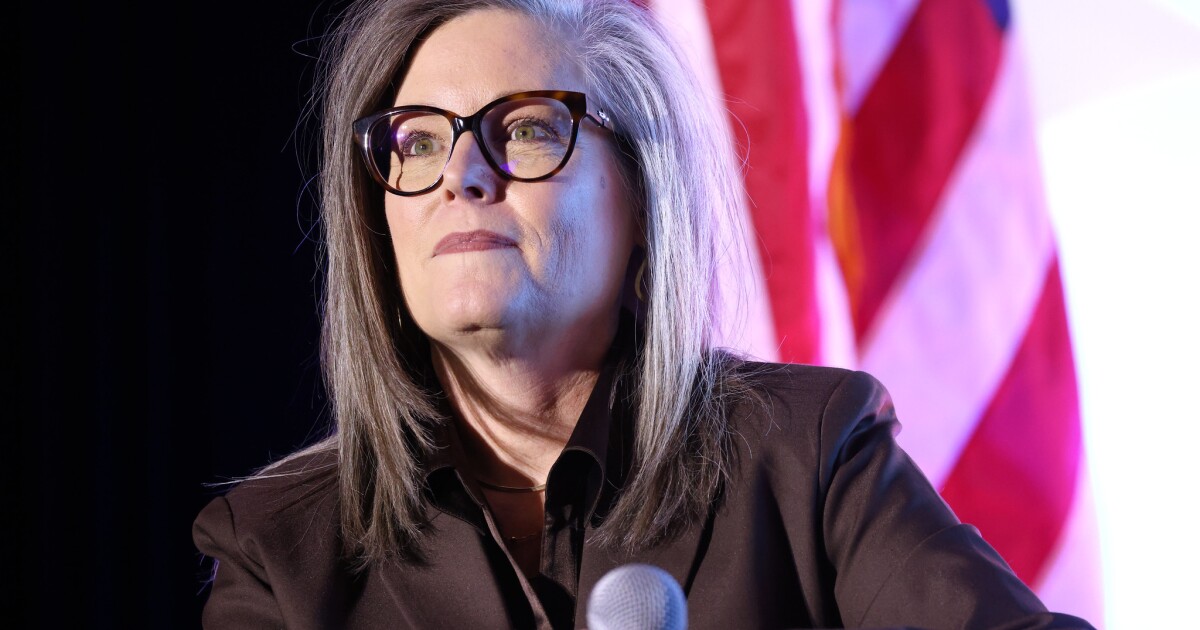
In a bid to enhance transparency in government dealings, Governor Katie Hobbs announced Thursday her intention to explore legislative proposals that would mandate the disclosure of political donations by companies seeking state contracts. This move comes months after she vetoed a similar initiative proposed by Sen. T.J. Shope.
Shope’s bill, SB 1612, would have required companies bidding for government contracts to reveal any donations made to the governor or related funds over the past five years. Despite dismissing the proposal as a “political stunt” at the time, Hobbs now appears open to the idea of greater financial transparency.
The catalyst for this renewed interest seems to be the scrutiny surrounding Sunshine Residential Homes, which received a significant rate increase following a $100,000 donation to Hobbs’ inaugural fund and an additional $300,000 to the Arizona Democratic Party. This decision has sparked ongoing investigations by both Attorney General Kris Mayes and Maricopa County Attorney Rachel Mitchell into potential “pay to play” practices.
Hobbs insists her current stance is not a reversal but a continuation of her commitment to transparency. “I’ve always talked about more transparency,” she stated, arguing that Shope’s proposed legislation was redundant since existing laws already demand disclosure of political contributions.
However, current laws fall short in several areas. While candidates must disclose donations to their political committees, they aren’t required to link those contributions to government contract pursuits. Additionally, there is no mandate to reveal donors to separate entities like “legal defense funds,” which can receive unlimited contributions.
Hobbs herself established a legal defense fund amid legal challenges from Republican Kari Lake concerning the 2022 gubernatorial race outcome. The fund’s existence was only publicly acknowledged due to a mandatory disclosure by Pinnacle West Capital Corp., which donated $100,000.
Similarly, donations for inaugural festivities remain largely undisclosed unless voluntarily released, as was the case with the $100,000 contribution from Sunshine Residential. This donation was only unveiled after Hobbs’ campaign provided a donor list for the inaugural event.
The Arizona Republic disclosed that Hobbs personally solicited Sunshine Residential’s CEO for financial support following her electoral victory. The inaugural fund amassed $1.5 million, although the event’s expenses totaled just $207,000.
Despite potential conflicts of interest, Hobbs stands by her administration. “I have always put Arizonans first in every single decision I make,” she assured, acknowledging the discomfort large donations might cause state employees.
Shope remains optimistic about working with Hobbs on future legislation, expressing readiness to collaborate. Meanwhile, Arizona House Speaker Steve Montenegro has initiated an advisory committee to investigate the matter, emphasizing the need for a fair and transparent system. “The facts reported raise serious questions the House cannot ignore,” Montenegro stated.
In a related development, Arizona Senate President Warren Petersen indicated support for potential impeachment proceedings against Hobbs and Attorney General Kris Mayes if evidence of wrongdoing surfaces, though he did not specify allegations against Mayes.
Impeachment proceedings would require a two-thirds majority in the nearly evenly divided state Senate, raising questions about the feasibility of such political actions.