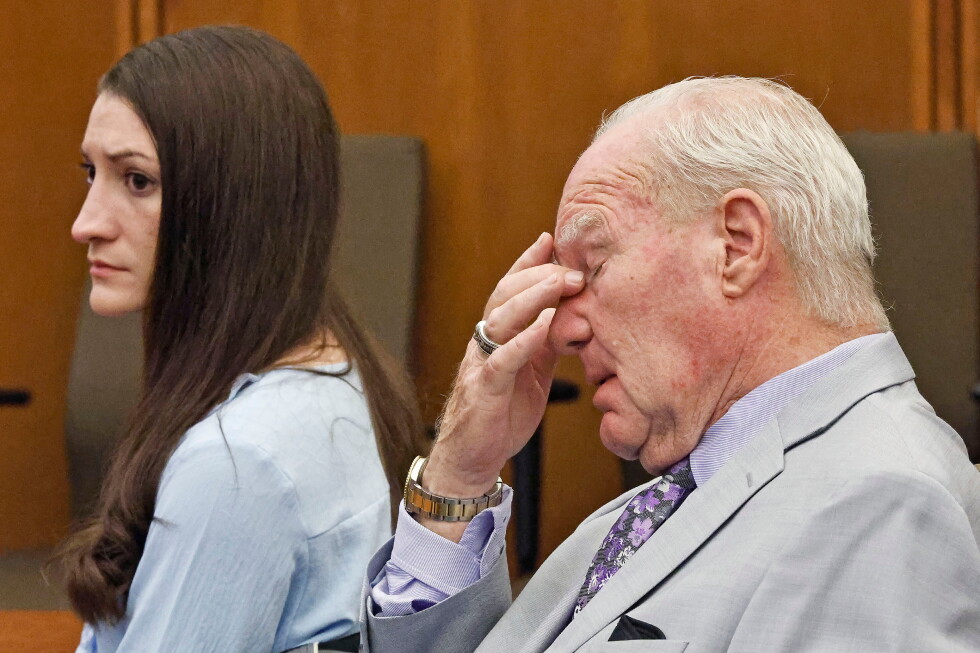
The trial of Lindsay Clancy, a Massachusetts mother accused of killing her three children, has taken another dramatic turn as jury deliberations continue to be fraught with tension. The jury, which has already communicated its inability to reach a unanimous decision, highlighted a new issue: a single juror’s refusal to adhere to the court’s guidance on reasonable doubt.
The jury reconvened Friday after a sixth day of deliberations ended without a verdict. A note from the jury’s foreperson to the judge indicated that one juror was hindering the decision-making process by ignoring legal instructions. Despite this, the judge declined a defense motion to dismiss the juror.
Trial Captures Public Attention
The case, which has been live-streamed, has attracted significant public interest and sparked debates over mental health issues related to postpartum experiences. Clancy, a former labor and delivery nurse, has not denied the allegations but claims that postpartum psychosis drove her actions. The prosecution, however, argues she was aware of her actions when she killed her children—Cora, Dawson, and Callan, ages 5, 3, and 8 months.
For more details on the case, visit the following links:
Jury deliberations,
Criminal responsibility,
Postpartum psychosis.
Judge’s Delicate Position
Judge William Sullivan, faced with the jury’s communication, took the step of individually questioning each juror in private. He emphasized the importance of following the court’s instructions on reasonable doubt but did not remove the juror in question. “I don’t feel it’s appropriate for me to side with one side or the other of the deliberations,” he explained. The defense, however, expressed concern over a potential mistrial if the jury remains deadlocked.
Potential Outcomes and Future Steps
If the jury remains unable to deliver a verdict, a mistrial could be declared, leading prosecutors to either retry the case, drop charges, or seek a plea agreement. A guilty verdict could lead to a conviction for either murder or manslaughter, while an acquittal might result in Clancy’s confinement to a mental health facility, depending on evaluations.
For more information about a potential mistrial, read
what happens next.
Insights into Clancy’s Mental Health
During the trial, testimonies from relatives and medical professionals revealed Clancy’s deteriorating mental health leading up to the incident. This included multiple medications and a psychiatric hospital stay. Expert opinions regarding her mental state at the time of the children’s deaths vary significantly between the defense and prosecution.
Clancy’s ex-husband, Patrick Clancy, has publicly stated his forgiveness, describing her actions as those of an ill person rather than one with malicious intent. The prosecution, in contrast, questions the sincerity of her suicide attempt and points to deliberate actions preceding the incident.
To explore more about Clancy’s mental health and psychiatric care, visit
psychiatric care.
The Associated Press has contributed to this report. For more in-depth coverage, follow the ongoing updates through the provided links.