The political landscape of Virginia is stirring significant controversy with the introduction of a controversial bill aimed at altering its borders. This legislation, proposed by a Republican representative, seeks to revert a historical decision that could dramatically shift the state’s political balance.
Georgia Republican Rep. Rich McCormick has put forth the “Make DC Square Again Act,” a proposal intended to reverse the return of the southwestern portion of Washington, D.C., to Virginia—a process known as retrocession. This move originally occurred in the 19th century. McCormick argues that this bill would rectify what he describes as an “artificial advantage” gained by Virginia Democrats due to the influx of federal employees into the state.
“The Make DC Square Again Act restores the original ten-mile-square District and ends the artificial advantage Virginia Democrats have recently gained from all the federal bureaucrats moving into Virginia,” McCormick stated.
The bill’s likelihood of passing is slim, given the current political gridlock in Congress. Nonetheless, it represents a strategic move in the ongoing battle for control in the closely contested House of Representatives as midterm elections approach.
Supporters of federal district statehood criticize the proposal, highlighting how it underscores the political maneuvering surrounding Washington, D.C. Alicia Yass from the American Civil Liberties Union of D.C. emphasized, “The residents of the district are not fully participating in the democracy of this country because we are not allowed to. Bills like this that mess around with the district just show how important it is for D.C. to have the full benefits and rights of a democracy.”
Understanding Retrocession
Retrocession involves returning land from the District of Columbia to Virginia, a process initiated in 1846 when Congress allowed 31 square miles, including Alexandria and areas now housing the Pentagon and Arlington National Cemetery, to revert to Virginia. This decision was driven by economic concerns and fears of congressional interference with slavery.
Calls to reverse this retrocession have surfaced repeatedly, with some arguing that Congress lacked the authority to cede the land and that the local referendum did not meet congressional standards for such a decision. However, the clarity of Congress’s ability to reintegrate these areas into the federal district remains uncertain.
George Derek Musgrove, a history professor, expressed skepticism about McCormick’s motivations, suggesting that the bill is more about political advantage than genuine retrocession. “It’s not even a retrocession bill. It’s really a Virginia voter suppression bill,” he remarked.
Significance in the Current Political Climate
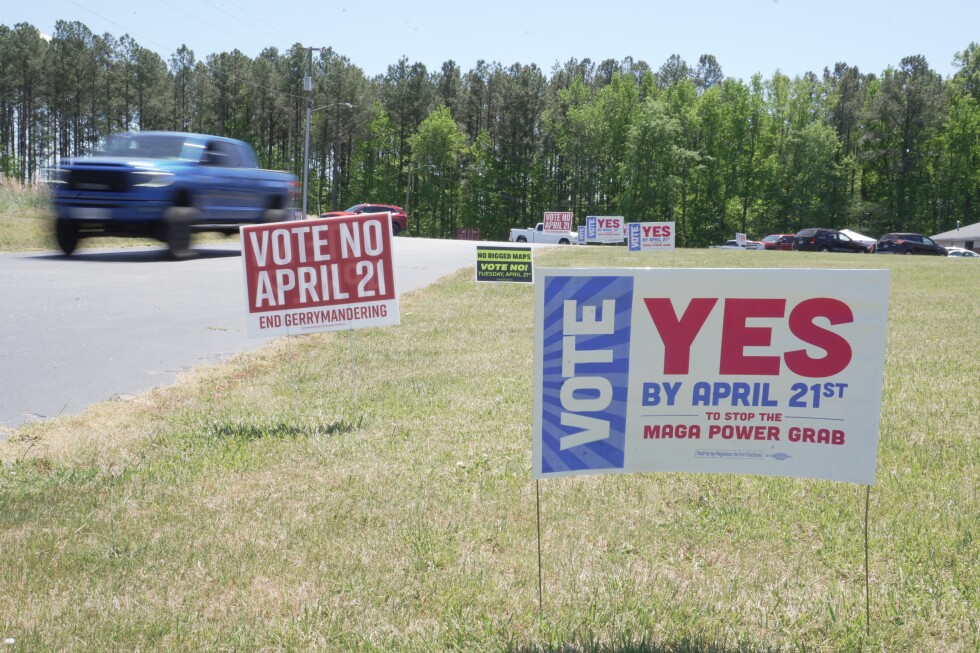
The areas of Alexandria and Arlington County, rich in Democratic voters, played a crucial role in Virginia’s recent redistricting referendum. In the 2024 presidential election, Democratic candidate Kamala Harris secured 77% of the votes there, compared to Donald Trump’s 20%. The redistricting could enhance Democratic representation in the U.S. House, but a return of these areas to D.C. might diminish this advantage and necessitate new district boundaries.
Approximately 400,000 residents in these regions could lose full representation in both the U.S. Senate and House if the retrocession is reversed.
Exploring Other Options
While McCormick’s bill aims to restore the district’s original boundaries, other proposals exist. The American Capital Project advocates for a presidential order declaring the original retrocession law void, potentially prompting a Supreme Court ruling on its legality. However, details about the group remain sparse.
Efforts to grant D.C. statehood have also been pursued, with the House passing such a bill in 2021, though it stalled in the Senate. Some Republicans have suggested returning the district to Maryland as an alternative for providing full congressional representation.