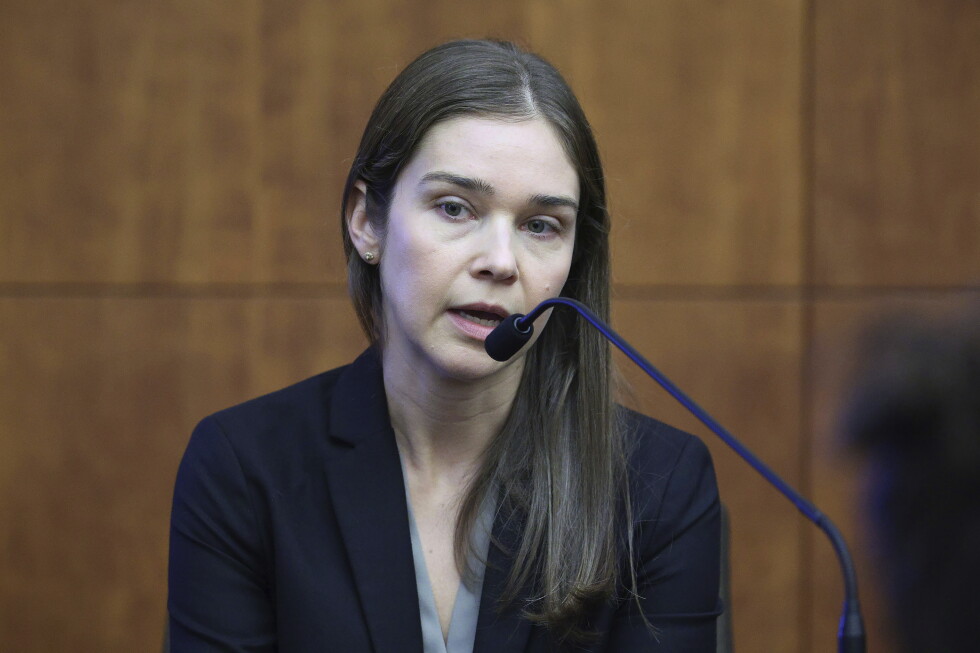
The trial of Lindsay Clancy, a Massachusetts mother accused of killing her three children, has brought forward questions about the adequacy of mental health care provided to her before the tragic event. Defense attorneys are scrutinizing the care she received, suggesting that the mental health system may have failed her during a critical period.
Defense Questions Psychiatrist’s Care
Lindsay Clancy’s defense team, led by attorney Kevin Reddington, has raised concerns about the treatment provided by Dr. Jennifer Tufts, who consulted Clancy through 25-minute video appointments. During these sessions, Clancy expressed symptoms and concerns about the medications she was prescribed, yet Reddington implied that the care she received was rote and insufficient.
When questioned about the treatment approach, Reddington asked, “What did you do? You had a woman who was telling you she felt hopeless.” Dr. Tufts responded that she assured Clancy that there were treatments and programs available, offering her hope.
Reddington further pressed whether Tufts ever suggested in-person consultations, to which Tufts replied, “Talking to her over the video didn’t seem like an issue. It didn’t seem like there was something I was missing.”
EDITOR’S NOTE: This story includes discussion of suicide. If you or someone you know needs help, the national suicide and crisis lifeline in the U.S. is available by calling or texting 988.
Clancy’s Mental Health and Legal Battle
Lindsay Clancy, 35, faces murder charges for the deaths of her children, Callan, Dawson, and Cora, found in the basement of their Duxbury home. She herself was found outside after jumping from a window, resulting in paralysis from the waist down. Prosecutors claim she deliberately planned the incident, while the defense argues she was suffering from severe mental illness.
Clancy’s attorneys assert that she should not be held criminally liable due to mental illness, describing her as having heard voices instructing her to commit the acts. A forensic psychiatrist diagnosed her with bipolar disorder and postpartum psychosis.
Her defense also highlighted her efforts to seek help, including consulting various healthcare providers, trying different medications, contacting a suicide hotline, visiting an emergency room, and checking into a psychiatric hospital.
Psychiatrist and Nurse-Practitioner Testimonies
Dr. Tufts, who diagnosed Clancy with generalized anxiety disorder and an adjustment disorder, testified that Clancy did not report hallucinations or manic episodes typical of bipolar disorder. Clancy did mention feeling suicidal at times, but Tufts noted she never indicated any plans to harm herself or her children.
Clancy is also involved in a civil lawsuit against Tufts and other healthcare providers. Tufts, who began her private practice shortly before treating Clancy, stated, “I do not believe that I’ve been negligent.”
The trial also featured testimony from Julie Paul, a psychiatric nurse-practitioner who treated Clancy briefly. Paul noted the frequent adjustments in Clancy’s medication regimen due to her reported symptoms but testified that Clancy never disclosed any thoughts of harming herself or her children.
The court proceedings continue with Reddington expected to question Paul further. If convicted, Clancy faces life in prison without parole. Alternatively, a not guilty verdict due to lack of criminal responsibility could result in her commitment to a state mental health facility.