In a digital age where crowdfunding is transforming various sectors, students at Howard University are increasingly turning to GoFundMe to manage their tuition expenses. This shift follows the implementation of Donald Trump’s Big Beautiful Bill, which caps federal student aid and has left many scrambling for alternative financial solutions.
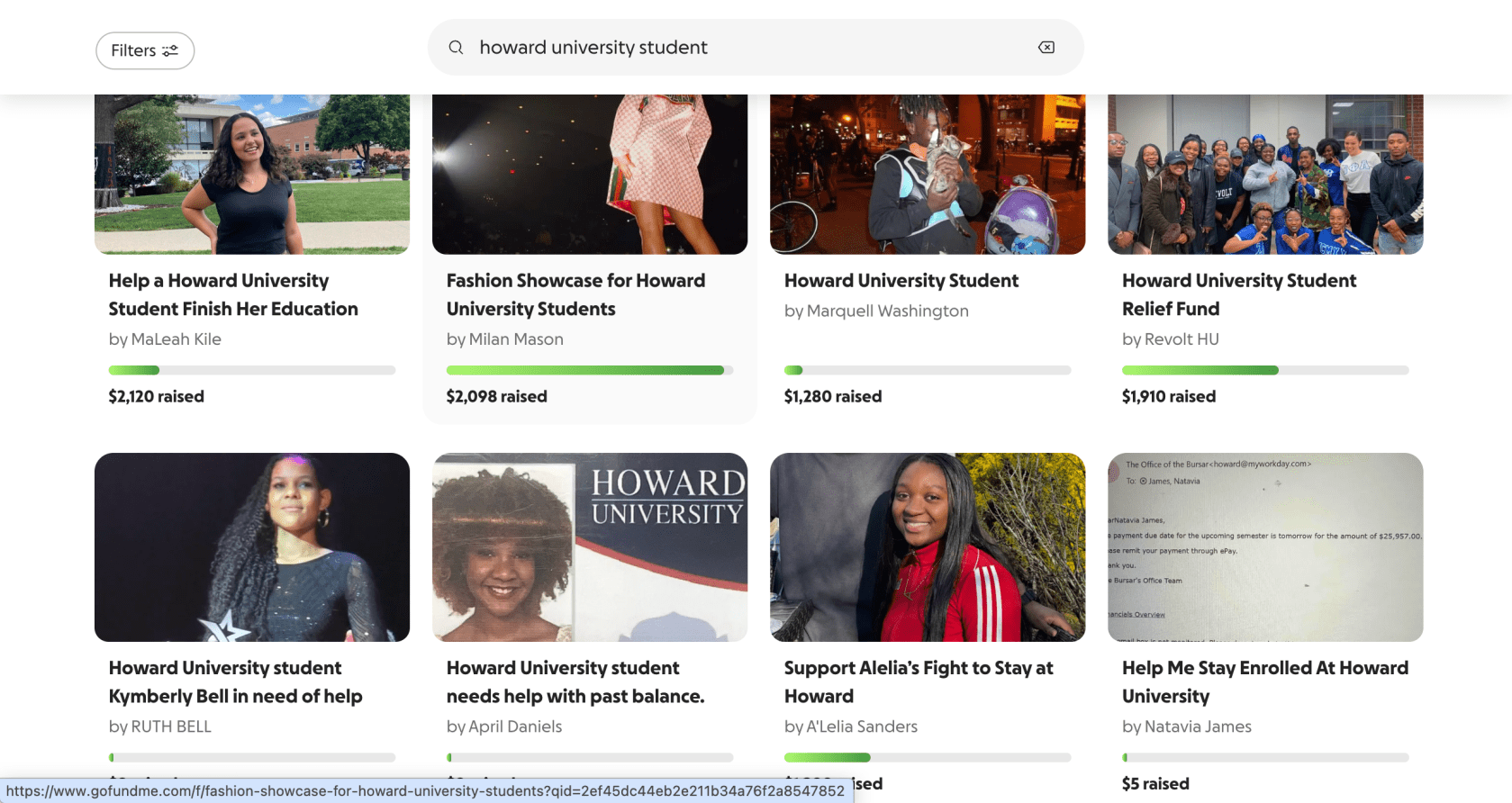
Upon searching “Howard University tuition” on GoFundMe, it becomes evident that students are relying heavily on the platform to fund their education. Pages upon pages showcase students from different walks of life, from seniors in their final year to freshmen just starting out, all pleading for assistance to remain in school.
The stories are strikingly similar: students facing the risk of eviction from their dorms or being unable to register for classes due to unpaid fees. The funding requests vary from $500 to $10,000, painting a poignant picture of the financial challenges faced by students today.
Through GoFundMe’s search capabilities, around 300 active campaigns by Howard students have been identified this year. This platform, once considered a last resort, has now become an essential part of the financial aid ecosystem, driven by the generosity of strangers and the unity among students.
Nationally, this trend is growing. A Newsweek report highlighted a more than 15% increase in education-related crowdfunding campaigns in 2024. Similarly, a NASFAA report from 2023 noted the rising reliance on crowdfunding by students to cover educational expenses.
The introduction of the One Big Beautiful Bill Act, aimed at capping federal borrowing to curb debt, has unintentionally pushed students into financial distress, leaving them to seek out crowdfunding to bridge the gap and stay in school.
This financial strain is tangible, as seen in the experiences of students like Stephanie Stewart, a journalism major, who faced enrollment and housing challenges due to delays in her Parent PLUS loan disbursement. Similarly, Jessica Parker from Georgia was prevented from starting her junior year until she could settle an outstanding balance, raising $3,585 on GoFundMe towards this cause.
Other students, such as Anania Wills and Roy Xavier James Vanterpool, are also battling financial hurdles. Wills is trying to raise $15,000 to prevent her account from being sent to collections, while Vanterpool seeks $5,000 to cover unexpected tuition and housing increases.
At Temple University, students are adopting various strategies to cope, from selling personal items to holding multiple jobs. Meanwhile, at Towson University, the reliance on family support varies, with some students juggling meal plans and off-campus housing to cut costs.
The issue transcends Howard University, reflecting a broader systemic challenge in higher education post-Big Beautiful Bill. While some students, like Zakaiya from the Chadwick A. Boseman College of Fine Arts, have successfully met their crowdfunding goals, many continue to navigate the emotional and financial strain of securing their education.
For these students, crowdfunding is more than just a financial necessity; it is a testament to their resilience and determination to pursue higher education amidst shifting financial landscapes.
As tuition costs rise and federal aid remains limited, students are left to bear the weight of educational expenses, often turning to the kindness of strangers to support their academic aspirations.
Howard University students’ reliance on GoFundMe highlights the broader challenges faced by students nationwide, illustrating the pressing need for sustainable financial solutions in the realm of higher education.
SEE ALSO: