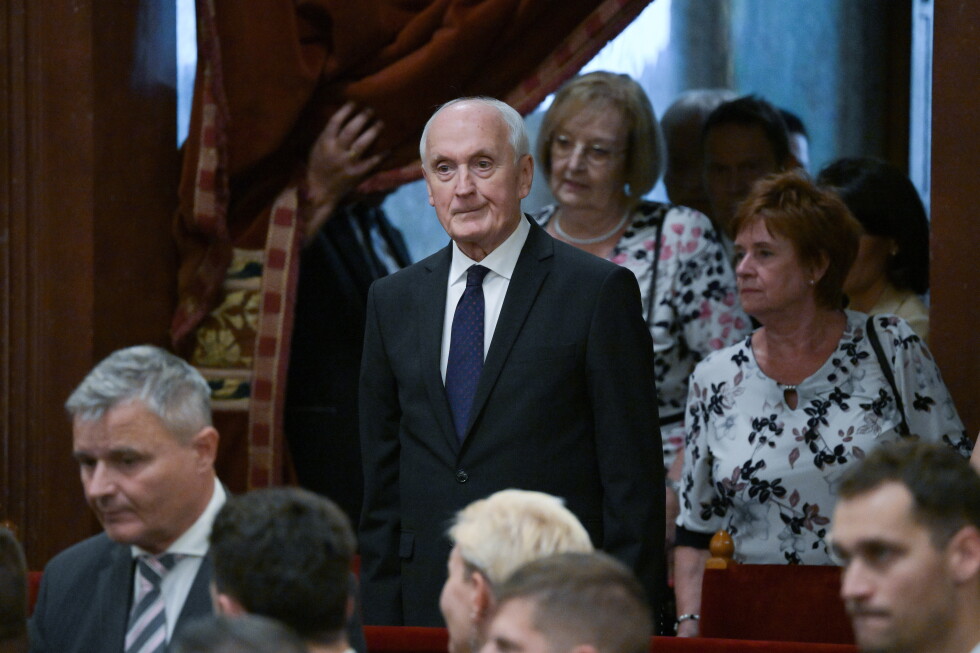
In a significant political shift in Hungary, the nation’s Parliament has appointed András Baka, former chief justice of the Supreme Court, as the new president. This move is a part of the current government’s efforts to reconfigure the political landscape following the era of former Prime Minister Viktor Orbán.
Backed by the ruling Tisza party, Baka was elected through a secret ballot, receiving 140 votes in favor and six against, with the far-right Fidesz party, led by Orbán, abstaining from participation.
Although the presidential role in Hungary is mostly ceremonial, it holds the power to return legislation to Parliament or the Constitutional Court for further review. Baka is set to officially assume the presidency on August 19.
Focus on Democratic Restoration
Prime Minister Peter Magyar’s administration asserts that the removal of officials appointed during Orbán’s leadership is essential to restore democratic values and institutional integrity. This justification comes amidst accusations from Orbán and his party, labeling the new government’s actions as “tyrannical,” a claim that Magyar and Tisza vehemently deny.
In his parliamentary address post-election, Baka highlighted the challenges posed by societal and political divisions fostered during Orbán’s 16-year tenure. He emphasized the importance of addressing legal and financial misconduct while cautioning against political change driven by “revenge.”
“This country cannot build a common future while its citizens see each other as enemies,” Baka stated. “Political change should not mean that from now on people will have to be afraid, be silent, or feel like outsiders in their own country.”
Dismantling Past Power Structures
Since May, Magyar’s government has been actively dismantling what he describes as Orbán’s “mafia,” targeting political appointees and institutional heads linked to Orbán’s administration. The government has also suspended Hungary’s public broadcast service, which Magyar criticized as a “propaganda factory,” and closed the Sovereignty Protection Office, an agency criticized for suppressing dissent.
Further reforms include establishing an office to investigate financial misconduct under Orbán’s government and imposing term limits for lawmakers and prime ministers to ensure accountability and transparency.
Journey Back to Leadership
Baka’s appointment follows the strategic removal of Orbán-era president Tamás Sulyok, whom Magyar referred to as “Orbán’s puppet.” Following a decisive electoral victory in April, Magyar called for Sulyok’s resignation. After Sulyok’s refusal, the Tisza party enacted a constitutional amendment ending his term, which he signed under pressure.
Baka, 74, previously served on the European Court of Human Rights from 1991 to 2008 and was Hungary’s Supreme Court chief justice from 2009 until his removal in 2011 by Orbán’s government. This dismissal was later ruled a violation of his rights by the European Court of Human Rights, attributing it to his criticism of Orbán’s judicial reforms.
Aside from his judicial roles, Baka has contributed to academia as a visiting professor or lecturer at several U.S. universities, including the University of Virginia, the University of California at Berkeley, and Columbia University.