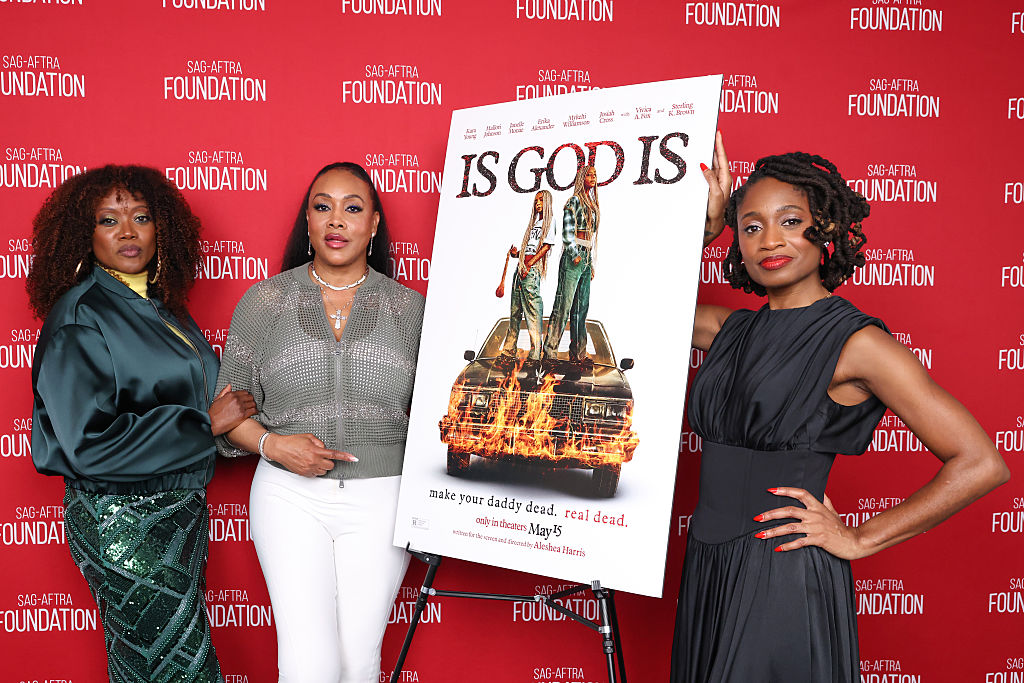
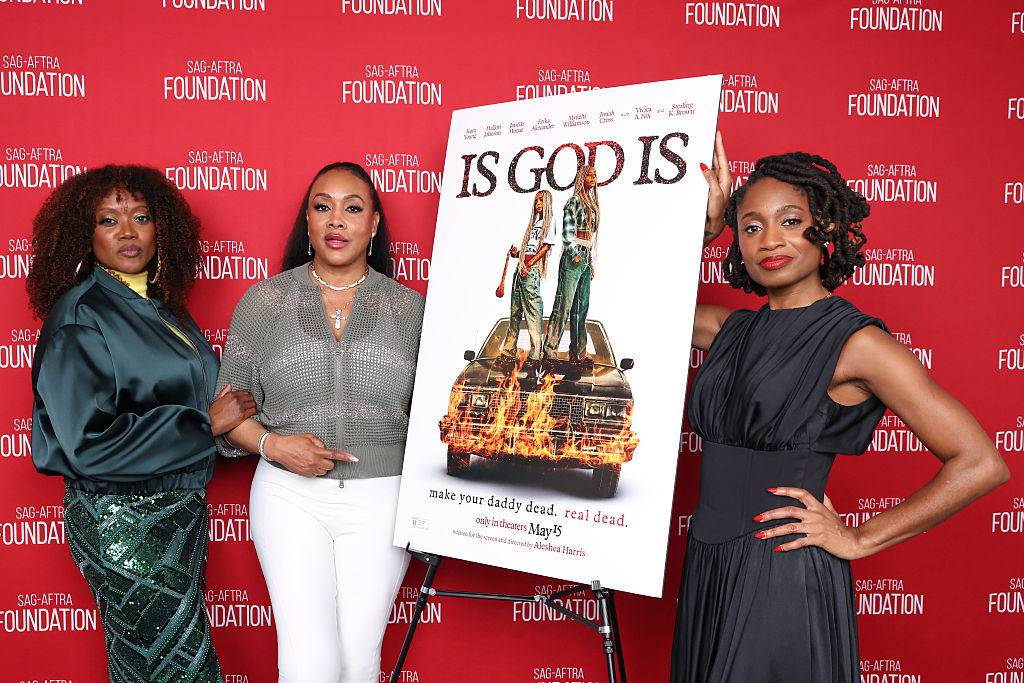
The film Is God Is by writer-director Aleshea Harris explores a gripping revenge narrative where twin sisters, motivated by their mother’s dying wish, embark on a journey to confront their father, labeled as the “Monster,” who attempted to murder their mother by fire.
Racine, one of the twins, captures the essence of their mission: “This is destiny shit.” This revenge saga stands out in Black cinema, allowing Black women to express their anger rather than suppress it.
Aleshea Harris presents the intense anger of Racine and Anaia as justified and overdue, reflecting real-world issues. Black women suffer violence from intimate partners at double the rate of white women, with over 40% experiencing such abuse.
Recent cases of Black femicide highlight this issue. Pastor Tammy McCollum from North Carolina was tragically killed by her husband shortly after Easter Sunday. Vice Mayor Nancy Metayer Bowen in Florida was found murdered by her spouse. Similarly, Dr. Cerina Fairfax was shot by her husband amid divorce proceedings.
These women followed societal norms—achieving success, marrying, and trusting the system—yet still faced fatal outcomes. Harris examines why these systems fail Black women, particularly through characters like Divine, a pastor and former partner of the Monster, played by Erika Alexander.
Divine’s story reveals the complex relationship between Black women, faith, and the men they protect. Harris prompts viewers to consider how institutions may ironically shield abusers, questioning the loyalty of women like Divine, who idolize their abusers despite the harm they cause.
The Black church, as a prominent institution, is criticized for its role in perpetuating these dynamics. Erika Alexander highlights this contrast: “Think about how many times we don’t have power when we go walking down these racist streets… But if you go into these houses of worship, you have your king, your queen, your first lady. You have all of that stuff. You have agency. You have power. You have access to money.”
This creates a closed system of influence where authority flows one way, often leading to unchecked abuse within the church. The institution, once a bastion against oppression, has paradoxically become a place where domestic violence is tolerated, offering Black men protection from external hostility while failing to safeguard Black women.
Divine, in this narrative, exemplifies how Black women have historically contorted themselves to align with oppressive men. Alexander suggests that women like Divine are pivotal to the power of such men, who rely on their support to maintain influence.
Sterling K. Brown portrays the Monster, diverging from his usual roles of dignified figures, to underscore how charm can mask abusive tendencies. Harris notes, “Sterling exists in a particular way in the consciousness, and people are having all kinds of reactions to him in this role.”
Janelle Monae, as the Monster’s current wife Angie, embodies complexity, portraying a woman who initially seems unlikely to be ensnared in such a situation. Her journey reflects a departure from the life she shared with the Monster, leaving with dignity, yet viewing the twins as inferior.
Angie’s character represents the archetype of a second wife at the first wife’s funeral, projecting an image of elegance while concealing the bruises of domestic strife.
Vivica A. Fox, known for roles in Set It Off and Kill Bill, plays the Mother, a force of nature within the film. Harris casts her as the embodiment of divine retribution, offering a fresh perspective on Fox’s cinematic legacy.
The Monster, central to the revenge plot, serves as a catalyst for the daughters’ journey, prompting audiences to empathize with Racine and Anaia, who bear the scars of a broken system that failed them at every turn.
Harris illustrates how trauma extends beyond individual survivors, affecting families and shaping inherited cycles of silence and rage. The twins’ shared trauma is a testament to the pervasive impact of abuse.
Black women in cinema have seldom been granted the opportunity for vengeance. Harris disrupts this narrative, refusing to portray Black women as mere victims. Instead, she showcases their full humanity, advocating for films that reflect the diverse realities of Black women.
Erika Alexander emphasizes the importance of these narratives, suggesting that portraying Black women as multifaceted humans can change societal perceptions and actions. “If we can disrupt the story system, we can change the trajectory of our own lives and people,” she states.
By challenging the limited portrayals of Black women in media, Is God Is offers a broader, more nuanced depiction that affirms their complex humanity and resilience.
SEE ALSO:
‘IS GOD IS’ Reimagines The Revenge Genre Through Black Women’s Eyes
Erika Alexander Narrates New Audible Series ‘Finding Tamika’