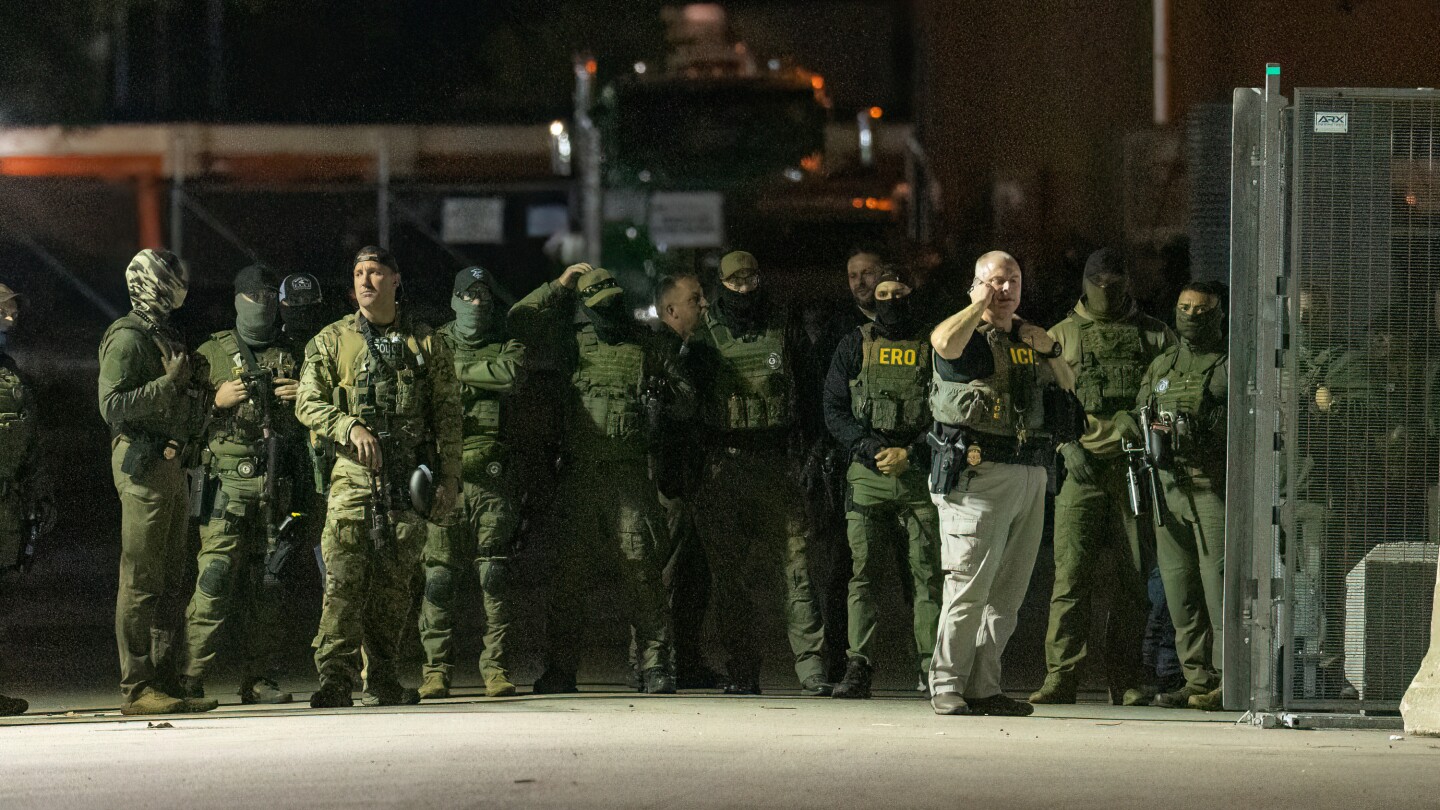
In response to concerns about federal immigration enforcement practices, a judge in Chicago has mandated the use of body cameras for immigration officers in the area. This decision comes amid ongoing tensions and more than 1,000 arrests during an enforcement operation that has drawn significant public attention.
U.S. District Judge Sara Ellis expressed her surprise upon viewing televised confrontations involving tear gas and other measures. She remarked, “I live in Chicago if folks haven’t noticed, and I’m not blind, right?”
In a related development, a federal appeals court has maintained a temporary prohibition against deploying the National Guard to assist immigration operations in Illinois, a measure the Trump administration is currently appealing.
Community groups in Chicago have been actively monitoring and documenting Immigration and Customs Enforcement (ICE) activities, with protests frequently occurring at a facility in Broadview. Although the Trump administration intended to utilize National Guard troops in support of these efforts, a federal judge had previously halted this plan.
Judge Ellis had previously stipulated that agents must display badges and refrain from using riot control tactics against peaceful demonstrators and the media. She recently expressed concerns over compliance with her orders.
“I am adding that all agents who are operating in Operation Midway Blitz are to wear body-worn cameras, and they are to be on,” Judge Ellis stated, emphasizing the need for transparency.
Sean Skedzielewski, representing the U.S. Justice Department, attributed the controversy to “one-sided and selectively edited media reports,” but acknowledged the logistical challenges in deploying cameras immediately. Ellis responded, recognizing the delay but insisting on future compliance.
Tricia McLaughlin, a spokesperson for the Department of Homeland Security, criticized any judicial mandates for body cameras as “an extreme act of judicial activism.”
Governor JB Pritzker supported the judge’s decision, citing discrepancies between government reports and actual events, including a fatal shooting incident. “They clearly lie about what goes on,” he commented.
In 2024, ICE plans to roll out approximately 1,600 body cameras to agents across various cities, including Baltimore, Philadelphia, and Detroit. Other Homeland Security agencies have already implemented similar measures, with U.S. Customs and Border Protection releasing footage in force-related incidents.
Furthermore, a Cook County judge has recently prohibited ICE from conducting arrests at courthouses in Chicago and its suburbs, highlighting ongoing legal challenges to immigration enforcement practices.