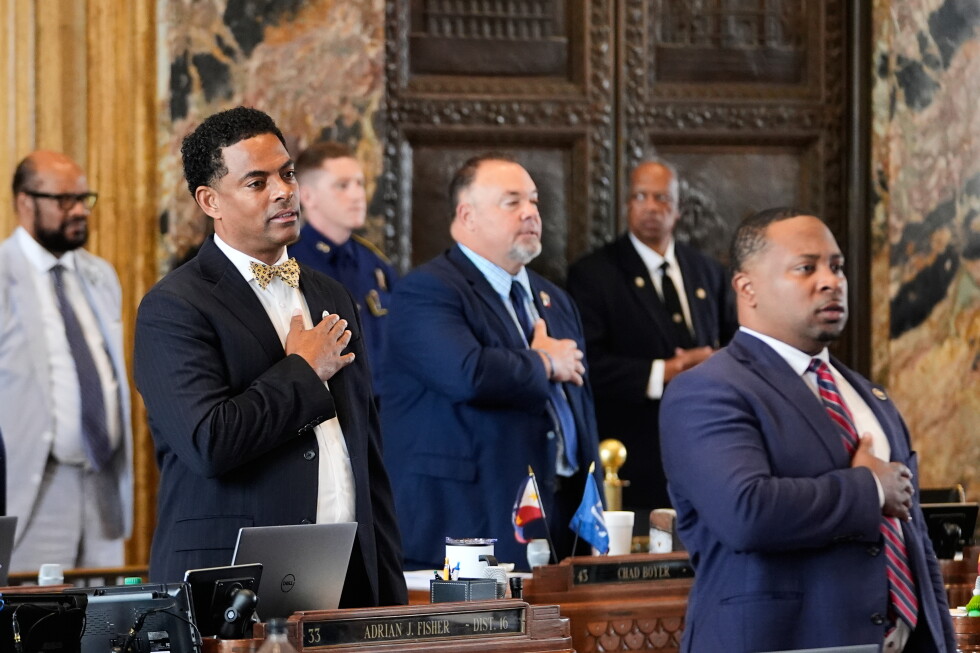
In a significant move impacting Louisiana’s political landscape, state lawmakers have approved a new congressional map that aims to strengthen Republican influence. This decision comes in the wake of the U.S. Supreme Court’s recent ruling against the state’s existing map, citing racial gerrymandering concerns.
The newly approved map, passed by the Louisiana Senate with a 28-10 vote, eliminates one of the state’s two majority-Black House districts. This change is seen as a strategic effort to bolster Republican chances in the upcoming elections, potentially securing five out of six U.S. House seats for the party.
Last month, the Supreme Court struck down the previous map, which was developed to comply with the 1965 Voting Rights Act, describing it as an illegal racial gerrymander. This decision has fueled a broader redistricting battle across Southern states, with Louisiana at the forefront.
The map revision debate in the Senate highlighted a clear partisan divide. Democrats argue that the new boundaries dilute the influence of Black voters by consolidating them into a single district. Democratic state Sen. Sam Jenkins criticized the new map, stating, “I think it’s a racially gerrymandered district that’s going to get us into a lot of trouble here.” Republican state Sen. Jay Morris, who sponsored the bill, emphasized that the boundaries were drawn based on party lines rather than race. Morris stated, “I purposely put more Democrats into District 2 to make the remaining districts better performing for Republicans.”
The decision to redraw the map follows Republican Gov. Jeff Landry’s action to postpone the state’s closed U.S. House primary and transition it to an open primary on November 3. This move was intended to provide lawmakers with the time needed to pass the revised map.
Some legal challenges are anticipated against the new map, with accusations of racial gerrymandering likely to emerge. Democratic state Sen. Royce Duplessis voiced concerns, saying, “From the beginning of the process, I said we’re building a house on a broken foundation — now it feels more like quicksand.”
This trend of redistricting is not unique to Louisiana. Following the Supreme Court’s ruling, several Republican-led states have similarly sought to redraw their congressional districts. In Florida, new districts could potentially yield up to four additional seats for Republicans, while Tennessee’s redistricting aims to win another seat by dividing a majority-Black district.
The outcomes of these efforts remain uncertain as both parties continue to strategize for the upcoming elections. While Republicans are gaining ground through redistricting, Democrats are hopeful about gaining seats in other states like California and Utah.