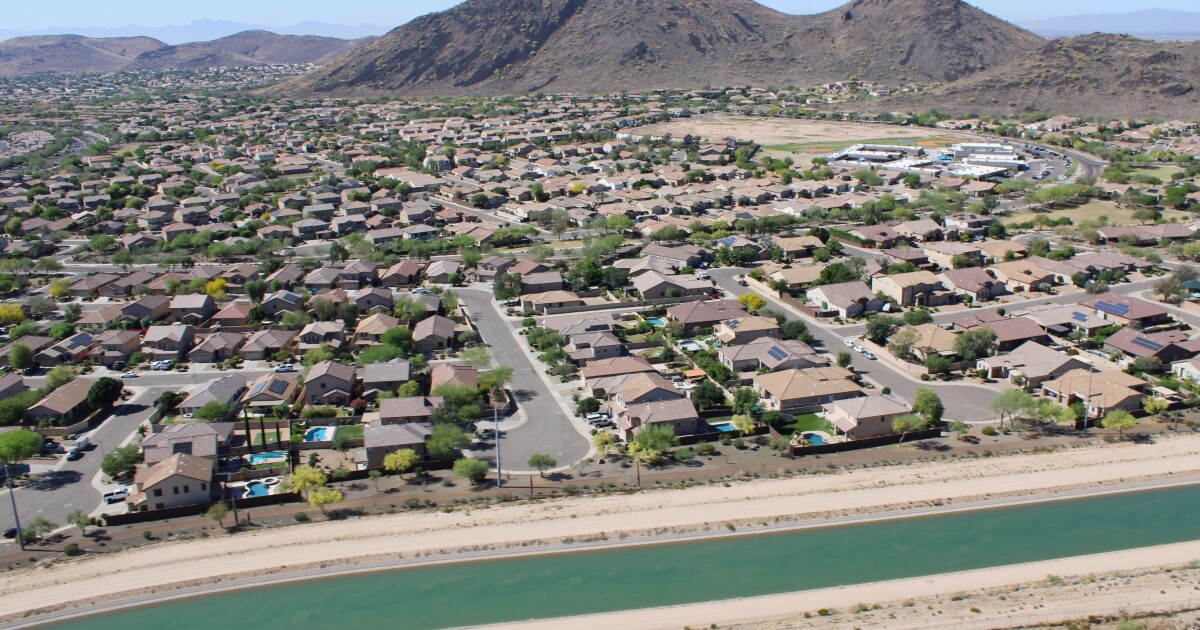
In a strategic move to prevent severe water shortages, Arizona has agreed to retain some of its allotment in the Colorado River, a decision that could spare Phoenix-area communities from severe water restrictions. This adjustment comes as part of a collaborative water management proposal involving Arizona, California, and Nevada.
The tri-state plan aims to stabilize crucial reservoirs until at least 2028 and mitigate drastic reductions in the flow to the Central Arizona Project (CAP), an extensive canal network that supplies Colorado River water to Phoenix and Tucson.
Facing historical lows, Lake Powell and Lake Mead, the nation’s largest reservoirs, have been severely impacted by a 26-year megadrought, exacerbated by an exceptionally dry winter season.
Previously, the federal government suggested a plan to enhance reservoir levels by imposing cutbacks on Arizona, a proposal criticized by local officials as unfairly targeting the CAP. This sparked concern among communities depending on this water source. For instance, Cave Creek was at risk of losing nearly 60% of its water supply from the Colorado River, which constitutes nearly all the water for the town.
The proposal by Arizona, California, and Nevada seeks to cut back water usage and support Lake Mead and Lake Powell.
Central Arizona Project leaders expressed that the federal proposal was an existential threat, with suggestions of potential legal action if implemented. The newly proposed plan offers a more optimistic outlook for the region.
“It’s the difference between devastating, impossible to manage cuts that wouldn’t have real impacts on some of those communities’ residents, to something that’s manageable,” stated Patrick Dent, CAP’s assistant general manager of water policy.
Under the prior federal plan, CAP stood to receive only 237,000 acre-feet of water. However, the new agreement with the three states increases this allocation to approximately 820,000 acre-feet.
To provide perspective, an acre-foot of water is enough to cover a football field with one foot of water, and it equates to the yearly water consumption for three homes in the Phoenix area, according to the Arizona Department of Water Resources.
Conceived with input from the Central Arizona Project, this new proposal could potentially avert a legal standoff with the federal authorities.
“We’re hopeful,” Dent added, “for the next three years, when it comes to litigation over cuts that they might implement, that if they choose this, then it might provide some reasonable shelter from litigation.”