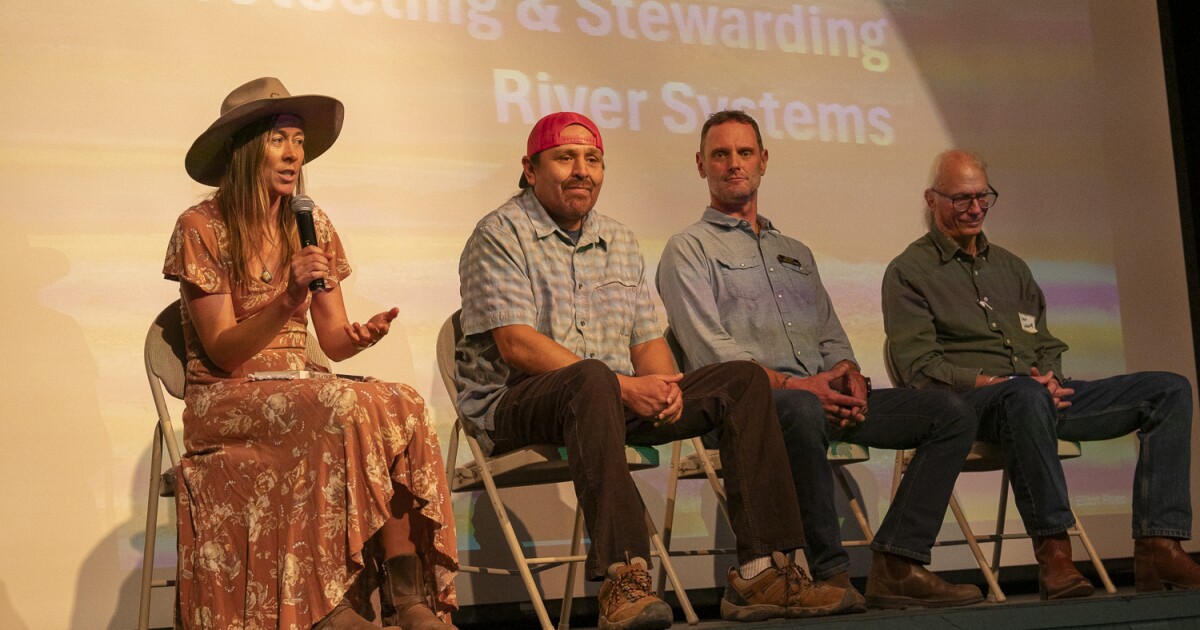
Amidst the scenic landscapes of Moab, Utah, a diverse group of scientists, artists, and writers convened for the Rivers of Change event. The gathering centered on the critical issues surrounding Glen Canyon Dam and Lake Powell, exploring their effects on the Colorado River and its future.
Co-hosted by the Glen Canyon Institute, a science-oriented advocacy group, the event brought forward new perspectives and insights. Program Manager Zanna Stutz shared her reflections, emphasizing an unexpected sense of optimism that permeated the discussions.
Fostering Hope and Collaboration
ZANNA STUTZ: “I was so impressed by the positivity and the amount of care that just came out of this event. There was such a sense of this being a place that people care about and the ways that that care can then fuel action and movement and a vision for the future and what’s going forward here.”
Stutz highlighted the diverse backgrounds of the participants, ranging from art to science, and their shared commitment to the Colorado River. Through storytelling and creative exhibits, attendees were inspired to collaborate and share their connection to Glen Canyon.
Storytelling emerged as a key theme, with narratives spanning scientific data to Indigenous traditions, all contributing to a collective vision for the river’s revival.
Challenges and Opportunities
MARK BRODIE: Positivity seems a rare commodity when discussing the Colorado River’s current state. Can you elaborate on this?
STUTZ: The story of Glen Canyon has often been one of loss, but now, as the reservoir recedes, we’re witnessing a resurgence of life. This shift from scarcity to renewal is fostering hope, even as we face challenges like missed deadlines and complex negotiations over water rights.
The event coincided with federal deadlines for Colorado River Basin states to reach water-sharing agreements, highlighting the tension between ecological restoration and water management. Yet, optimism persists, driven by the ecological recovery observed in Glen Canyon.
Reimagining the Colorado River
Stutz emphasized the importance of viewing the Colorado River as a dynamic, living entity rather than just a reservoir. The transformation of Glen Canyon into a thriving ecosystem serves as a powerful example of nature’s resilience.
BRODIE: How should our perceptions of the Colorado River, Glen Canyon Dam, and Lake Powell evolve?
STUTZ: Glen Canyon’s ecological and cultural significance extends beyond being a water storage site. Embracing the river’s vibrancy and the community it inspires is crucial for future management strategies.
The challenges posed by current water management infrastructure, like Lake Powell, highlight the need for a broader reassessment of storage and delivery systems. As conditions change, a balance between pragmatic solutions and value-based decisions becomes essential.
In a time of ecological uncertainty, the Rivers of Change event has ignited a hopeful dialogue about the Colorado River’s future, blending scientific insights with cultural narratives to forge a path forward.